
Last updated November 15, 2026
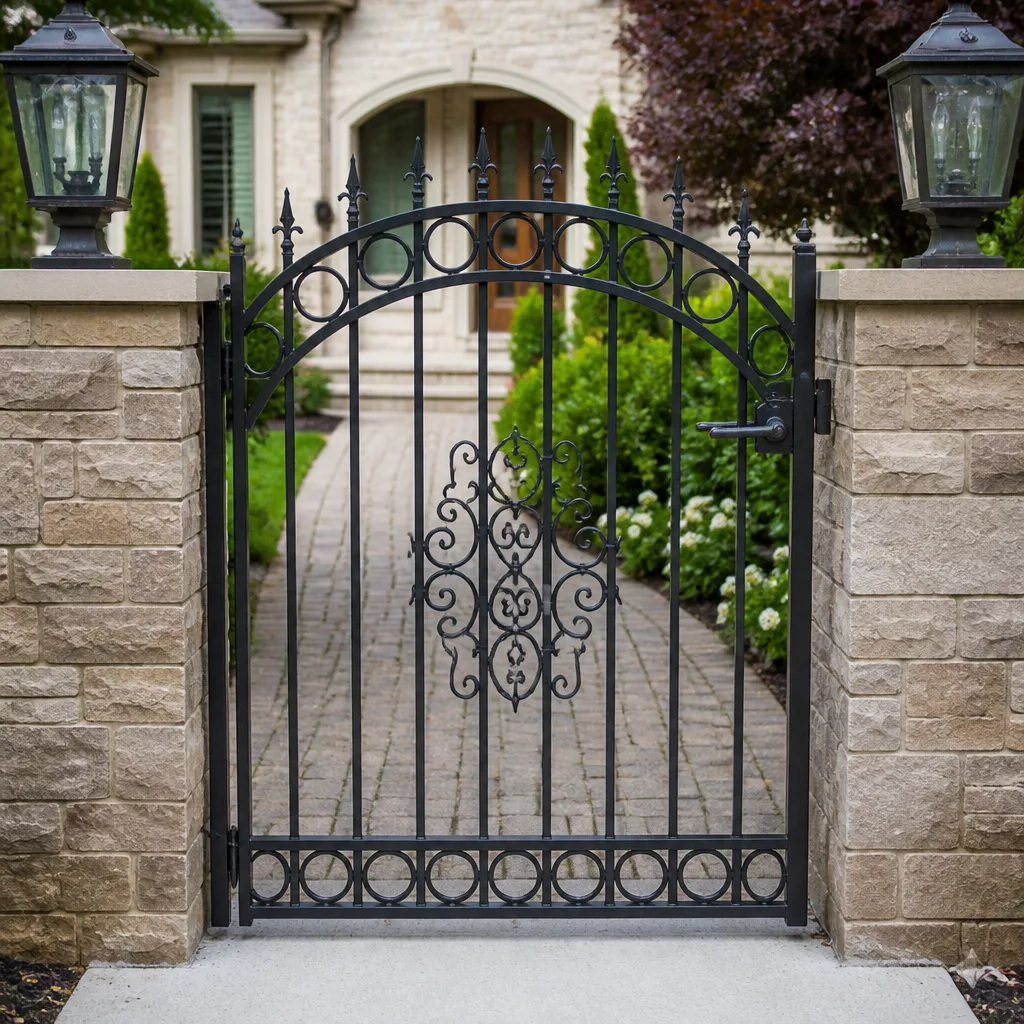 Wrought iron
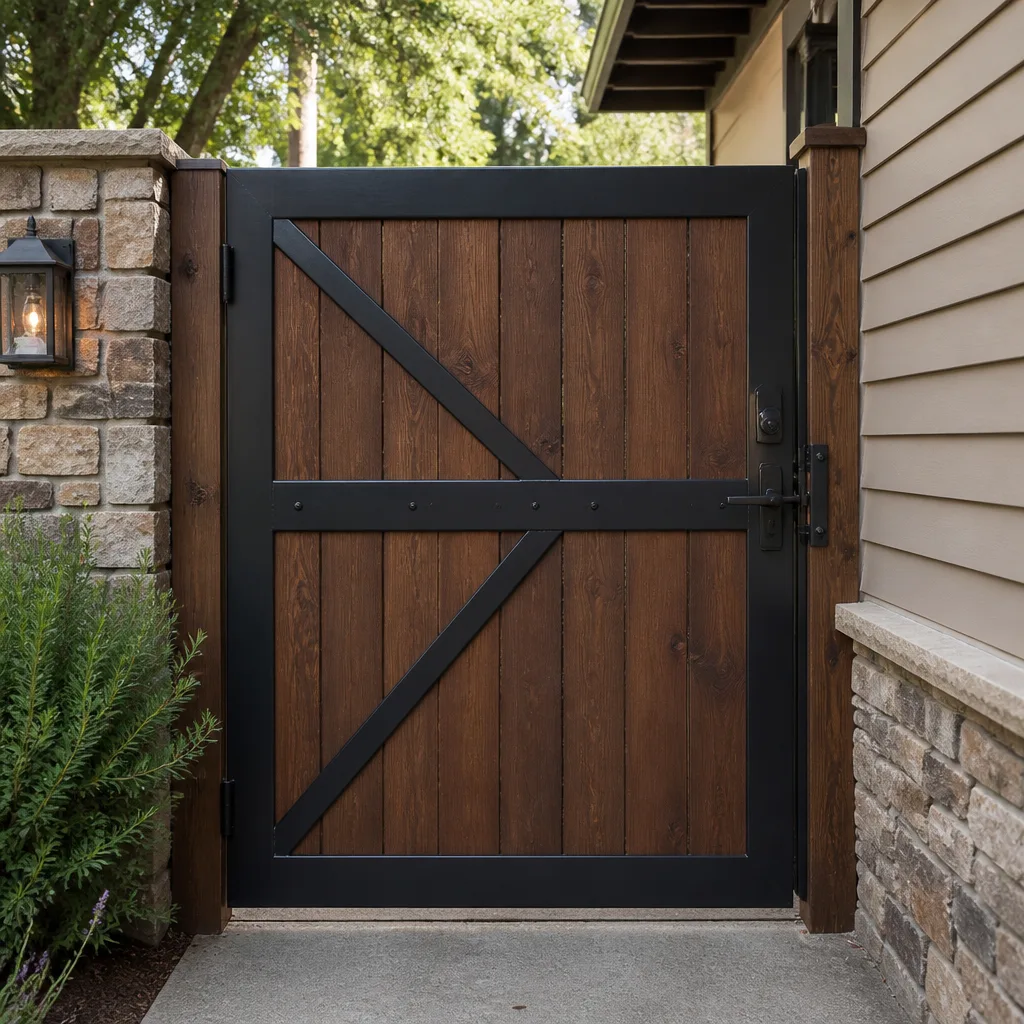 Wood & steel frame
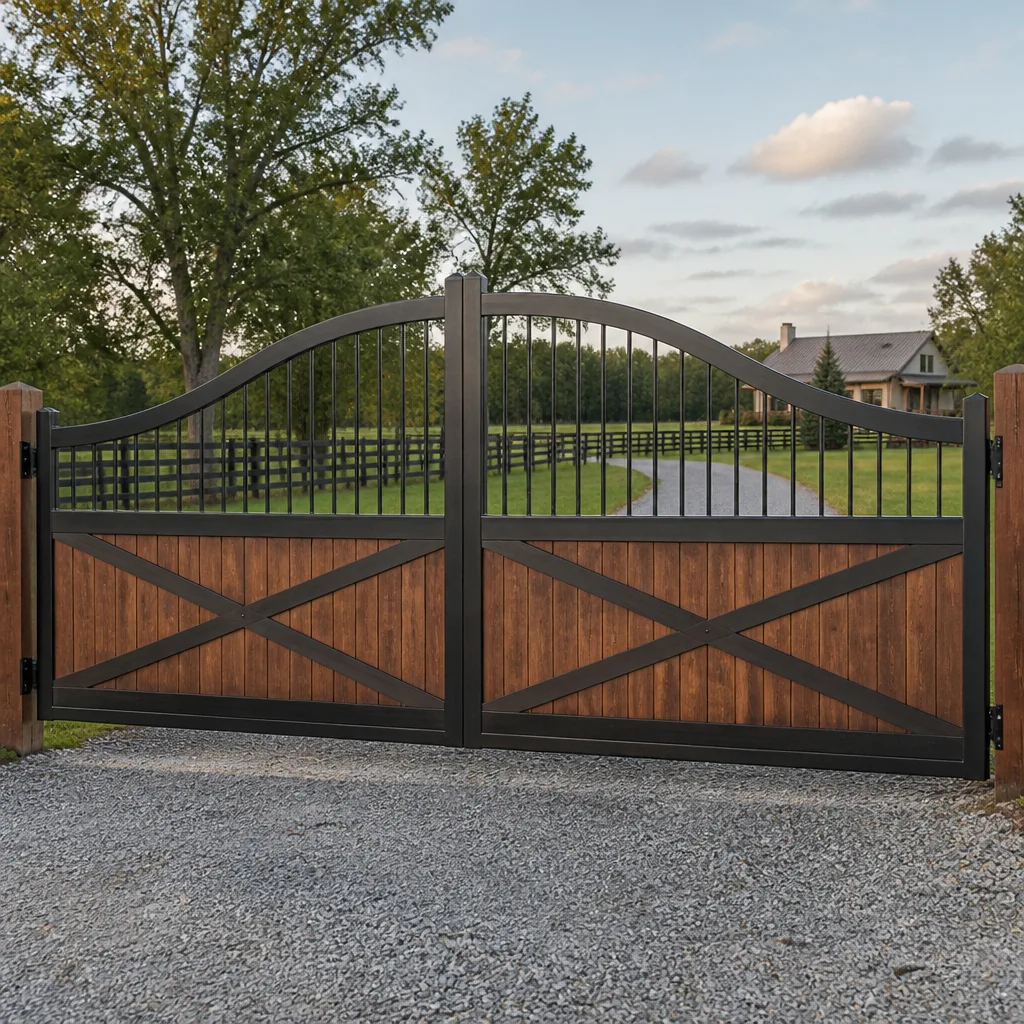 Farm & ranch
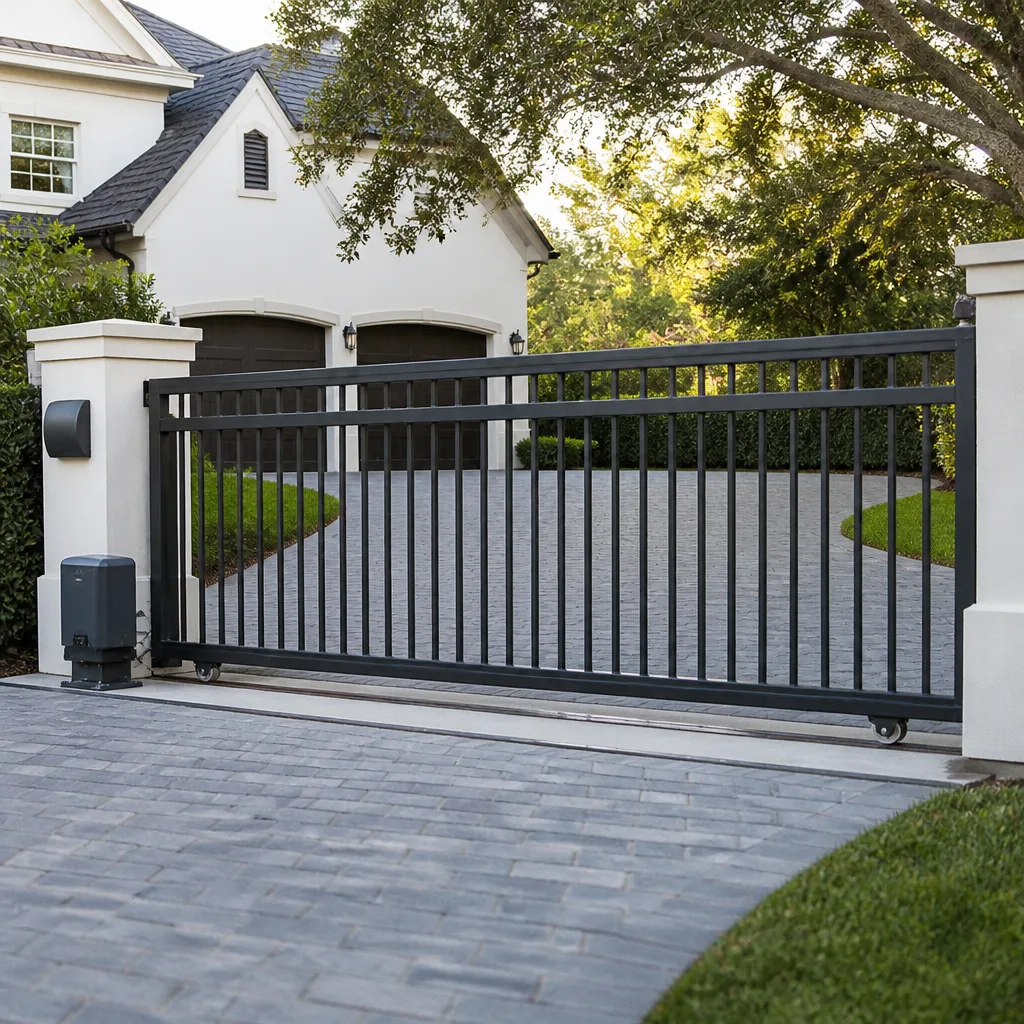 Sliding driveway gates
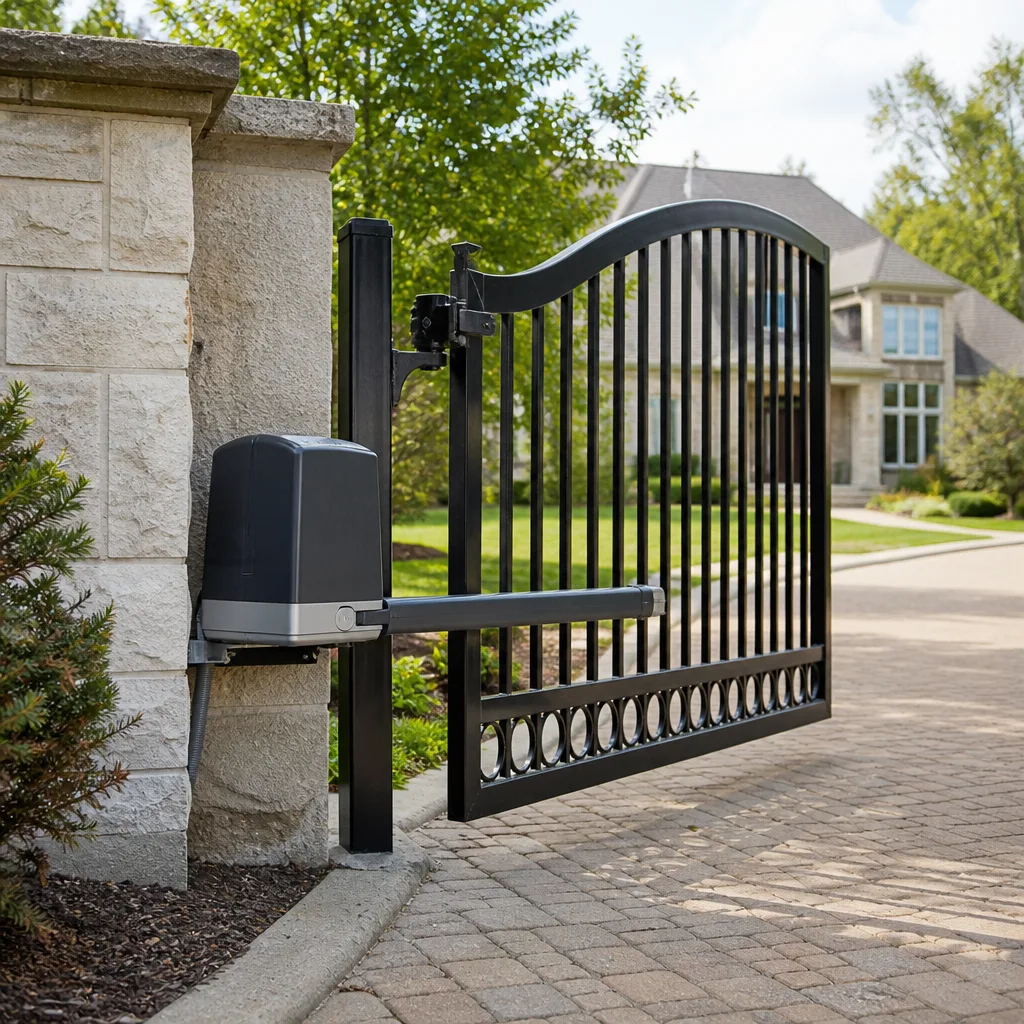 LiftMaster operators
Free on-site gate assessment - hinges, posts, and your LiftMaster or Nice gate operator checked before anything is quoted
The assessment is free and the quote is the invoice.
Get your free estimateGate Repair Maintenance Schedule: What to Do and When
The industry-standard “annual gate service” recommendation was written for mild, dry climates. Hampton Roads isn’t that. Here, a single yearly visit is too long to wait on hinges and too short for some electronic components, which makes the usual advice wrong in both directions. Gate maintenance isn’t one task on one calendar date: it’s a layered schedule where electrical parts, mechanical hardware and safety sensors each wear at their own rate. This guide lays out a month-by-month framework built around those actual wear rates, so Suffolk homeowners and property managers can stop guessing what to check and when.
Quick Answer
Gate maintenance in Suffolk follows a tiered schedule rather than one annual tune-up. Hinge pins and moving hardware need lubrication every three months, limit switches and safety sensors should be checked twice a year, and battery backup load testing belongs on a yearly cycle timed before hurricane season. Track each component on its own interval, and the mechanical and electronic sides of your gate get serviced when they actually need it instead of all at once in a single visit.
Styles & brands we work with
- Wrought iron
- Wood & steel frame
- Farm & ranch
- Sliding driveway gates
- LiftMaster operators
Table of Contents
- Why the Annual Service Guide Falls Short in Hampton Roads
- Component-Specific Intervals: What Wears Out and How Fast
- A Seasonal Checklist for Suffolk’s Climate
- The Hinge Pin Problem: Why Lubrication Saves Motors
- Sensors, Loops and Safety Edges: The Electronic Schedule
- How to Log Maintenance So Wear Trends Show Up
- What You Can Do Safely vs. What Needs a Technician
- When to Call a Professional
Why the Annual Service Guide Falls Short in Hampton Roads
Most gate maintenance calendars you’ll find online trace back to a climate that’s drier and less humid than ours. That guidance gets copied around the country without adjustment, and it makes two mistakes at once. It leaves mechanical hardware in Suffolk sitting for months between lubrication while humidity accelerates wear, and it sends technicians to inspect electronic parts more often than those parts actually need attention. Neither error shows up immediately. Both shorten a gate’s life.
Walk around any long-running automated gate in Suffolk and you’ll see what we mean. Hinge pins dry out, tighten and begin to bind well before a year is up. Meanwhile, a control board on a DoorKing operator might run for years with nothing more than a periodic visual check, as long as debris stays out of the enclosure and the wiring holds up. The parts age on different clocks.
Gate repair works differently when the schedule respects that. Instead of one flat visit, you get a plan:
- Quarterly: lubrication of hinges, pivots, rollers and latches, plus track clearing on slide gates.
- Twice yearly: limit switch calibration checks, safety sensor alignment, photo-eye lens cleaning.
- Annually: battery backup load testing, full electrical inspection, manual release function test, post alignment review.
- As needed: loop detector sensitivity checks after any nearby road, driveway or landscaping work.
That structure is the heart of this guide. Everything below breaks one layer down at a time. For the broader picture of what falls under general service, see our gate repair page.
Component-Specific Intervals: What Wears Out and How Fast
Different gate components fail at different rates, and matching the service interval to the part is the whole point of a layered schedule. Here’s the framework we’d put on any Suffolk property, residential or commercial:
Hinge and pivot lubrication: every 3 months
Humidity here keeps metal slightly damp for much of the year, and that’s exactly the condition that turns lubricant thin and lets exposure get to a bare pin. Quarterly application keeps a protective film in place. This one interval matters more than any other on the list, for reasons we’ll get to below.
Limit switch calibration: twice a year
Limit switches tell the operator when the gate has fully opened or closed. When they drift, the gate either slams into its stop or reverses early. A stop that looks violent is often a calibration problem, not a mechanical failure, and a semi-annual check catches drift before it damages the operator.
Battery backup load testing: annually
A backup battery that reads “charged” on a meter can still fail under a real load. We test the battery under the kind of demand it would face during an outage, and the natural time for this check in Suffolk is shortly before hurricane season, when a power cut is most likely.
Loop detector sensitivity: after nearby road or driveway work
Vehicle loop detectors are buried in the pavement and triggered by metal moving overhead. New asphalt, rebar, utility trenching or a fresh driveway pour nearby can throw off sensitivity. This isn’t a calendar item; it’s a trigger item. After any such work, have the loop tested.
Control board and wiring inspection: annually
Control boards on any operator, from a Mighty Mule on a residential driveway to a commercial-grade FAAC unit, should get a visual inspection once a year: enclosure condition, wire terminations, moisture intrusion, insect activity. It’s the system’s nervous system, and a yearly look keeps small problems small.
Post alignment and footing review: annually, or after ground movement
Swing gate posts shift as soil moves with wet and dry cycles. A gate that suddenly drags or swings off its arc is often reporting a post problem, not a hinge problem. Review alignment once a year and any time you notice a new drag.
A Seasonal Checklist for Suffolk’s Climate
Suffolk’s four seasons stress a gate in four different ways, and the seasonal layer of your maintenance schedule should reflect that. Here’s what each season asks of you:
Spring: pollen
Pollen coats every outdoor surface here, and photo-eye lenses are the component that suffers most. A lens with a dusting of pollen on it can send a gate into a phantom reversal loop, opening and closing for no apparent reason. Spring is when to clean every photo-eye lens and check safety edges for pollen film.
Summer: heat
Long hot stretches push hydraulic operators harder. Hydraulic fluid viscosity shifts with temperature, and an operator low on fluid or running old fluid can start to strain. Summer is when to have hydraulic fluid levels and condition reviewed by a technician, never topped off or changed by a homeowner.
Fall: leaf debris
Falling leaves foul slide gate tracks faster than anything else. A track with leaves packed into it forces the operator to work against resistance, which strains the motor and the rollers. Fall means clearing the track regularly and checking the rollers for debris buildup.
Winter: ground movement
Wet-then-dry soil cycles move swing gate posts slightly. A post that was plumb in October can be a fraction off in January, which shows up as drag at the hinge, sag at the latch, or a gate that no longer swings cleanly. Winter is when alignment gets checked and the ground is watched for shifting.
A one-page checklist for the year, then:
- Spring: clean photo-eye lenses, test safety edges, clear every lens of pollen.
- Summer: have hydraulic fluid checked on any hydraulic operator, listen for motor strain.
- Fall: clear slide gate tracks weekly, check rollers for leaf debris, inspect hinges.
- Winter: review post alignment, test manual release, lubricate all hinges.
The Hinge Pin Problem: Why Lubrication Saves Motors
If there’s one task on this schedule you should not skip, it’s lubricating the hinge pins. A dry hinge pin is the single most common root cause of otherwise-avoidable swing gate motor burnouts we see, because the failure chain is invisible until it’s expensive.
Here’s the chain. A dry hinge develops resistance. The operator, whether a LiftMaster or an older Elite unit, doesn’t know the hinge is dragging. It just senses more effort is needed and pushes harder against the same load. Over months that added resistance becomes the motor drawing more current on every cycle: a slow, cumulative penalty that never trips a fault until the motor itself is weakened. Gate works fine one day; the operator quits the next; the hinge pin was the cause the whole time.
Quarterly lubrication breaks that chain. It’s cheap, quick, and it costs far less than a motor:
- Clear the gate area and put the operator into manual release.
- Apply a suitable lubricant to each hinge pin, pivot and latch point.
- Move the gate through its full swing by hand, so the lubricant works into the joint.
- Re-engage the operator and cycle the gate once to confirm it moves freely.
If a hinge is already binding, don’t force a dry pin with lubricant alone. A binding hinge may need adjustment or replacement, and that’s a job for a technician. If your gate has already started straining, our electric gate repair service covers operator diagnosis and control board work. We also work on the operator brands you find across Suffolk: Ghost Controls, DoorKing, Elite and Mighty Mule among them.
Sensors, Loops and Safety Edges: The Electronic Schedule
The electronic side of a gate ages differently from the mechanical side, and it deserves its own interval. The three components to track are photo eyes, safety edges and loop detectors:
Photo eyes
These are the paired lenses on either side of the gate opening that detect an obstruction. In Suffolk, they’re the most frequent source of phantom reversals, usually because pollen, spider webs or dirt have coated a lens. Clean the lenses twice a year and any time your gate starts behaving oddly. Aligning them after anything bumps the post or the housing is also a sensor task.
Safety edges
Safety edges on the gate leaf sense contact and reverse the gate. They need a twice-yearly test, plus inspection for cracked rubber or damaged wiring. Never bypass a faulty safety edge: a gate that closes on a person or vehicle is a serious hazard, and the fix is the edge, not a setting.
Loop detectors
Buried vehicle loops trigger the gate for cars leaving or arriving. They’re typically reliable until the pavement around them changes. Nearby road work, a new driveway, or utility excavation can shift sensitivity. Have the loop checked after any nearby work, and if your gate starts opening for no vehicle, the loop is a prime suspect.
Batteries
Backup batteries degrade quietly. Annual load testing before hurricane season tells you whether your gate can open during a power cut, and if it can’t, you’ve found out in advance instead of during a storm. This is just one component of a full electric schedule, which you can read about on our electric gate repair page.
Safety note: the operator’s wiring and power components are dangerous, and gates are heavy. Testing a safety edge by tapping it lightly is fine, but leave board-level inspection and wiring work to a technician.
See the difference
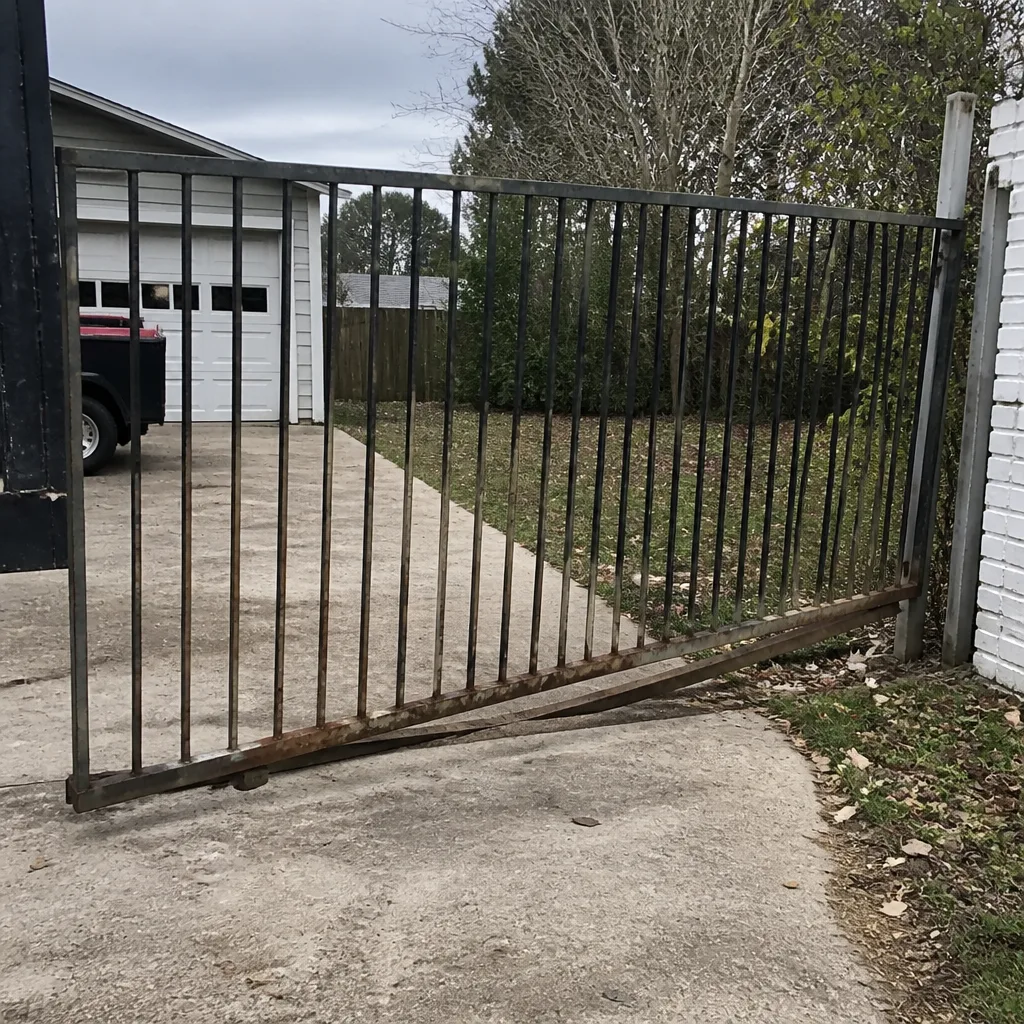 Before
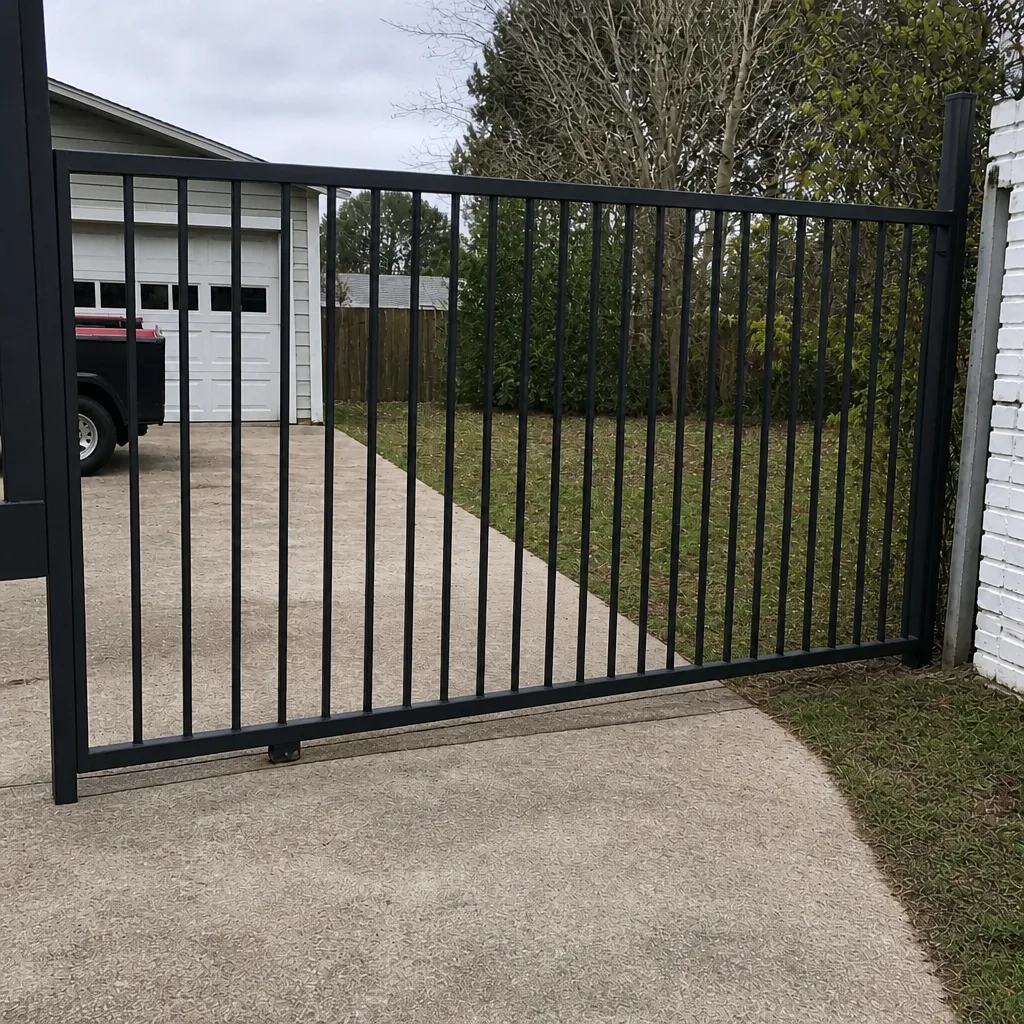 After
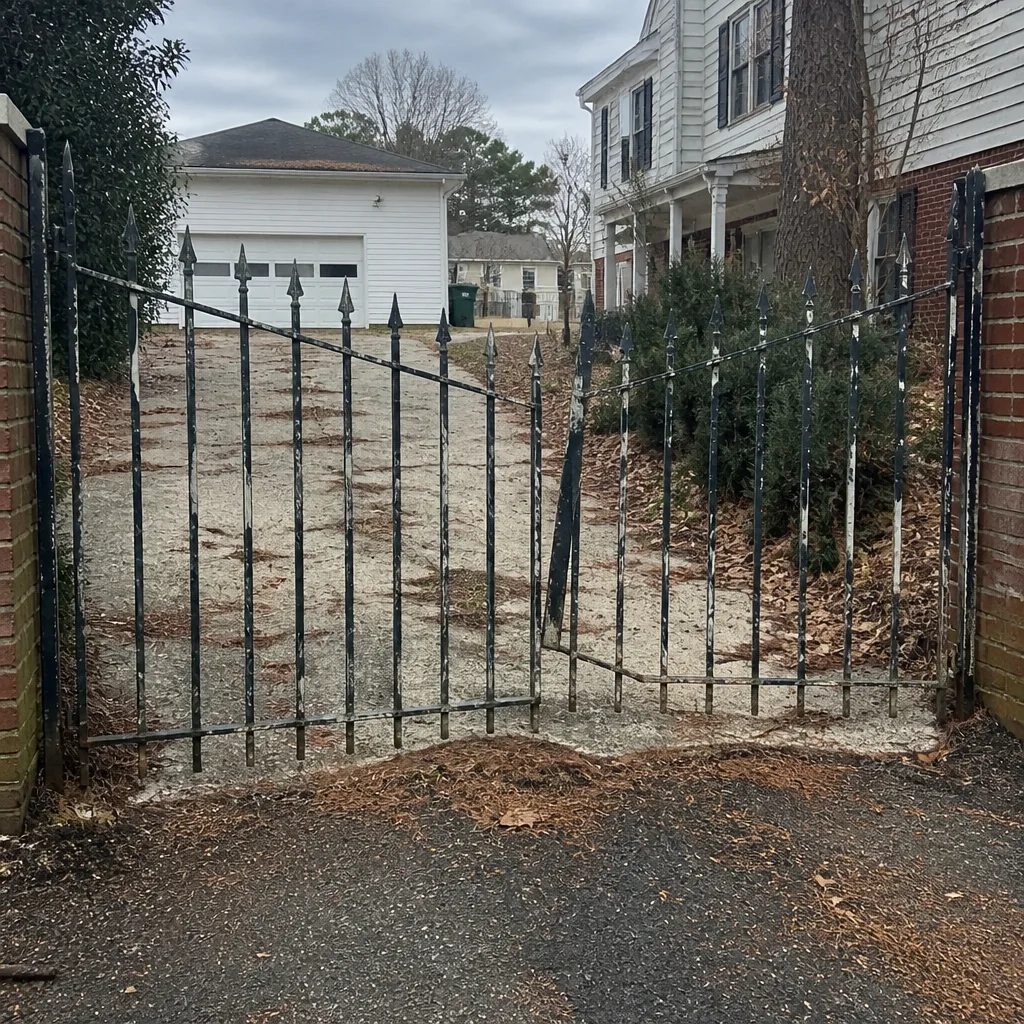 Before
 After
 Before
 After
How to Log Maintenance So Wear Trends Show Up
A log turns maintenance from a series of standalone events into a history. When a technician can see what was serviced, when, and what was found, wear trends become visible: a gate that needs hinge lubrication more often than the schedule says, a battery whose load capacity is drifting downward, a loop that has lost sensitivity twice. Without the log, every visit starts from scratch and problems only get noticed when they fail.
A simple log works. A notebook on a hook by the gate or a shared note on a phone is enough. What matters is that each entry captures the same few things:
- Date of service or inspection.
- Component serviced: hinges, limit switches, battery, photo eyes, loop.
- What was found, not just what was done: “hinge binding slightly on the left,” “battery tested weak.”
- Who did it: homeowner or technician.
- Next due date for that component.
When a technician visits, the log changes the conversation. Instead of “the gate is broken,” it becomes “the gate’s been dragging for three months and the left hinge was last lubricated eight months ago.” That’s a diagnosis, not a guess, and it often means repair rather than replacement. We work this way because working on the customer’s existing system rather than pushing a new one is why we’re gate-only specialists. If you’re in Suffolk, our gate repair service starts with that history.
What You Can Do Safely vs. What Needs a Technician
Not every task on this schedule belongs to a technician, and not every task belongs to you. Knowing the line keeps your gate safe and your schedule honest.
Safe for a homeowner
- Cleaning photo-eye lenses and inspecting safety edges.
- Testing the manual release: put the operator into manual and confirm the gate swings freely.
- Clearing leaves, twigs and debris from slide gate tracks and swing arcs.
- Visual checks of enclosure covers for cracks, moisture or insect activity.
- Keeping the maintenance log.
Needs a technician
- Hydraulic fluid service on any hydraulic operator.
- Electrical board inspection, wiring checks and control board diagnosis.
- Limit switch calibration and operator programming.
- Hinge, roller and latch replacement when parts are worn beyond lubrication.
- Loop detector testing and sensitivity adjustment.
- Battery load testing under real demand.
The reasoning is simple: the safe tasks are observation and light cleaning. The technician tasks involve live electrical components, hydraulic fluid under pressure, or heavy moving parts that can crush. Any gate operator with wiring is a system where the wrong adjustment can cause an injury, so electrical and hydraulic work stays with a trained technician.
Common Mistakes to Avoid
- Treating maintenance as one annual visit. One yearly service collapses different intervals into a single date, which leaves hinges under-lubricated and tests electronics more often than needed. Match each interval to its component and the whole schedule tightens up.
- Greasing the hinge pin and nothing else. Lubrication is the priority, but limit switches, safety edges and batteries need their own checks. A lubricated gate with a failing safety edge isn’t a maintained gate.
- Bypassing a safety edge or photo eye that keeps tripping. In Suffolk, a dirty lens or a misaligned photo eye is often the only problem, and the fix is cleaning or alignment, not a workaround. Never disable a safety device that’s misbehaving.
- Waiting for a gate to fail before looking at it. A binding hinge or a drifting limit switch sends warning signs first. A quarterly look catches them while they’re still small repairs.
- Topping off hydraulic fluid without diagnosing the cause. Low hydraulic fluid means it went somewhere, and a technician needs to find where before adding more. A homeowner topping off a hydraulic unit is usually covering a leak, not fixing it.
- Ignoring ground movement until the gate drags. Suffolk’s wet-then-dry soil cycles shift swing gate posts a little at a time. Catch alignment drift in the annual review before the gate starts straining the operator.
- Not checking loop sensitivity after nearby road work. New pavement or driveway work is a common trigger for a loop that suddenly triggers on its own. Have the loop checked after any work near it.
When to Call a Professional
Call a technician when the gate stops behaving as expected, when a safety device trips or fails, when the operator strains or won’t fully open or close, when hydraulic fluid is low, or when electrical components look damaged. Also call if a hinge is binding after lubrication, if a slide gate comes off its track, or if your gate behaves erratically after any nearby road or driveway work. Our technicians have up to 10 years of experience, and we have worked on every gate type from residential swing systems to commercial automated operators, so we can diagnose the problem without the guesswork. Gate Repair Suffolk offers free estimates in Suffolk: call (855) 360-8054. We answer 24/7. Fast dispatch from 7am to 7pm, Sunday through Friday.
Frequently Asked Questions
The right schedule is layered, not a single annual visit. Lubricate hinges and moving hardware every three months, check limit switches and safety sensors twice a year, and load test the battery backup once a year before hurricane season. Loop detectors get checked after any nearby road or driveway work. Call (855) 360-8054 for an exact maintenance quote: estimates are free.
You can safely lubricate hinge pins and pivots yourself with a suitable lubricant, and doing it quarterly is what keeps a swing gate motor from working harder than it should. Use the manual release, apply lubricant to each pin, and swing the gate by hand to work it in. If a hinge is already binding, call a technician: (855) 360-8054.
A gate that cycles without a vehicle usually has a sensor problem. The most common cause in our area is pollen or debris on a photo-eye lens, followed by a loop detector that lost sensitivity after nearby road or driveway work. Clean the photo-eye lenses first. If that doesn’t stop it, call (855) 360-8054 for diagnosis.
Anything involving the operator’s electrical wiring, control board inspection, hydraulic fluid service or limit switch calibration should be left to a technician. Those tasks involve live electrical parts, pressurized hydraulic fluid or heavy moving components. Cleaning lenses, clearing track debris and testing the manual release are safe for you to do. Call (855) 360-8054 to book a technician for the rest.
Most gates need repair, not replacement. A worn hinge, a drifted limit switch, a tired battery or a dirty lens accounts for a large share of problems, and a technician with a maintenance log can usually identify what’s worn. We work on your brand rather than pushing a new system. Call (855) 360-8054 for a free estimate before deciding.
The core timing is the same across brands: quarterly lubrication, semiannual sensor checks, annual battery testing. What differs is the operator specifics. A residential Ghost Controls or Mighty Mule unit has different battery and board characteristics than a commercial DoorKing or Elite operator, so service should follow the operator’s actual design, which is why brand knowledge matters. Call (855) 360-8054 and tell us your brand.
The Bottom Line
Gate maintenance works best as a layered schedule, not an annual appointment. In Suffolk’s climate, hinges need lubrication every three months, sensors and limit switches need checking twice a year, and battery backup testing belongs once a year before hurricane season. Seasonal stressors are predictable too: pollen in spring, hydraulic heat in summer, leaf debris in fall, post movement in winter. Keep a simple log and the pattern of wear shows up before a breakdown does. Lubricate the hinge pins every quarter and you prevent most of the motor failures this guide describes. Match the interval to the component on your gate and you’ll spend less than you would on repairs, and the gate will last longer for it.
If you’d rather hand the schedule to a gate-only specialist, we’re here. Gate Repair Suffolk handles repair, electric gate repair and installation, and we work with nine major brands including Ghost Controls, DoorKing, Elite and Mighty Mule. Call us at (855) 360-8054 for a free estimate. We answer 24/7. Fast dispatch from 7am to 7pm, Sunday through Friday. Visit our Gate Repair Suffolk page for more, and we’ll work on your gate, your schedule, your terms.
Written by the team at Gate Repair Suffolk.