
Last updated November 15, 2026
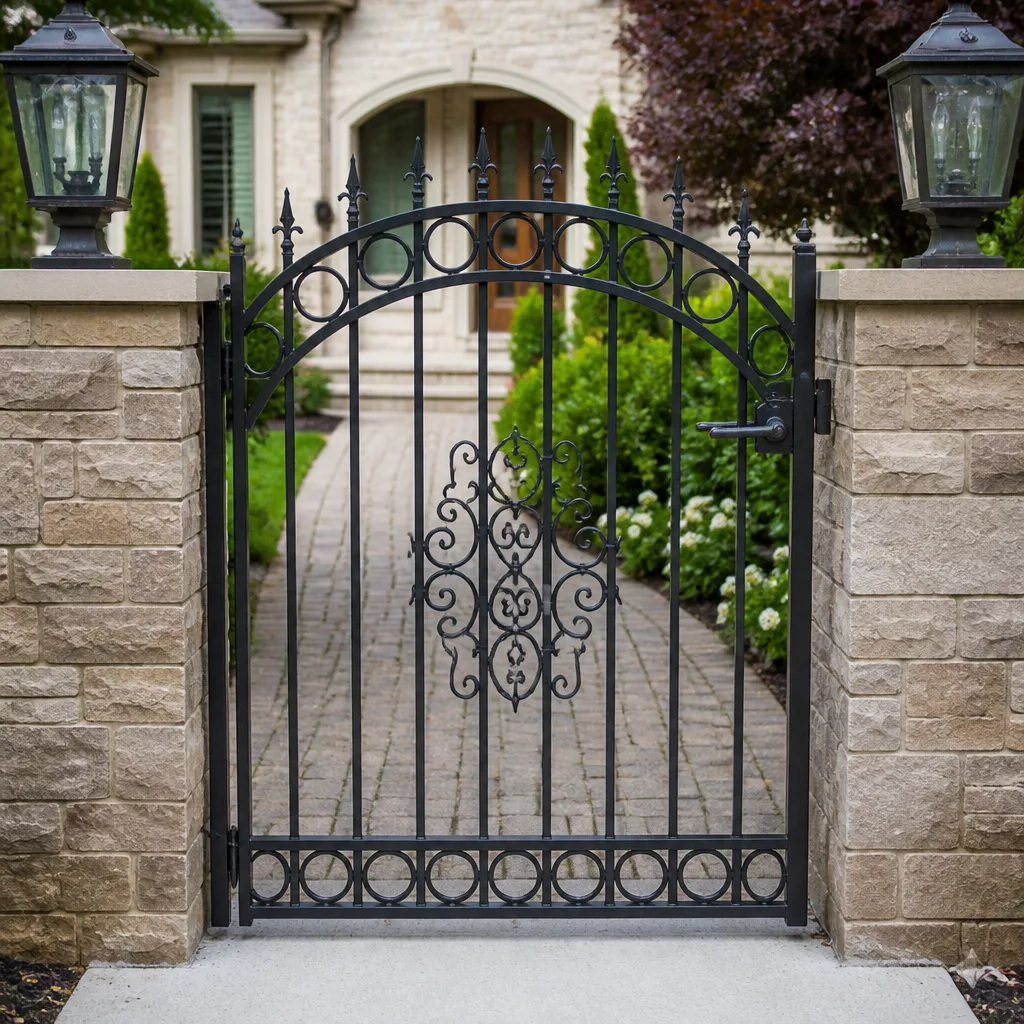 Wrought iron
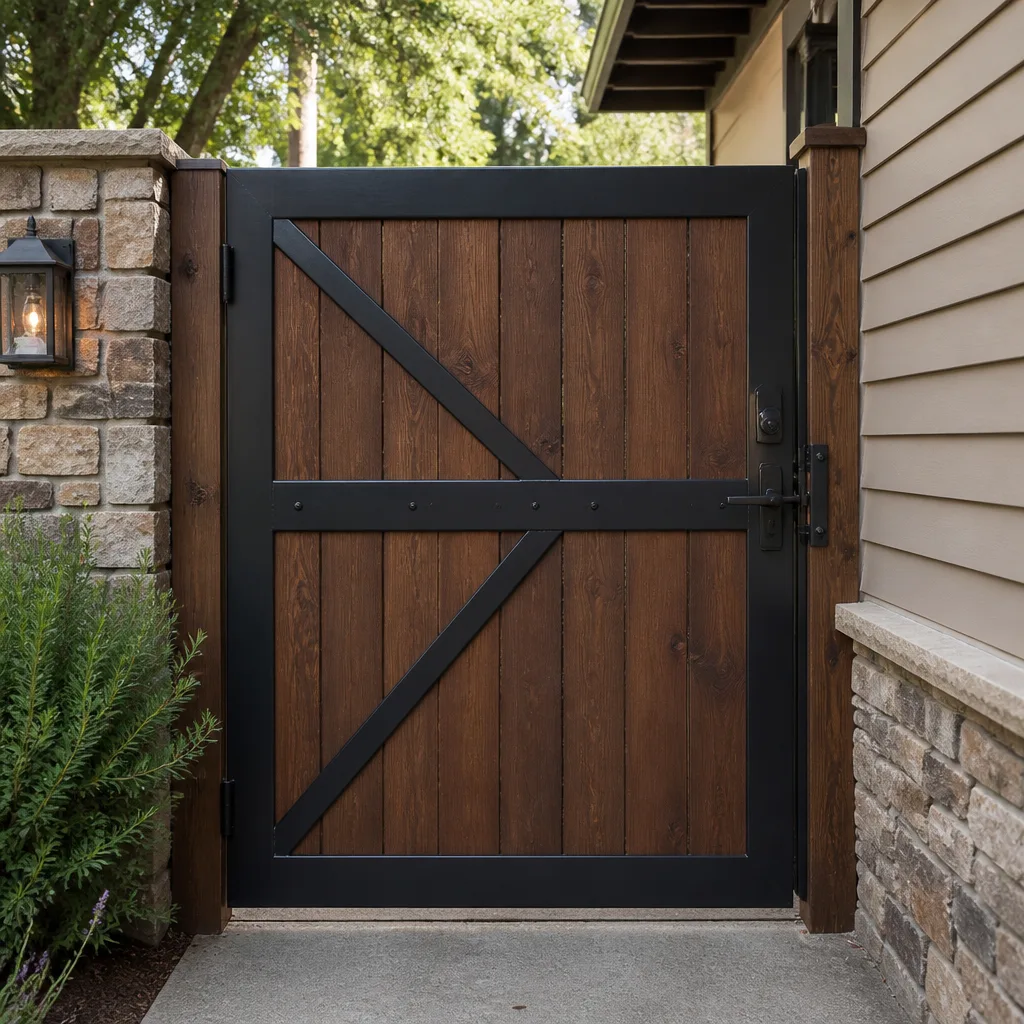 Wood & steel frame
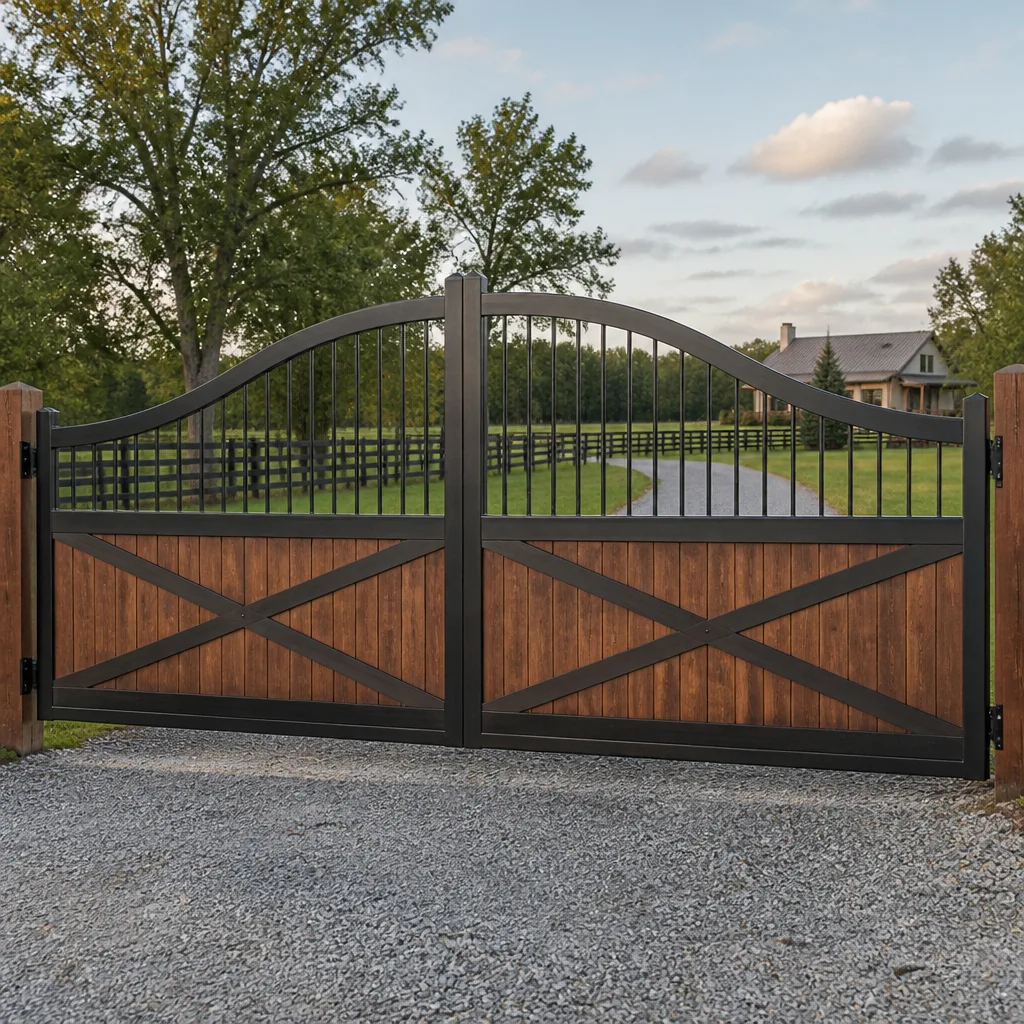 Farm & ranch
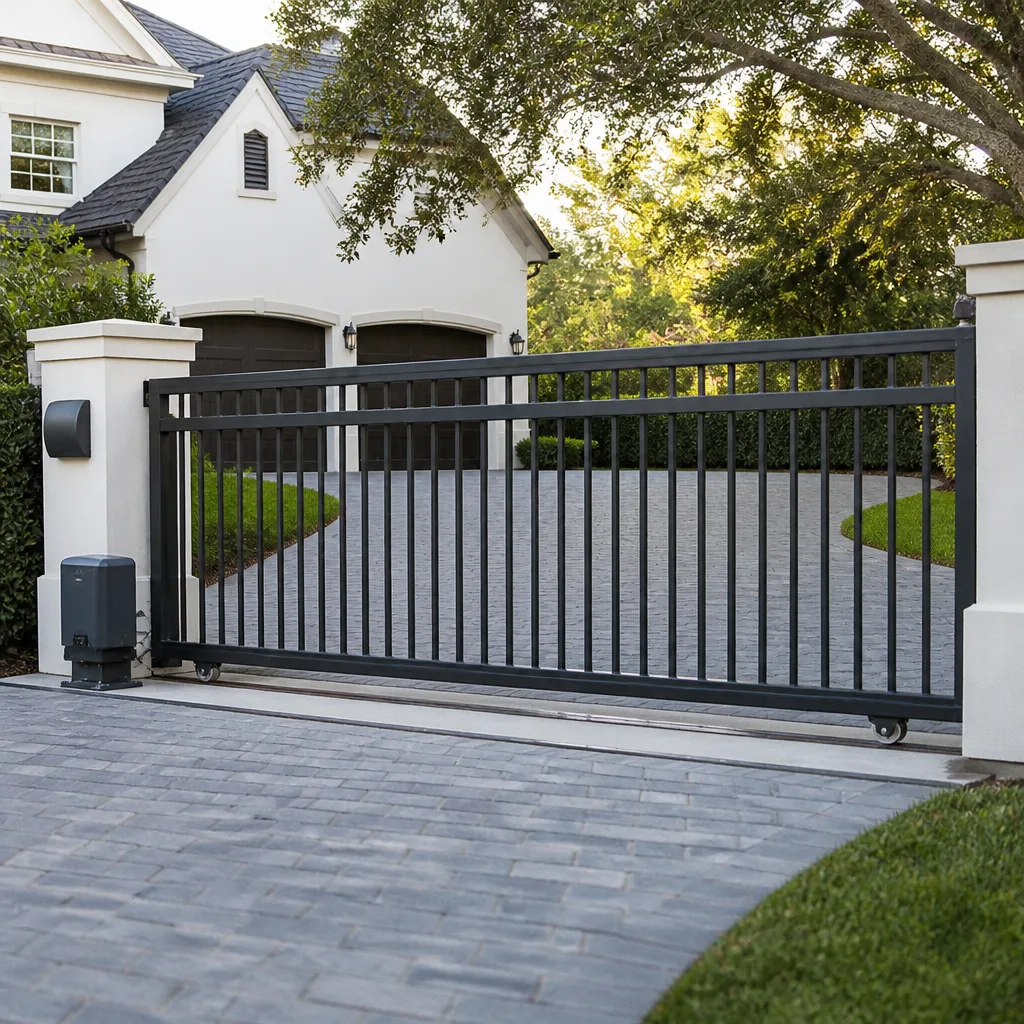 Sliding driveway gates
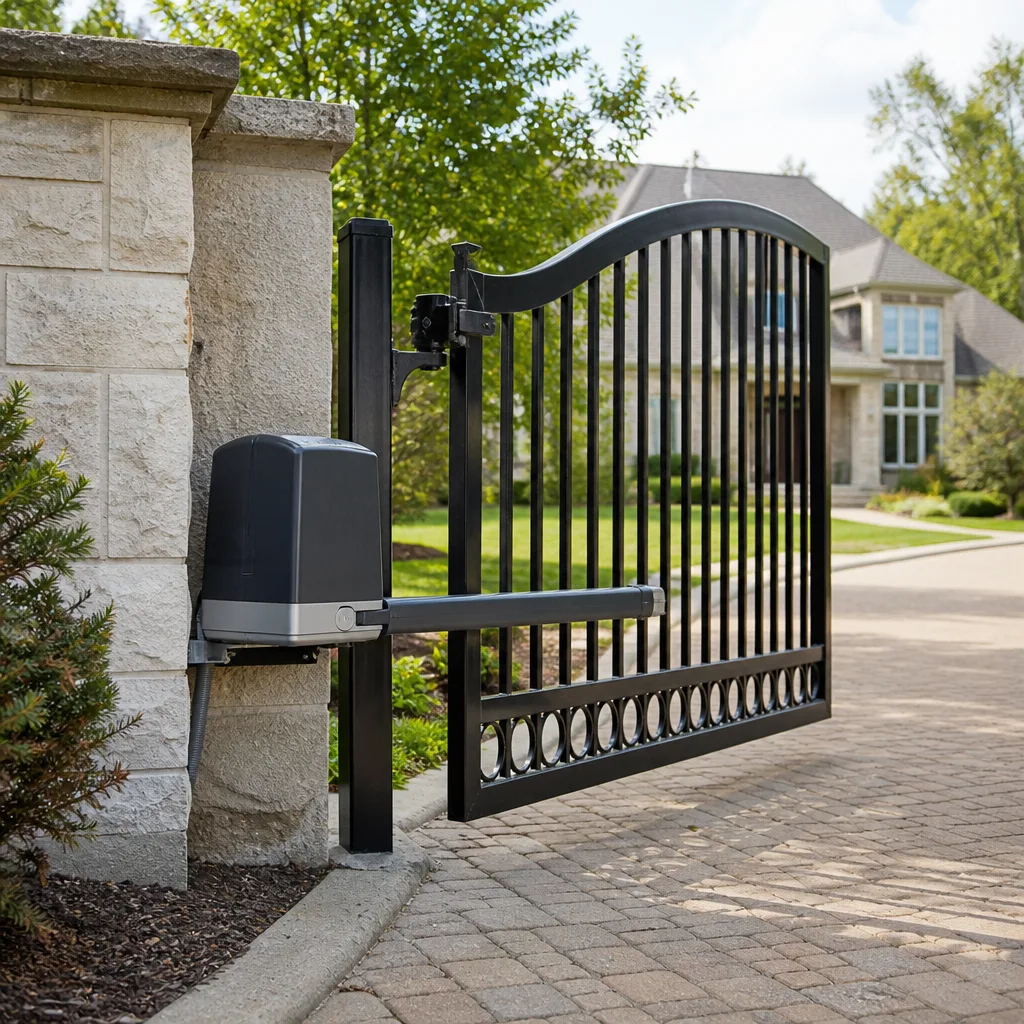 LiftMaster operators
Free on-site gate assessment - hinges, posts, and your LiftMaster or Nice gate operator checked before anything is quoted
The assessment is free and the quote is the invoice.
Get your free estimateGate Repair Permits, Codes & Inspections in Suffolk, VA: What You Need to Know
Most homeowners assume gate work is permit-free. It usually is, until the job stops being a repair. The moment an operator swap touches the electrical circuit, a post moves, or a fence line shifts in a review district, you’ve left maintenance behind and entered permitting territory. That distinction matters because unpermitted electrical work on a gate operator can surface years later during a home sale or an insurance claim, and the fix then costs far more than the permit would have. In this guide we’ll walk through what triggers a permit in Suffolk, which zoning overlays add a second layer of review, how HOA covenants stack on top of city code, and how to get a definitive answer from the city before anyone picks up a wrench.
Quick Answer
In Suffolk, VA, routine gate and operator repair generally does not require a building permit, but work that alters the electrical connection to a gate operator, changes a gate’s footprint or post locations, or modifies a fence line in an overlay or historic district commonly does. Electrical work on an operator typically falls under a Virginia electrical permit, pulled by a licensed electrician. HOA deed restrictions apply separately and can prohibit work the city allows. When in doubt, request a pre-application meeting with the city’s permits office before work starts. It’s free, and it settles the question in writing.
Styles & brands we work with
- Wrought iron
- Wood & steel frame
- Farm & ranch
- Sliding driveway gates
- LiftMaster operators
Table of Contents
- Repair vs. alteration: where Suffolk draws the line
- What a Virginia electrical permit covers for gate operators
- Zoning overlays in Suffolk that add review requirements
- HOA deed restrictions vs. city code
- How inspections work and what inspectors check
- How to request a pre-application meeting
- Keeping a permit trail for resale and insurance
Repair vs. alteration: where Suffolk draws the line
The single most useful question you can ask about any gate job is whether it’s a repair or an alteration. A repair restores something to its original working condition without changing its dimensions, its footprint or its electrical supply. An alteration changes one of those things. In most Virginia localities, including Suffolk, permits attach to alterations and not to repairs, though the exact thresholds depend on the scope of work and the property’s zoning.
Here’s how the split usually falls for gate work:
- Repair, typically no building permit: replacing a control board, swapping a photo-eye sensor, rehanging a sagging gate leaf, replacing hinges, repairing a latch, adjusting an operator’s limit switches, replacing a battery backup.
- Alteration, often permit-triggering: moving a gate post, widening an opening, adding a new gate where none existed, running new conduit or a new circuit to an operator, converting a manual gate to automated, replacing a post in a different location.
- Electrical work: any new or modified connection to the property’s electrical system, which is where the electrical permit question usually begins.
The confusion usually comes from operator replacement. If you’re swapping a failed Mighty Mule operator for a new unit on the same post, using the same existing circuit and disconnect, many jurisdictions treat that as a like-for-like replacement rather than new electrical work. If the new operator needs a dedicated circuit that isn’t there, or the disconnect has to move, that’s a wiring change and the electrical permit conversation starts. Because Suffolk’s own review can depend on the specific installation, we tell homeowners to describe the job in plain terms to the permits office rather than assume. Gate repair specialists in Suffolk deal with this question often, and the answer is almost always faster to get than to guess at.
What a Virginia electrical permit covers for gate operators
A Virginia electrical permit covers the wiring that supplies and controls a gate operator: the circuit from the panel, the disconnect, the conduit run, the low-voltage control wiring, and the bonding and grounding of the operator’s enclosure. It does not cover the mechanical side of the gate. That’s the clean division. The electrical permit is about power and safety, not about whether your gate swings straight.
Virginia ties electrical work to licensure in a way that matters here. Electrical work that requires a permit generally has to be performed or supervised by a licensed electrical contractor. That’s why some operator installations need an electrician involved even when the gate itself is a straightforward mechanical job. The situations where this comes up most:
- New operator on an existing gate with no prior power. A circuit has to be run from the panel to the gate location, which is electrical work requiring a permit and a licensed electrician.
- Operator upgrade that outgrows the existing circuit. A commercial-grade unit like a DoorKing slide operator often draws more than a residential circuit was set up for, and the supply has to change.
- Disconnect or emergency-stop relocation. If the safety disconnect moves to accommodate a new operator, that’s a change to the electrical installation.
- Repair after water intrusion or a lightning surge. Replacing a control board is typically repair. Replacing damaged conduit, a wet disconnect or burnt supply conductors crosses into electrical work.
Here’s the practical point: a gate specialist can diagnose and repair the operator and the control board, but the circuit itself belongs to the electrician. That’s not a limitation, it’s how the trade is divided, and it protects you at inspection time. Ask any contractor you hire which side of that line their scope stops at. If they can’t answer clearly, that’s a sign they haven’t done much permitted operator work.
Zoning overlays in Suffolk that add review requirements
Suffolk is a large, varied city, and a fence or gate that sails through in one part of town can require additional review in another. The reason is overlay districts. Overlays sit on top of the base zoning and add design or review requirements for specific areas, most often historic districts, waterfront properties and commercial corridors.
What this means for gate work:
- Historic districts. Modifications to fences and gates visible from the street are commonly reviewed for compatibility with the district’s character. A modern commercial operator on a historic entry gate may need review before installation, even if the mechanical work is straightforward.
- Waterfront properties. Gates and fences near shorelines can fall under additional environmental or setback review depending on how close the work sits to the water and what the underlying zoning allows.
- Commercial corridors. Access control and gate placement on commercial frontage sometimes receives site-plan review, particularly when the gate affects ingress, egress or parking layout.
The habit that saves time is to check the property’s zoning first, before you decide the job is simple. You can look up zoning through the city’s planning department, and a short call to confirm whether your address sits in an overlay is worth the five minutes. In our experience, the jobs that get delayed are rarely the complicated ones. They’re the ones where nobody checked the overlay because the work looked routine. If you’re in a historic block near downtown Suffolk or on a waterfront parcel, assume the review question needs asking and go from there.
HOA deed restrictions vs. city code
This is the part that trips up more Suffolk homeowners than any permit question. City code and HOA covenants are two separate systems, and compliance with one does not satisfy the other. A gate can be fully code-compliant and still violate your deed restrictions. The city will approve it. Your HOA can still require you to change it.
The two systems work differently:
- City code is enforced by the locality through permits and inspections. It addresses safety, structural requirements, electrical work and zoning compliance.
- HOA covenants are private contracts recorded against your deed. They often address appearance, materials, color, height, visibility from the street and whether certain equipment can be seen at all.
Where they collide in gate work is usually aesthetics and visibility. An HOA may prohibit a slide gate on a corner lot, restrict the color of an operator housing, ban visible keypads or require that a gate match a specific fence style. None of that appears in city code. Meanwhile the city may require a permit for post relocation that your HOA also restricts for an entirely unrelated reason.
So the sequence matters. Read your deed restrictions and any architectural review requirements before you order equipment, then handle the city permitting question, then schedule the work. Doing it in that order means you’re not stuck with an operator you can’t legally install or a gate design your HOA will make you tear out. As Gate Repair Suffolk, we’ve walked homeowners through both sides of this, and the HOA side is usually the stricter one. If you’re unsure what your covenants say, your HOA management company or the recorded declaration will tell you.
How inspections work and what inspectors check
When a permit is required, an inspection is scheduled after the work is complete and before the installation is closed out. For gate operator work, the electrical inspection is the main event. Inspectors look at a consistent set of items, and knowing them ahead of time keeps the appointment from turning into a second visit.
- The circuit and disconnect. The supply circuit must match the operator’s requirements, and a means of disconnecting power must be present and accessible.
- Grounding and bonding. The operator enclosure and any metal components that could become energized need proper bonding. This is one of the most common correction items on gate installations.
- Conduit and connections. Exposed wiring must be protected, and connections at the operator and at any junction must be made in a way that keeps water out.
- Entrapment protection. For automated gates, the safety devices that stop or reverse the gate when something is in its path are part of the installation and are checked. Photo-eyes, safety edges and loop detectors all fall in this category.
- Permit and plans on site. The approved permit and any submitted documentation should be available for the inspector.
The entrapment protection item deserves emphasis. Automated gates are heavy, and a slide gate that keeps traveling with a person in its path is a genuine crush hazard. Safety edges and photo-eyes are not accessories, they’re the reason the installation is safe, and an inspector will treat them that way. If your existing gate lost a safety edge years ago because it kept getting bumped, replace it rather than leave it off.
The mechanical side of gate work isn’t typically inspected the way the electrical side is, which is worth understanding when you’re deciding who to call. An operator and control board repair on a Ghost Controls or Elite unit is usually mechanical and electronic diagnosis rather than permitted electrical work. A new circuit to a relocated gate is electrical work, full stop.
How to request a pre-application meeting
The single best move before any ambiguous gate project in Suffolk is a pre-application meeting with the city’s permits office. It’s a short conversation where you describe the work and the city tells you, before anything is built, whether a permit or additional review applies. That’s worth far more than a guess, because unpermitted work discovered later tends to cost more than the permit ever would have.
Here’s how to prepare so the meeting actually answers your question:
- Write a plain description of the work. “Replacing an existing slide operator on the same post, same circuit” is a different answer from “adding an operator to a manual gate with new power.” Be precise about what changes and what stays.
- Bring the property address and zoning. Confirm whether the parcel sits in an overlay district, historic district or waterfront area before you walk in.
- Bring the site plan or a simple sketch. Show where the gate is, where the posts are, where the power comes from and where the disconnect sits.
- Name the equipment. The operator model tells the city what the electrical load looks like and whether the installation is commercial or residential in scope.
- Ask specifically about the electrical permit. Confirm whether the work falls under a Virginia electrical permit and who is required to pull it.
- Ask about the inspection path. What gets inspected, and when does the permit get closed out?
Bring the answers home in writing if you can. A note from the city saying the work is repair rather than alteration is useful documentation later, whether you sell the house, refinance or file an insurance claim. It costs you an hour and takes a lot of uncertainty out of the project.
Keeping a permit trail for resale and insurance
Permits feel like paperwork until they don’t. The moment a buyer’s lender or an insurance adjuster asks about your gate electrical work, the permit and the inspection record become the fastest way to close the question. Without them, the work has to be verified retroactively, which means a second inspection and a delay you didn’t plan for.
What to keep:
- The permit number and the final inspection sign-off for any electrical work on an operator.
- The installing contractor’s name and invoice for any new gate or operator, showing the brand and model.
- Any HOA architectural approval letters for gate or fence changes.
- Service records for operator repairs, especially control board and safety device replacements.
This is a small habit that pays off. We recommend a simple file, digital or paper, holding the permit documents and every service invoice for the gate system. When a future buyer’s inspector asks whether the operator was permitted, you hand over a folder instead of a phone call to a contractor who may no longer be in business. Because we can work with any of the major brands, including DoorKing and Elite operators, service records also help a future technician pick up where the last one left off without re-diagnosing a solved problem. If you need gate repair and want the paperwork handled cleanly from the start, that’s part of what we do.
Common Mistakes to Avoid
- Assuming a new operator never needs a permit. The operator itself may not, but a new circuit to run it almost certainly does. Ask about the electrical side separately from the mechanical side.
- Moving a post without checking zoning. Relocating a gate post changes the footprint, and in an overlay district that can trigger review even when the gate itself looks unchanged.
- Getting city approval and stopping there. Your HOA covenants can be stricter than city code. Read the deed restrictions before ordering equipment, not after.
- Letting a contractor handle electrical work without the license for it. Virginia ties permitted electrical work to licensed electrical contractors. Confirm who’s pulling the permit and who’s doing the wiring.
- Skipping entrapment protection to save a few dollars. Automated gates are heavy, and a missing safety edge or photo-eye is a real hazard, not a technicality inspectors overlook.
- Throwing away the inspection paperwork. A permit sign-off is worth very little the day it’s issued and a great deal at closing or during an insurance claim. File it.
- Starting the job before checking the property’s zoning district. A historic block near downtown Suffolk has different rules from a rural parcel. Five minutes of lookup prevents a rebuild.
See the difference
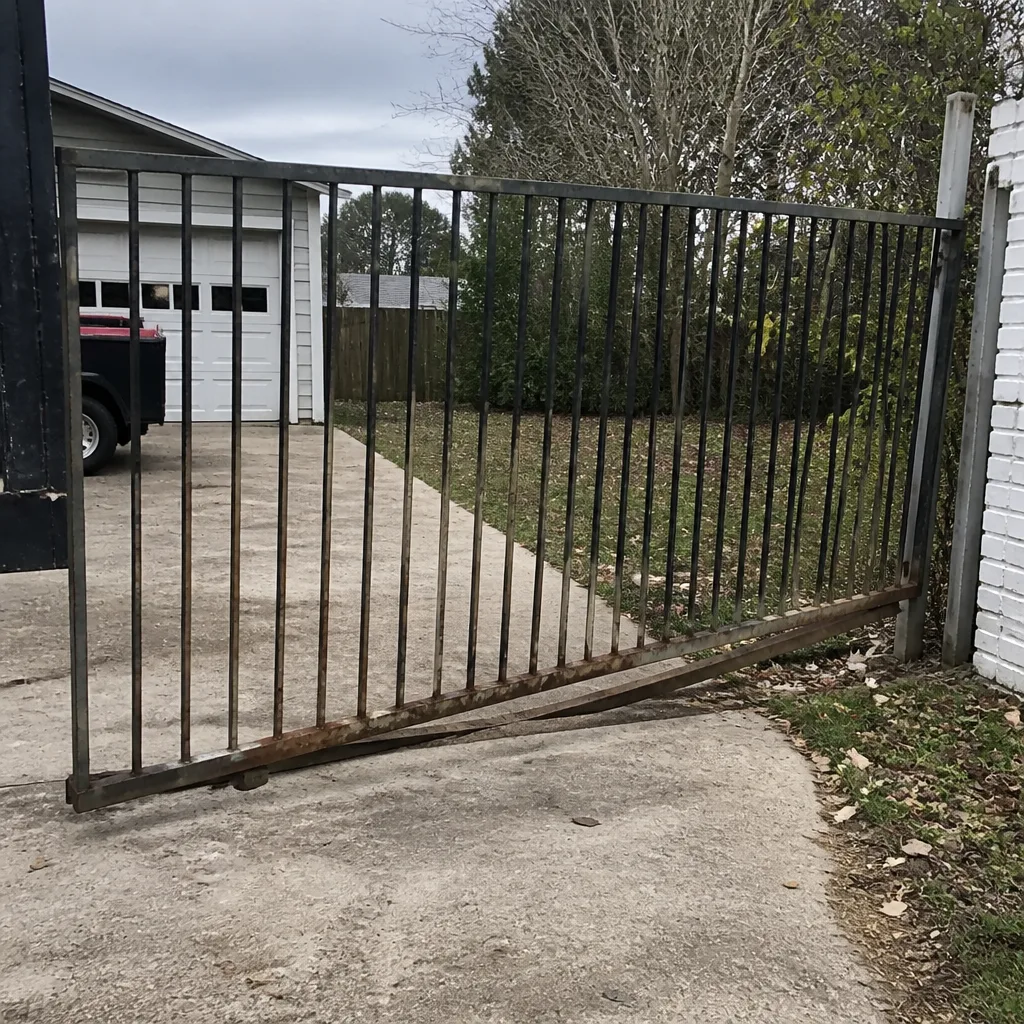 Before
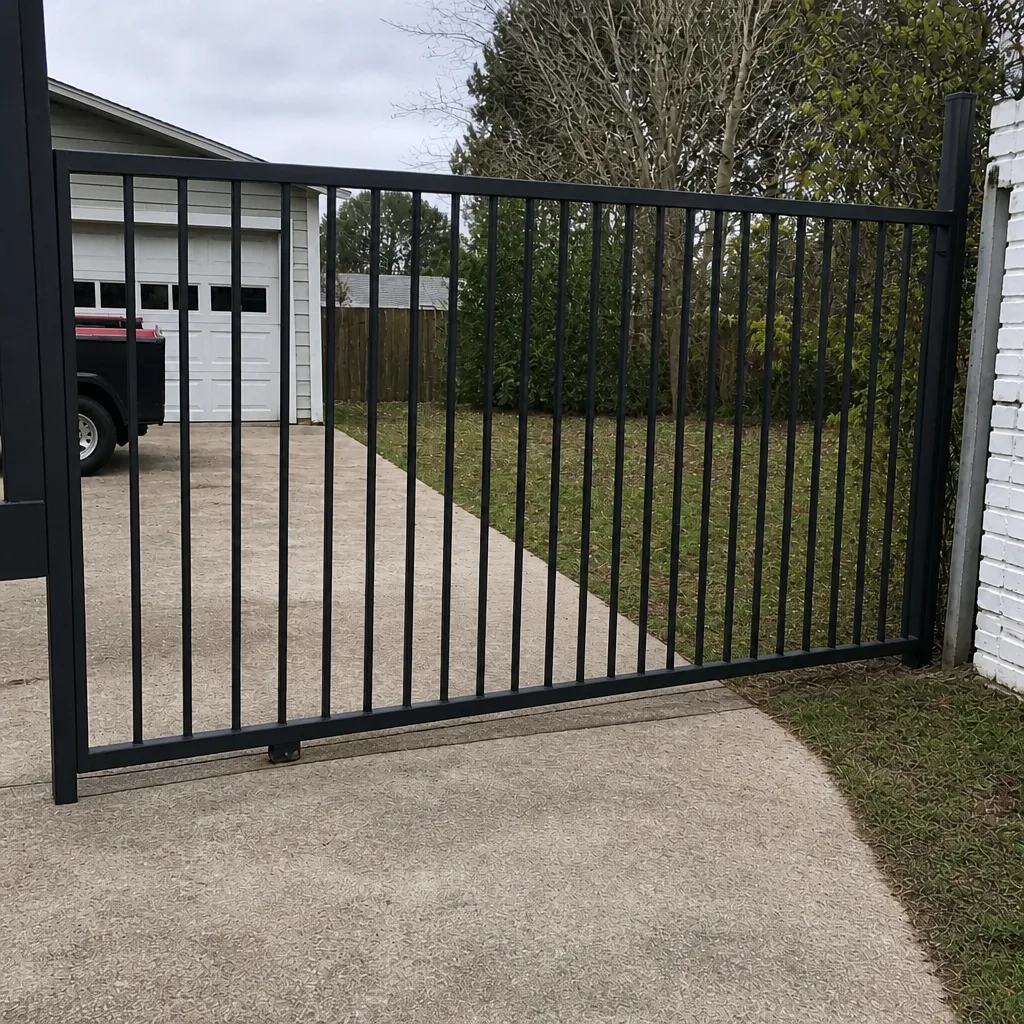 After
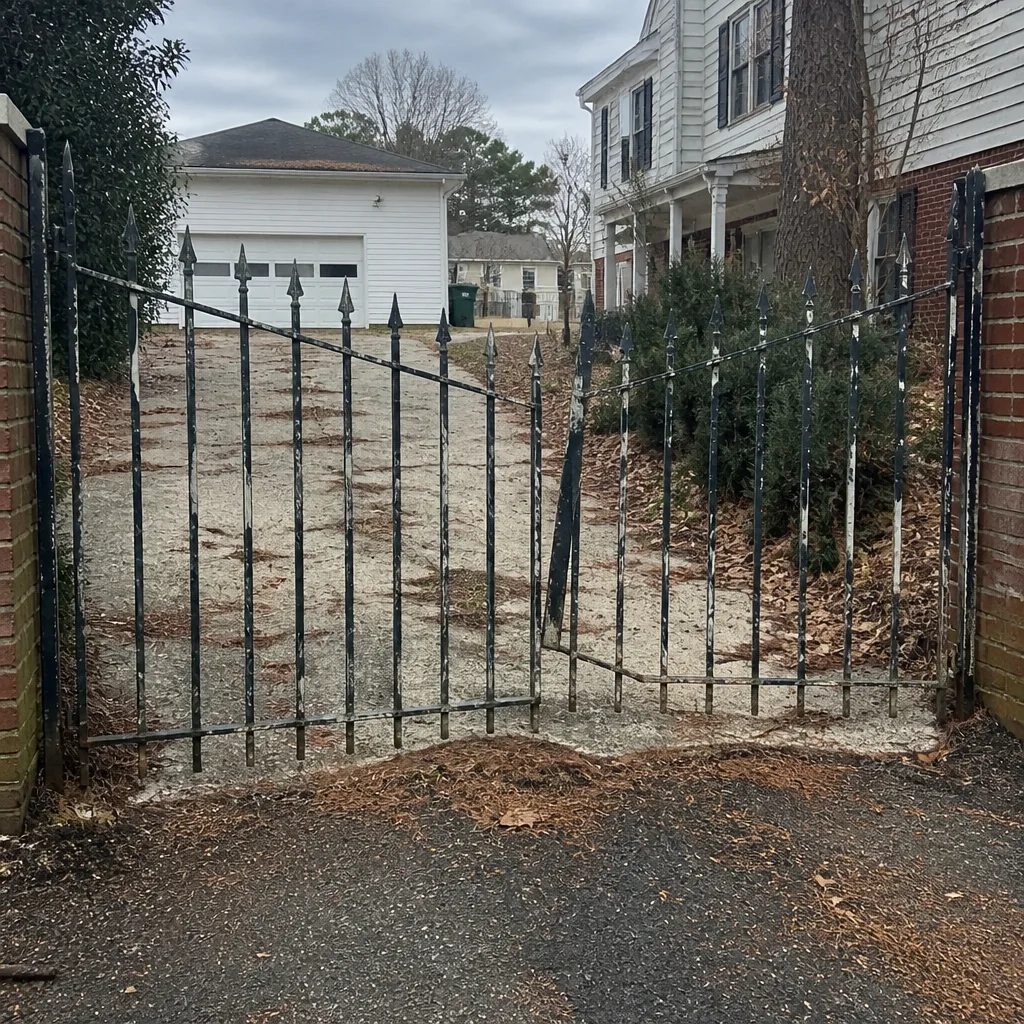 Before
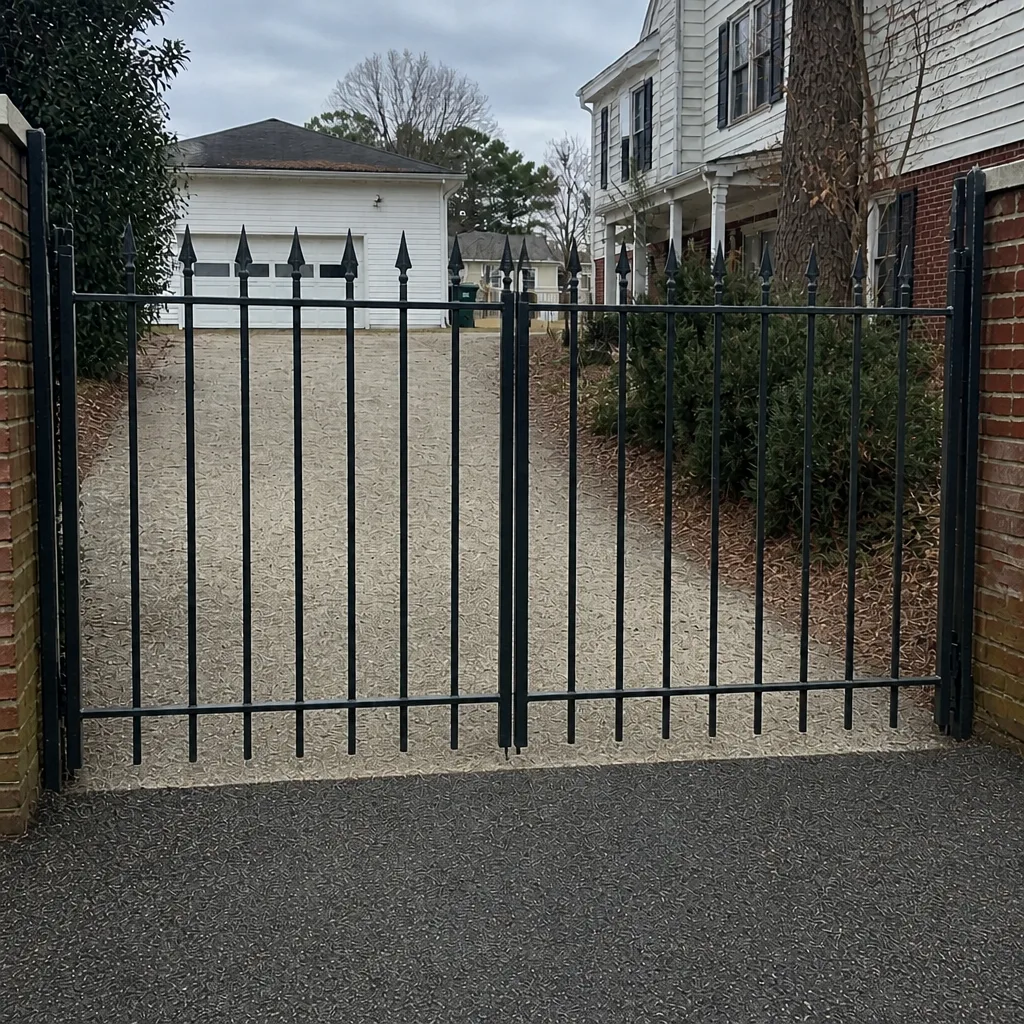 After
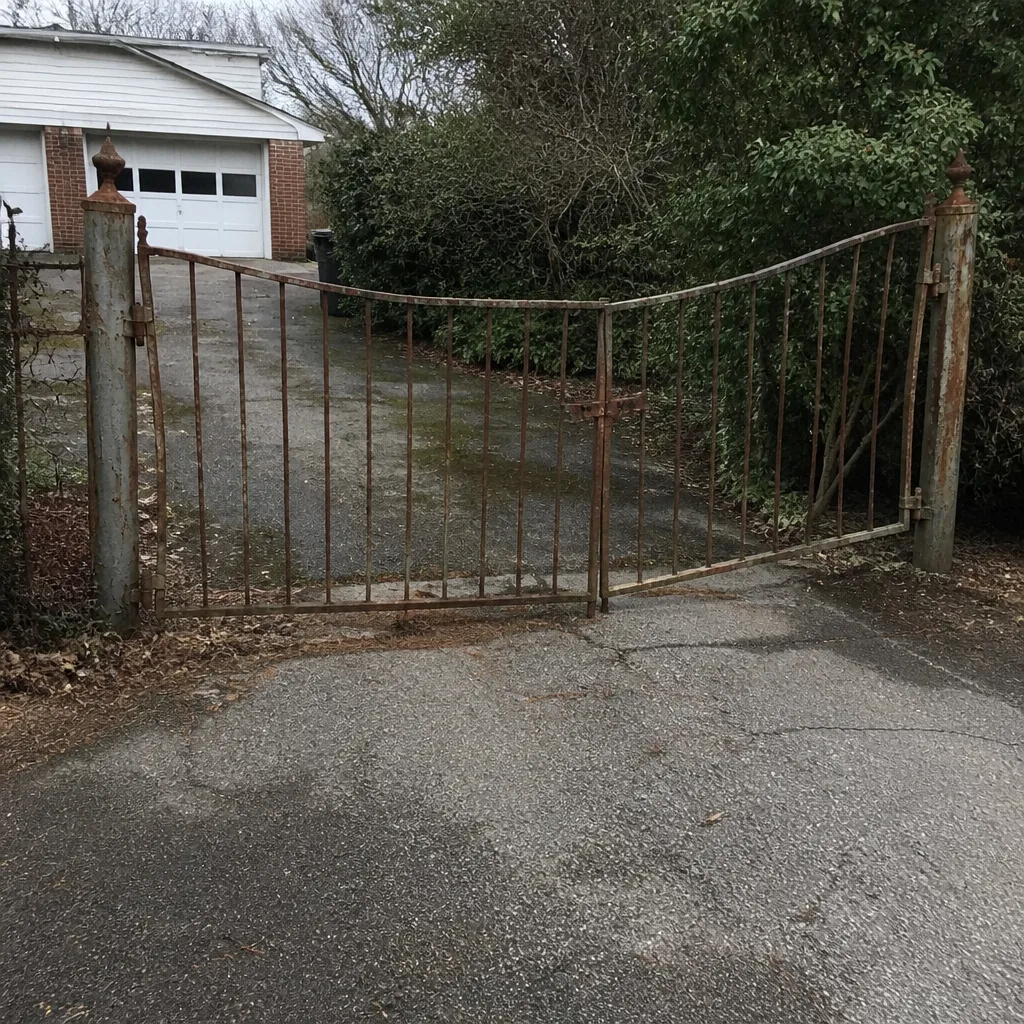 Before
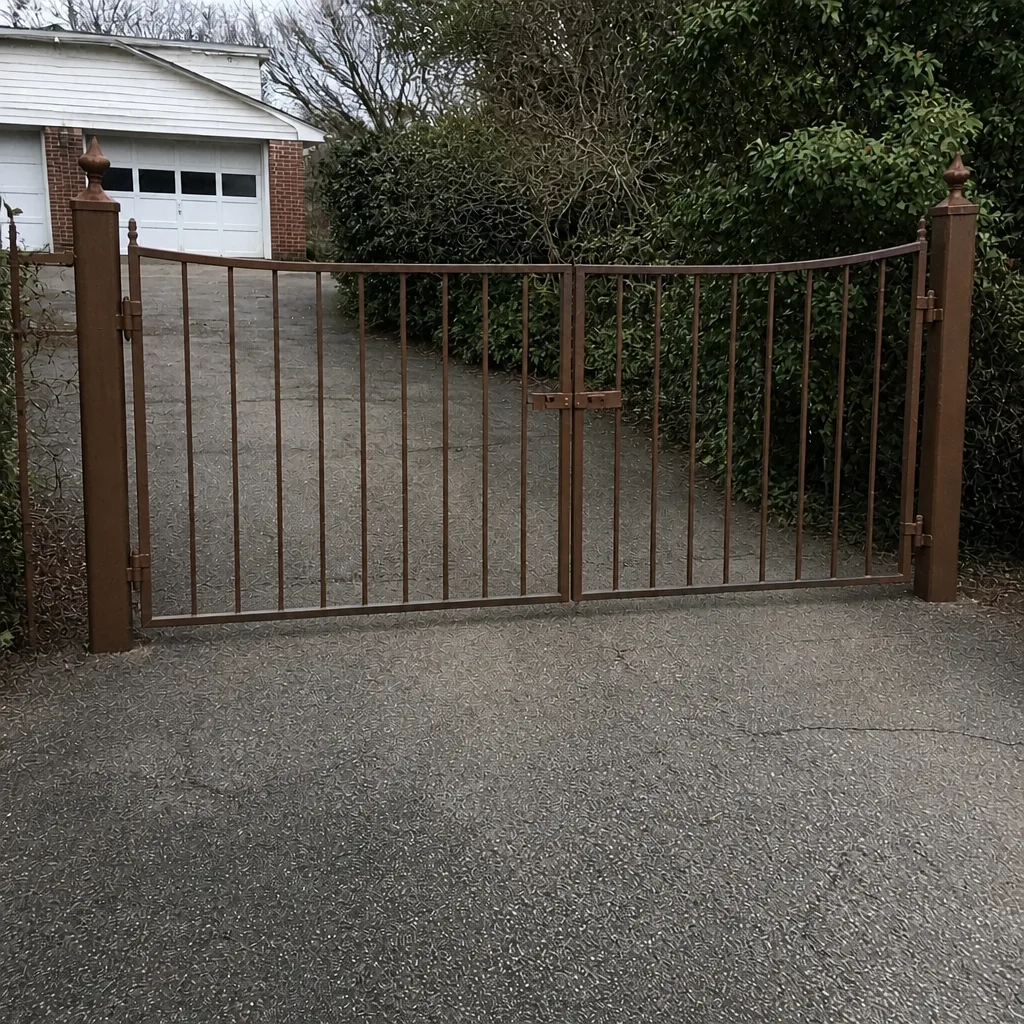 After
When to Call a Professional
If your gate involves an electric operator, a control board you can’t identify, a safety edge that’s stopped working, a post that’s shifted, or any question about whether the work needs a permit, it’s time for a professional. The dangerous parts of gate work are the operator’s power supply, heavy gate panels that can crush, and slide gates that come off the track. Those are not weekend projects. A trained technician can diagnose the system, tell you clearly which side of the repair-versus-alteration line your job falls on, and let you know when the electrical work needs a licensed electrician. Gate Repair Suffolk offers free estimates in Suffolk: call (855) 360-8054. We answer 24/7. Fast dispatch is available from 7am to 7pm, Sunday through Friday.
Frequently Asked Questions
Routine gate repair in Suffolk generally does not require a building permit, but alterations to the electrical connection, post locations or fence lines often do. Replacing a control board or a hinge is repair; running a new circuit or moving a post is an alteration. When the scope is ambiguous, request a pre-application meeting with the city’s permits office before work begins. Call (855) 360-8054 for a free estimate on the repair itself.
Yes, when the work involves new or modified wiring to the electrical system. A Virginia electrical permit covers the supply circuit, the disconnect, conduit and the grounding and bonding of the operator enclosure, and permitted electrical work generally has to be done by a licensed electrical contractor. A like-for-like operator swap on an existing circuit is a different question from running new power, so describe the job precisely. Call (855) 360-8054 and we can tell you which side of that line your project sits on.
Yes. City code and HOA deed restrictions are separate systems, and complying with one doesn’t satisfy the other. An HOA can restrict gate style, color, height, visibility from the street or operator placement even when the city has approved the installation. Read your recorded declaration and any architectural review requirements before ordering equipment. For help understanding the mechanical side of a planned change, call (855) 360-8054.
The electrical inspection focuses on the circuit, the disconnect, grounding and bonding, conduit and connections, and entrapment protection. Safety edges, photo-eyes and loop detectors are checked because an automated gate is heavy enough to injure someone if it keeps moving on an obstruction. The approved permit should be on site. Call (855) 360-8054 if your operator’s safety devices aren’t working and you want them diagnosed before an inspection.
Look up the zoning for your parcel through the city’s planning department, then ask whether an overlay applies. Historic districts, waterfront areas and commercial corridors commonly carry additional review for fence and gate changes. It’s a short call and it prevents a rebuild. If the overlay question is settled and the gate itself needs work, call (855) 360-8054 for a free estimate.
Call a gate specialist who diagnoses operators and control boards rather than a general fencing contractor, and confirm the electrical contractor handles any permitted wiring. Our technicians have up to 10 years of experience and work on LiftMaster, FAAC, BFT, Linear, Viking, Ghost Controls, DoorKing, Elite and Mighty Mule systems, so we diagnose your existing brand rather than pushing a replacement. For electric gate repair, call (855) 360-8054. Estimates are free, and the price is agreed before any work starts.
The Bottom Line
Gate work in Suffolk mostly isn’t a permitting question until it becomes one, and the triggers are predictable: new or modified electrical work, moved posts, changed footprints, and any fence line change inside an overlay district. Handle the questions in order. Check your zoning, read your deed restrictions, then call the city about permits, then schedule the work. Keep the paperwork. The gate system itself is a separate matter from the code, and when the operator, the control board or the mechanical side needs attention, that’s a job for a gate specialist who knows your brand. We’re a Suffolk gate-only service, and we can work with your existing system rather than replacing it.
Call (855) 360-8054 for a free estimate. We answer 24/7, with fast dispatch from 7am to 7pm, Sunday through Friday.
Written by the team at Gate Repair Suffolk.