
Last updated November 15, 2026
 Wrought iron
 Wood & steel frame
 Farm & ranch
 Sliding driveway gates
 LiftMaster operators
Free on-site gate assessment - hinges, posts, and your LiftMaster or Nice gate operator checked before anything is quoted
The assessment is free and the quote is the invoice.
Get your free estimateGate Repair Warning Signs: A Suffolk Homeowner’s Reference Guide
A gate that hesitates for two seconds before it moves isn’t “a little slow.” That pause is a specific symptom, and it points to one of three things: a backup battery losing its charge, a failing capacitor, or an obstruction sensor triggering when it shouldn’t. Each has its own repair path and its own cost. The gate is telling you which part is under stress before it quits entirely. Homeowners in Suffolk read the slow gate correctly about as often as they read the grinding one, which isn’t often, and that’s why gates fail with a car stranded on the wrong side. This guide decodes the signals: the sounds, the motion patterns, the control failures, and the structural clues, so you can describe the problem accurately and know when a service call can wait and when it can’t.
Quick Answer
Gate repair warning signs fall into four groups: unusual sounds (grinding, clicking, humming without movement), motion problems (hesitation, stopping mid-travel, reversing unexpectedly), control failures (remote works but keypad doesn’t, or the reverse), and structural changes (sagging, widening hinge gaps, post movement). Sounds and control failures usually point to the operator or electrical side. Motion and structural issues point to mechanics. Any gate that reverses on its own, drops suddenly, or moves while someone is standing in its path is an immediate safety call; the rest can usually be scheduled within 30 days.
Styles & brands we work with
- Wrought iron
- Wood & steel frame
- Farm & ranch
- Sliding driveway gates
- LiftMaster operators
Table of Contents
- What the Sounds Tell You
- Motion Patterns and What They Mean
- Control Failures: Remote vs. Keypad
- Structural vs. Electrical Warning Signs
- How Suffolk Humidity Shows Up in Gate Warnings
- Immediate Safety Risks vs. Planned Service
- What to Document Before You Call
- Common Mistakes to Avoid
What the Sounds Tell You
A healthy gate makes one sound: the operator running, steady and even, start to finish. Anything added to that baseline is data. Grinding, clicking, humming without movement, and rhythmic knocking each trace back to a different part of the system, and telling them apart is the fastest way to a useful diagnosis.
- Grinding. Metal-on-metal grinding usually comes from worn gears inside the operator or from chain and sprocket wear on a slide gate. It gets worse under load, so it tends to appear first on the heaviest gate panel you own.
- Clicking without movement. A single click when you press the remote, then nothing, often means the control board is receiving the signal but the motor isn’t getting power. On many units it’s a relay or capacitor issue rather than a dead motor.
- Humming but not moving. The motor is trying to run and can’t. On a swing gate that’s often a bound hinge or a failed capacitor. On a slide gate it’s frequently a jammed track or a worn drive gear.
- Rhythmic knocking. A knock at a steady interval during travel usually means a loose chain, a worn sprocket, or a hinge pin working loose. It’s a mechanical warning, not an electrical one.
- Nothing at all. Silence on command points to power, battery, or the control board before it points to the motor.
Listen with the gate unloaded, meaning no car waiting, and again with the gate working against its normal weight. Sounds that only appear under load are telling you the motor or drive is straining, and those are the ones worth recording before you call.
Motion Patterns and What They Mean
Motion is where gates are most honest. A gate that hesitates, stops partway, reverses, or moves in jerks is revealing which subsystem is losing confidence, and the pattern itself narrows the cause before anyone opens the control box.
- Hesitation before moving. A pause of a second or more after the command usually points to a low backup battery, a capacitor that’s fading, or an obstruction sensor triggering intermittently. Check whether the pause is longer in cold mornings or after a power blip; if it is, the battery is the first suspect.
- Stopping mid-travel. A gate that stops at roughly the same point every time often has a physical obstruction, a misaligned track, or a limit switch that’s drifted. One that stops at random points is more likely a control board or sensor issue.
- Reversing unexpectedly. Sudden reversal is the safety system doing its job. It means the obstruction sensor, edge, or current-sensing circuit detected resistance. Treat this as a safety signal, not a quirk.
- Jerky or uneven travel. Stuttering movement usually comes from a binding hinge, a bent track, or a worn drive gear. On BFT and Linear operators we often trace jerky travel to a mechanical bind rather than the motor itself.
- Slow travel overall. If the gate moves smoothly but slower than it used to, the operator may be compensating for resistance somewhere in the mechanism, or the speed setting may have drifted after a board reset.
Note the exact position where the gate hesitates, stalls, or reverses. A technician can often reproduce the fault from that one detail in minutes instead of cycling the gate a dozen times.
Control Failures: Remote vs. Keypad
When one control works and another doesn’t, you’ve already isolated the fault to a specific part of the system. A remote that opens the gate while the keypad won’t means the operator and motor are fine and the problem lives in the keypad, its wiring, or its receiver channel. The reverse, a keypad that works while the remote fails, usually means the remote itself, its battery, or its pairing has gone wrong.
- Remote works, keypad doesn’t. Check the keypad’s power source and wiring first. On Viking and Ghost Controls systems, a keypad that’s lost its code or its connection to the receiver is a common and straightforward fix.
- Keypad works, remote doesn’t. Replace the remote battery, then try re-pairing. If a second remote also fails, the receiver in the operator is the likely culprit.
- Both work intermittently. Intermittent control at both points usually means an antenna issue, a weak receiver, or interference. Heavy metal nearby, a new outbuilding, or a changed fence line can interfere with a signal that used to reach.
- Neither works, but the gate has power. This points to the control board or the receiver. It’s the point where a diagnostic visit pays for itself, because guessing at boards gets expensive fast.
- Gate opens but won’t close from any control. That pattern almost always points to a safety device: an obstruction sensor, a safety edge, or a photo-eye that’s misaligned or dirty.
Write down which control fails and which one succeeds. That single sentence cuts diagnosis time on every brand we work on.
Structural vs. Electrical Warning Signs
The most useful split in gate diagnosis is structural versus electrical, because the two demand different skills and different parts. A sagging gate is a mechanical and post problem. A clicking operator is an electrical one. Getting the category right tells you who to call and roughly what the work involves.
Structural warning signs
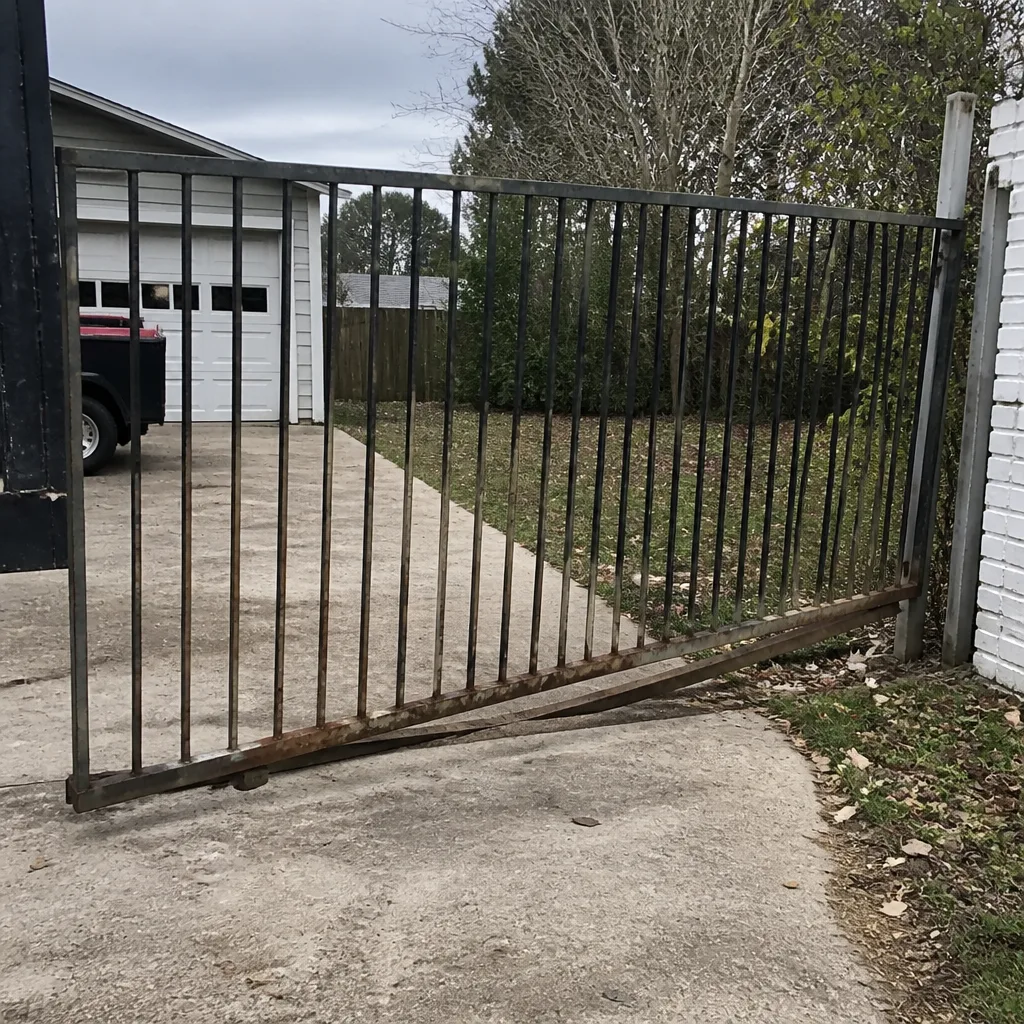
- Visible sagging on a swing gate, especially where the gate leaf hangs lower at the latch end.
- Hinge gap widening, so the gate leaf pulls away from the post over time.
- Post movement or leaning, which throws the whole gate geometry out of alignment.
- Rust at weld points or at the base of posts, where water collects.
- Track wear or a bent rail on a slide gate, causing the gate to bind as it rolls.
Electrical and mechanical warning signs
- Humming, clicking, or grinding from inside the operator housing.
- Erratic control from remotes, keypads, or both.
- Limit switches that no longer stop the gate in the right place.
- Obstruction sensors that trip without an obstruction present.
- Sudden reversal, jerky travel, or a gate that stops partway.
In our experience the two overlap more than homeowners expect: a binding hinge stresses the motor, and a strained motor stresses the board. When you describe the problem, say whether the gate looks wrong, sounds wrong, or both. “It looks fine but sounds wrong” and “it sounds fine but sags” are two very different repair paths, and getting them right on the first call saves a return visit.
How Suffolk Humidity Shows Up in Gate Warnings
Suffolk’s summer humidity and the seasonal wet-dry cycle do more damage to gate electronics than most homeowners realize, and the damage often shows up as behavior before it shows up as rust. That’s the part worth understanding: a board that’s degrading from moisture usually acts erratic first and looks corroded later, which is why “the gate is doing strange things” is sometimes a real electrical clue rather than a vague complaint.
- Erratic control before visible corrosion. Moisture on a control board can cause random opening, partial opening, or unresponsive controls while the board still looks clean from the outside.
- Battery and capacitor stress. Heat and humidity together shorten the life of backup batteries and capacitors, which is why hesitation and mid-travel stalls tend to appear in the warmer, wetter months.
- Sensor fogging and dirt. Photo-eyes and obstruction sensors can collect condensation and grime, causing false triggers and spontaneous reversal. A sensor that trips on a clear day is worth a close look.
- Hinge and track corrosion. Steel hinges, chains, and tracks corrode faster in humid weather, showing up as grinding or jerky travel before any visible rust reaches the surface.
- Connections and terminals. Moisture at wiring terminals causes intermittent control faults that come and go with the weather.
This is why we tell Suffolk homeowners that a “moody” gate is often a moisture or connection issue, not a motor on its last legs. The gate is behaving exactly as the electronics underneath it dictate. Compare the gate’s behavior on a dry week and a humid one; if the symptoms track the weather, the electrical side deserves a close look. You can read more about our approach on the electric gate repair page.
Immediate Safety Risks vs. Planned Service
Not every warning sign is urgent, and treating all of them as emergencies costs money and time. The useful question is: can this fault hurt someone or trap a vehicle, and how soon? Sort the warning signs into two groups and you’ll know whether to call right away or book a planned service visit.
Immediate safety risk, call now
- The gate reverses on its own, regardless of what’s in its path.
- A heavy gate leaf drops suddenly or falls partway.
- The safety edge or obstruction sensor no longer stops the gate.
- The gate moves while a person, child, or pet is standing in its path.
- A slide gate has come off its track or is riding at an angle.
- Wiring looks damaged, exposed, or is making a burning smell.
Planned service within 30 days
- Grinding or clicking under load, but the gate still opens and closes.
- A remote or keypad that works intermittently.
- Sagging, widening hinge gaps, or a post that’s begun to lean.
- Hesitation before movement at most pressings.
- A gate that’s slower than it used to be but still operates normally.
When in doubt, err on the side of safety, especially on any gate that could strike a person. If your gate is in the immediate risk group, call us and we’ll talk it through. We answer 24/7 and dispatch from 7am to 7pm, Sunday through Friday.
What to Document Before You Call
The best thing you can do before a technician arrives is to document the fault precisely. A short video, a photograph, and a couple of measurements turn a “something’s wrong with my gate” call into a specific diagnosis. On the phone, the difference between those two calls is the difference between a quick fix and a return visit.
- Record a short video. Show the whole gate from a fixed angle, press the control, and let the gate do its thing start to finish. Capture the whole cycle, including the failure if it happens.
- Note when it fails. Does it fail on opening, on closing, or both? Does it fail cold or warm, dry or humid? One line of notes on the pattern is worth several guesses.
- Photograph the operator, the control panel, and the warning label. A photo of the brand label tells us immediately whether it’s a Ghost Controls, Linear, BFT, or another system, and that shapes the parts and the diagnosis.
- Photograph the gate’s mechanics. Hinges, track, posts, and the sensor location. A photo of a widening hinge gap says volumes.
- Measure where the gate stops. Rough is fine. If the gate stalls at the same point, knowing where it stalls narrows the cause quickly.
- Note the control type. Say whether the failure happens with the remote, the keypad, or both, and whether it’s every press or just some.
Bring this to the call and the technician can often identify the repair before the truck pulls up. You can read more about our full gate repair approach, or start a conversation with our Gate Repair Suffolk team on the main page.
Common Mistakes to Avoid
- Treating hesitation as normal. A slow gate is telling you something is losing its edge: battery, capacitor, or sensor. Waiting until it stops moving usually costs more than fixing the hesitation does.
- Replacing the operator when the problem is a hinge. A binding hinge or worn track strains the motor and can look like operator failure. A good diagnostic checks the mechanics before the motor.
- Ignoring a gate that reverses on its own. Reversal means the safety system detected resistance, and it’s the one warning sign you should never schedule for “sometime next month.”
- Assuming erratic control means a dead board. Moisture, a weak battery, a dirty sensor, or a wiring fault all cause erratic behavior on Suffolk gates, and most of those are cheaper to fix than a new board.
- Guessing at brand parts. Fitting the wrong control board or receiver to a BFT or Linear system can cause more faults than it solves. Match parts to the brand that’s actually on your operator.
- Calling a general contractor for a motor fault. A fencing contractor can fix a sagging gate but may not diagnose a control board. For operator and electrical symptoms, start with someone who works on gate operators specifically.
- Not documenting the fault. Sounding out a vague description guarantees a slower diagnosis. A quick video and a photo of the label make the call faster and more accurate.
See the difference
 Before
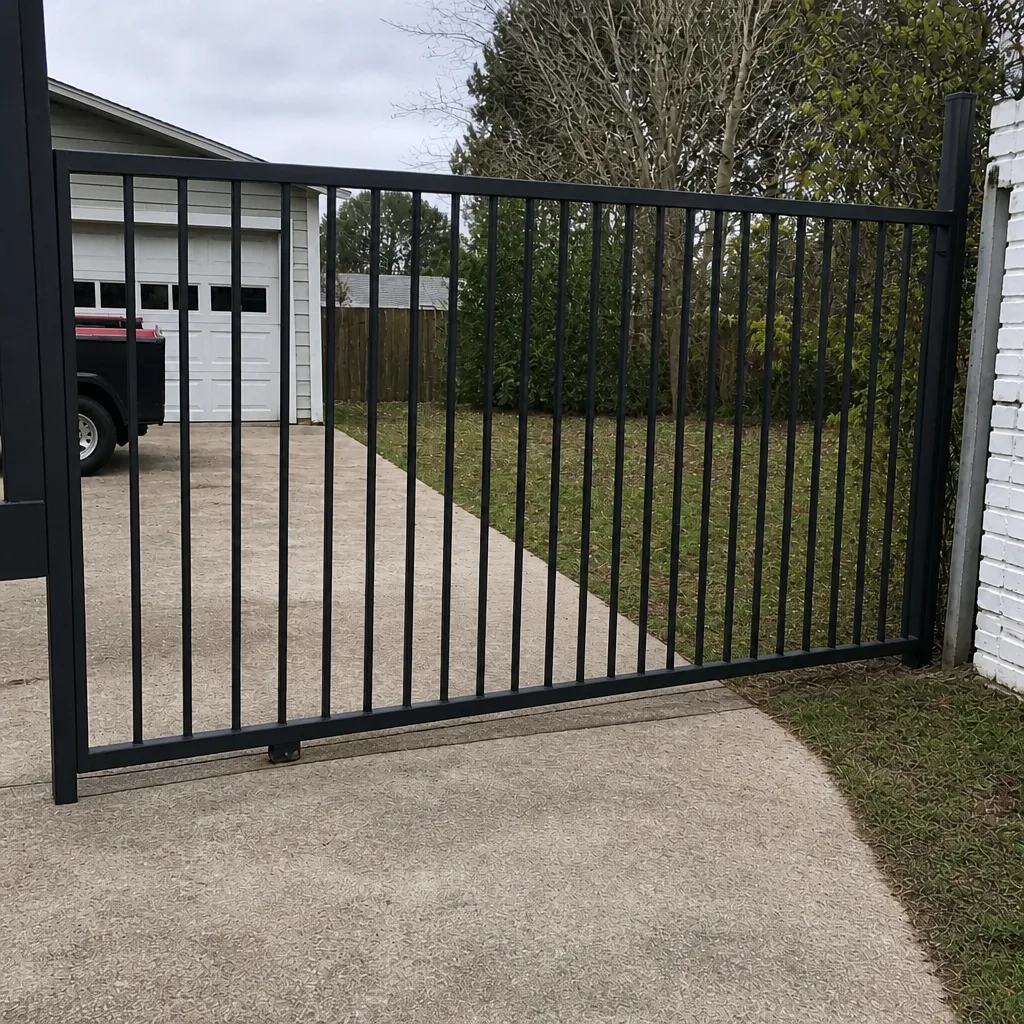 After
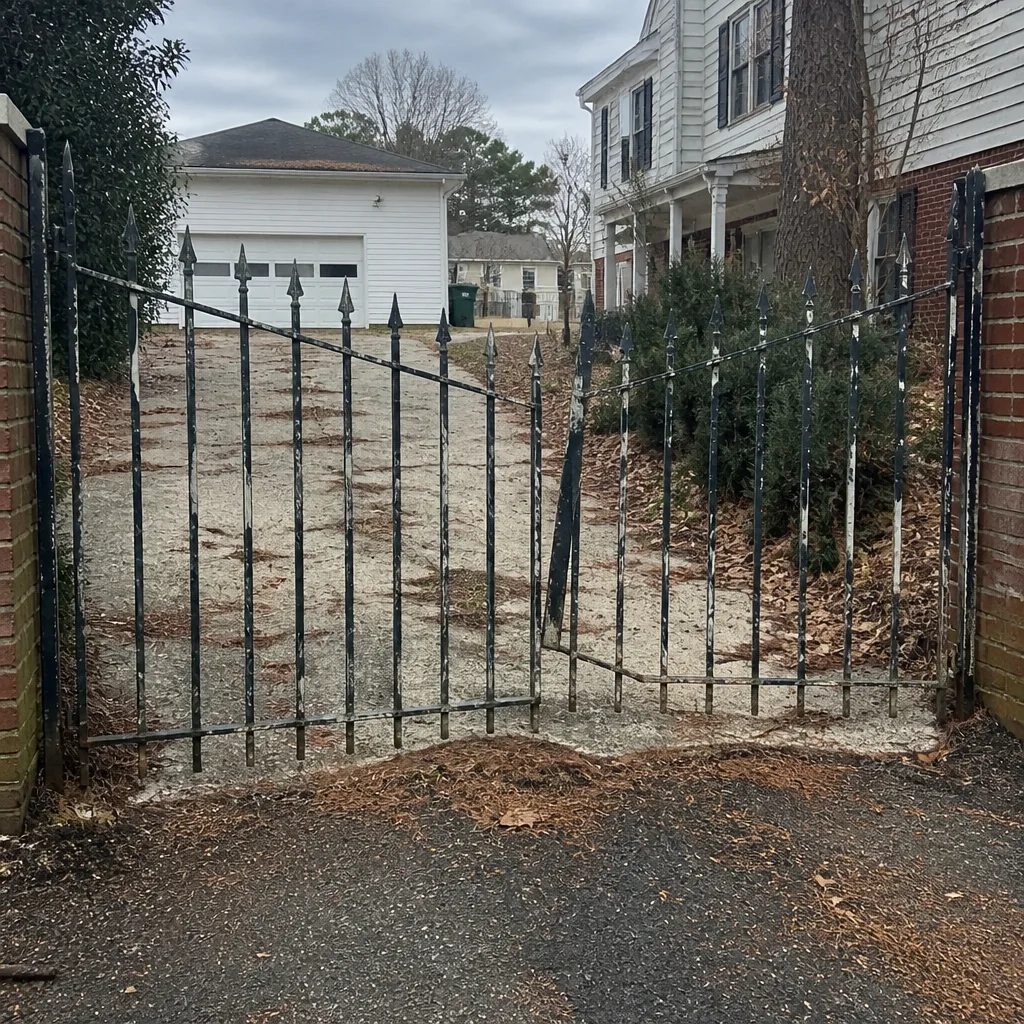 Before
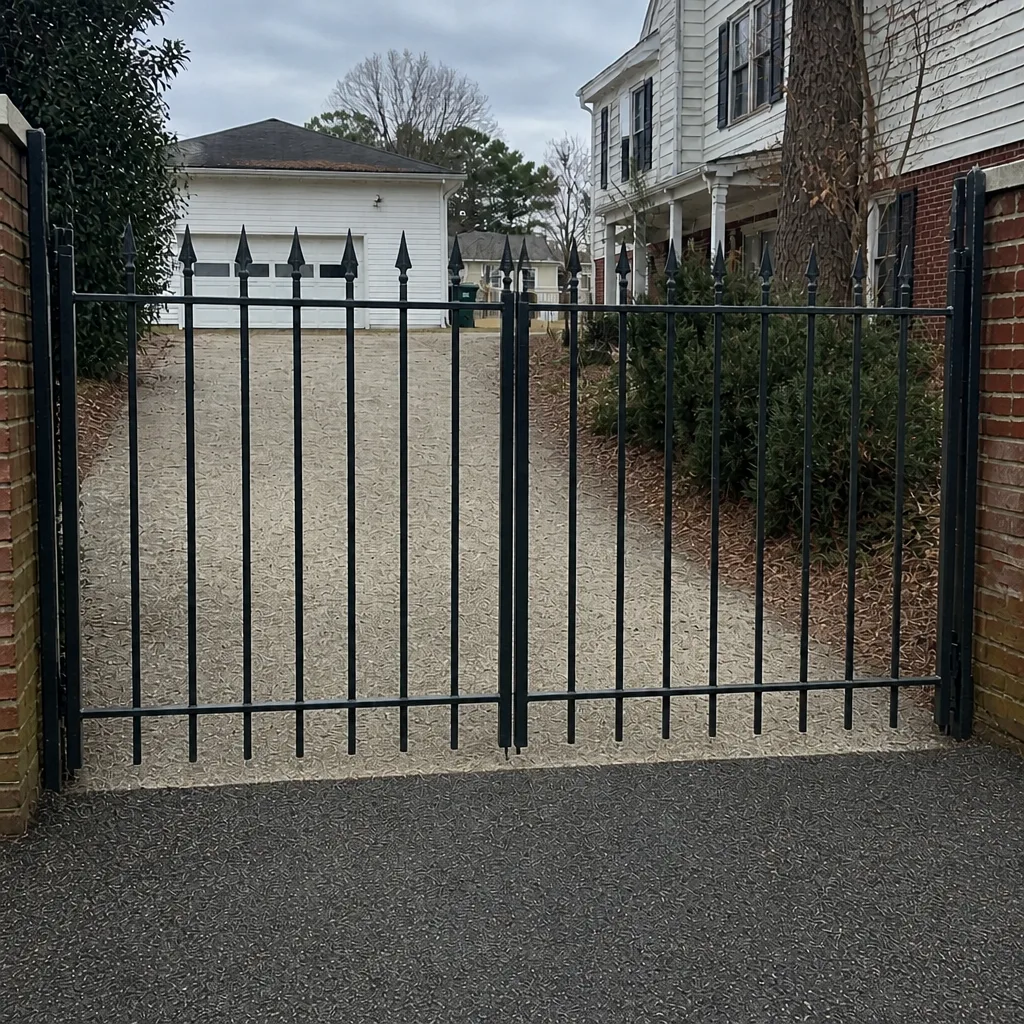 After
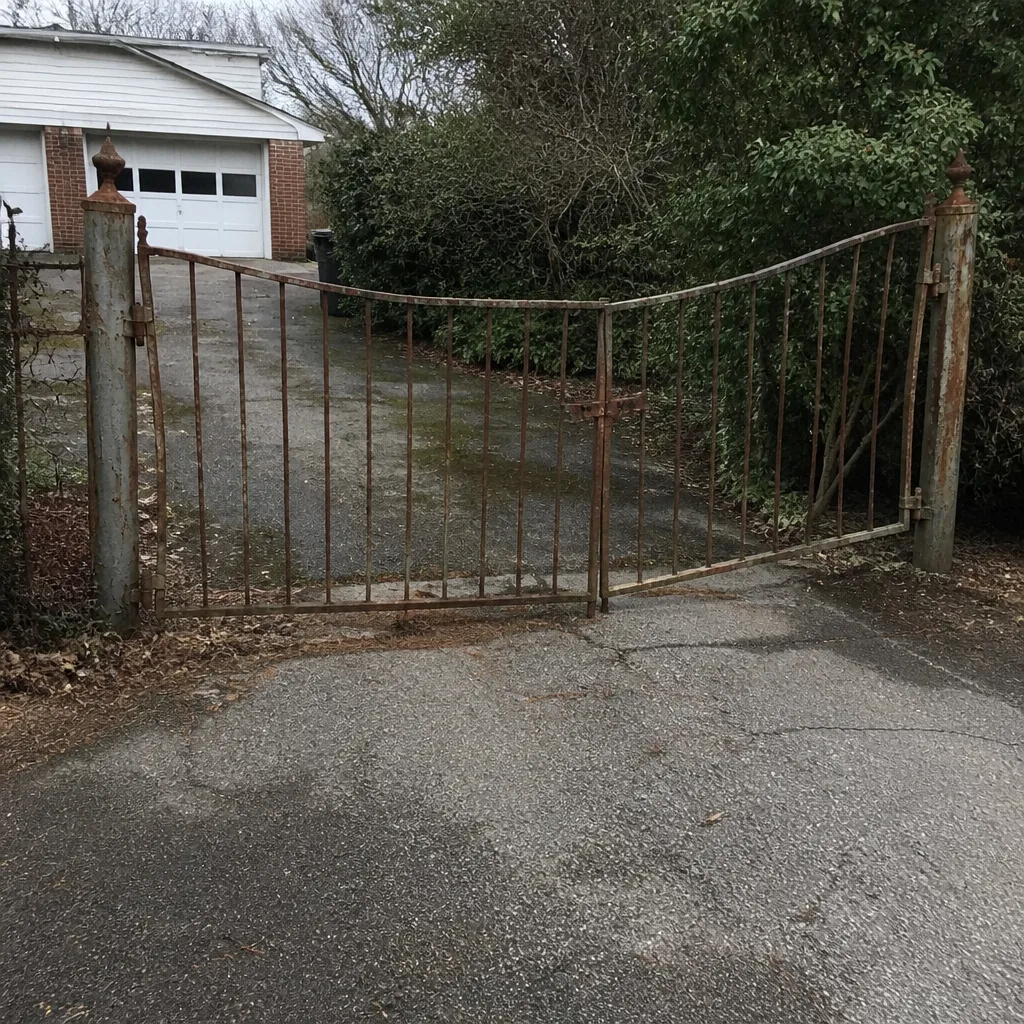 Before
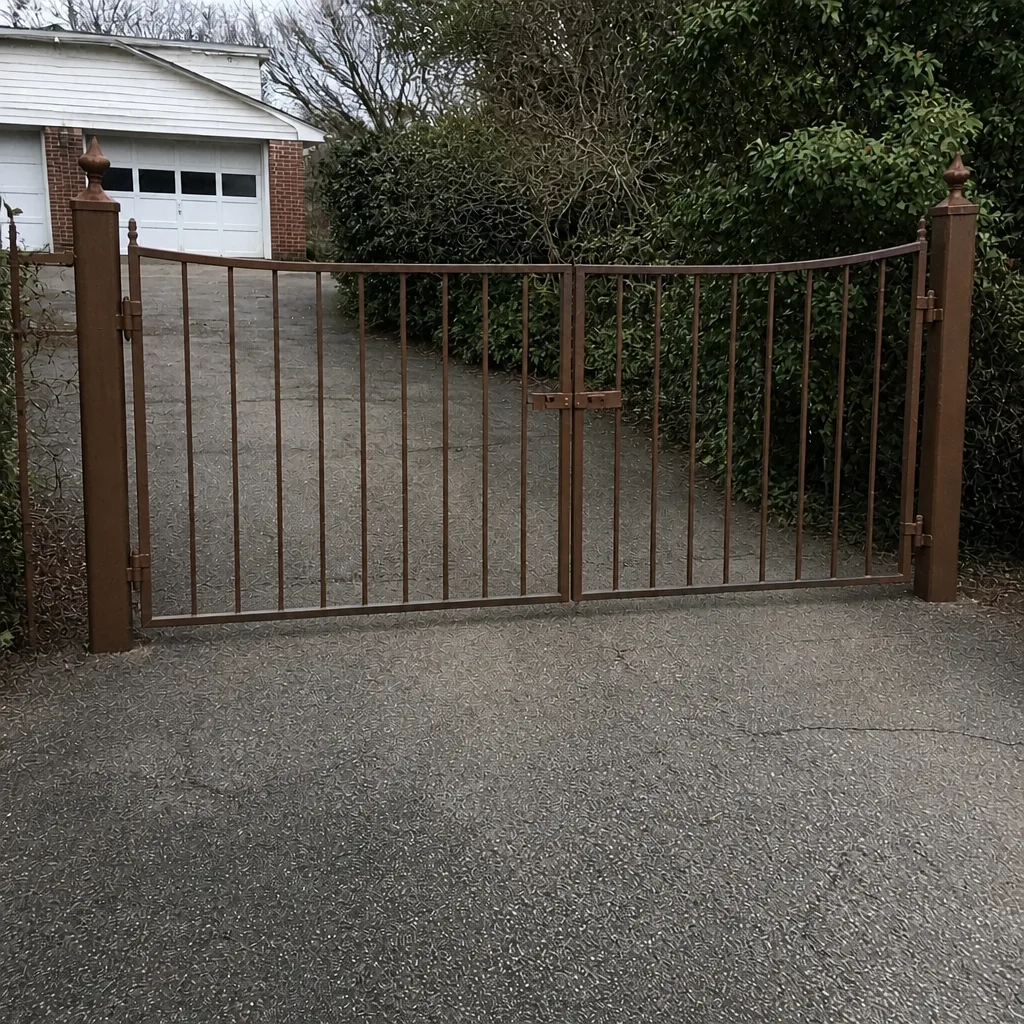 After
When to Call a Professional
Call a professional when the warning signs are electrical, safety-related, or have been showing up on more than one control point. If the gate reverses on its own, drops, or moves while someone is in its path, call right away. If the motor hums but doesn’t move, if both the remote and keypad fail, if a control board is a suspect, or if the gate has been doing strange things for weeks, a diagnostic visit is cheaper than a full failure. For pure mechanical issues like a sagging leaf or worn hinge, a gate specialist can handle both the mechanical and the operator side in one visit. Gate Repair Suffolk offers free estimates in Suffolk. Call (855) 360-8054 to book a diagnostic and get a written price before any work starts.
Frequently Asked Questions
Hesitation before movement is the earliest sign. A gate that pauses for a second or two before it starts usually has a weak backup battery, a fading capacitor, or an obstruction sensor triggering intermittently. Those three causes have very different repair costs, so catching the hesitation early is worth far more than waiting for the gate to stop moving.
It means the motor is trying to run and can’t, so the gate is under load it can’t overcome. That usually points to a bound hinge, a worn drive gear, or a failed capacitor. It’s not a do-it-yourself fault in most cases, so it’s worth a diagnostic visit before the motor gets strained further.
Reversal means the safety system detected resistance. That’s usually an obstruction sensor, a safety edge, or a current-sensing circuit detecting something in the path. Because reversal involves the safety devices that protect people, treat it as an immediate call rather than a scheduled repair.
Yes, and it’s one of the most common causes in Suffolk. Moisture on a control board, at wiring terminals, or on a photo-eye can cause random opening, partial opening, or unresponsive controls before any visible corrosion appears. Gate behavior that tracks the weather is a strong clue that the electrical side is the problem.
No. A remote that works while the keypad doesn’t means the operator and motor are fine and the fault is in the keypad, its wiring, or its receiver channel. That’s a localized fix, not a replacement, and on Ghost Controls and Linear systems it’s often a quick repair once the fault is confirmed.
If the gate reverses on its own, drops, or moves while someone is in its path, it’s an emergency. If the gate still opens and closes but grinds, clicks, or works intermittently, it can usually be scheduled within 30 days. Call (855) 360-8054. We answer 24/7 and dispatch from 7am to 7pm, Sunday through Friday, and a free estimate sets the price before any work begins.
The Bottom Line
Gates rarely fail without warning. The hesitation, the grind, the reverse, the intermittent remote, and the sagging hinge are all information, and reading it correctly is the difference between a quick repair and a stranded car or a safety incident. In Suffolk, humidity makes electrical symptoms show up before visible corrosion, so erratic behavior deserves a serious look, not a shrug. Document the fault with a video, a photo of the operator label, and a note on when it happens. Call early when the signs are electrical or safety-related. Call us for a free estimate when you’re ready to get ahead of the problem.
Get Your Gate Diagnosed
If your gate is showing any of the signs in this guide, the fastest way forward is a quick conversation. Call (855) 360-8054 for a free estimate. We answer 24/7, and fast dispatch runs from 7am to 7pm, Sunday through Friday. Our technicians have up to 10 years of experience and work on LiftMaster, FAAC, BFT, Linear, Viking, Ghost Controls, DoorKing, Elite, and Mighty Mule systems, so we can diagnose your specific brand and repair it. We’re your Suffolk gate-only specialists: repair, electric gate repair, and installation, from opener to operator to gate panel. Tell us what the gate is doing and we’ll tell you what it needs.
Written by the team at Gate Repair Suffolk.