
Last updated November 15, 2026
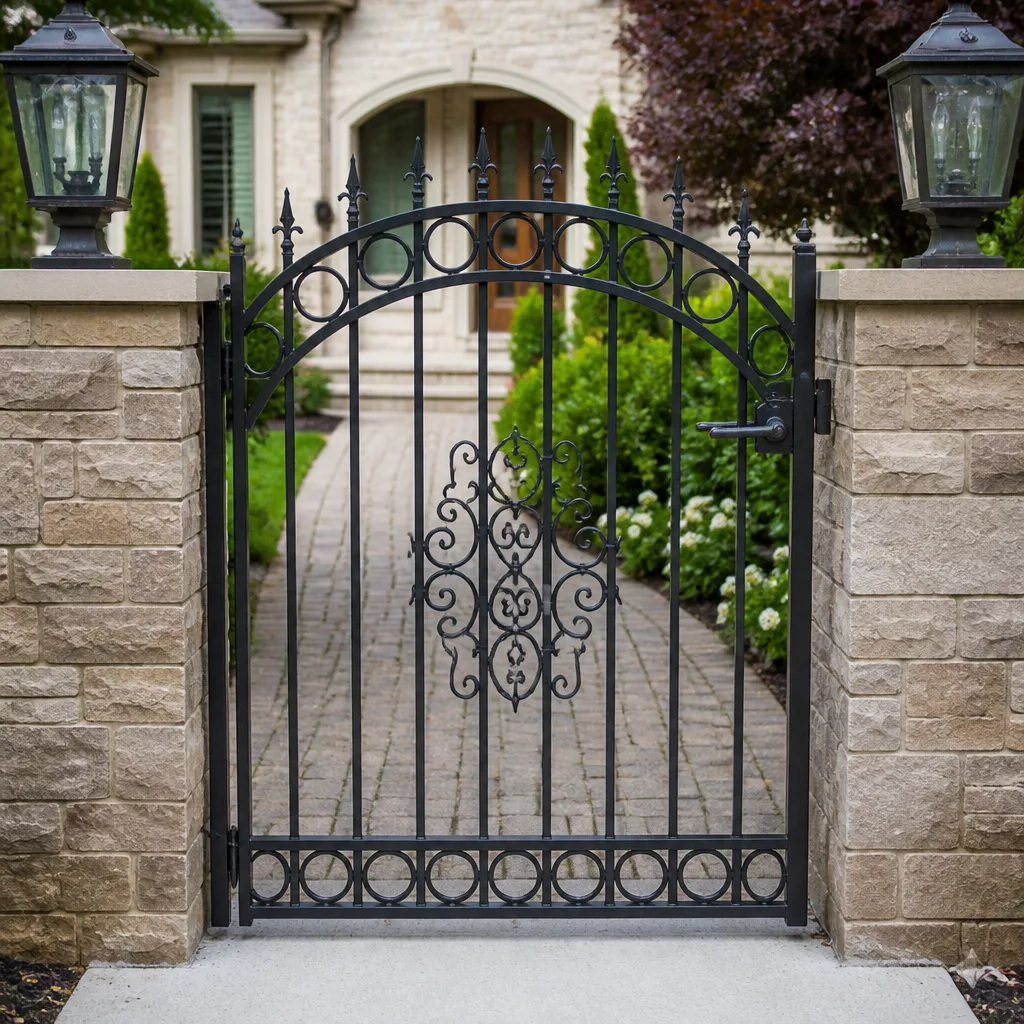 Wrought iron
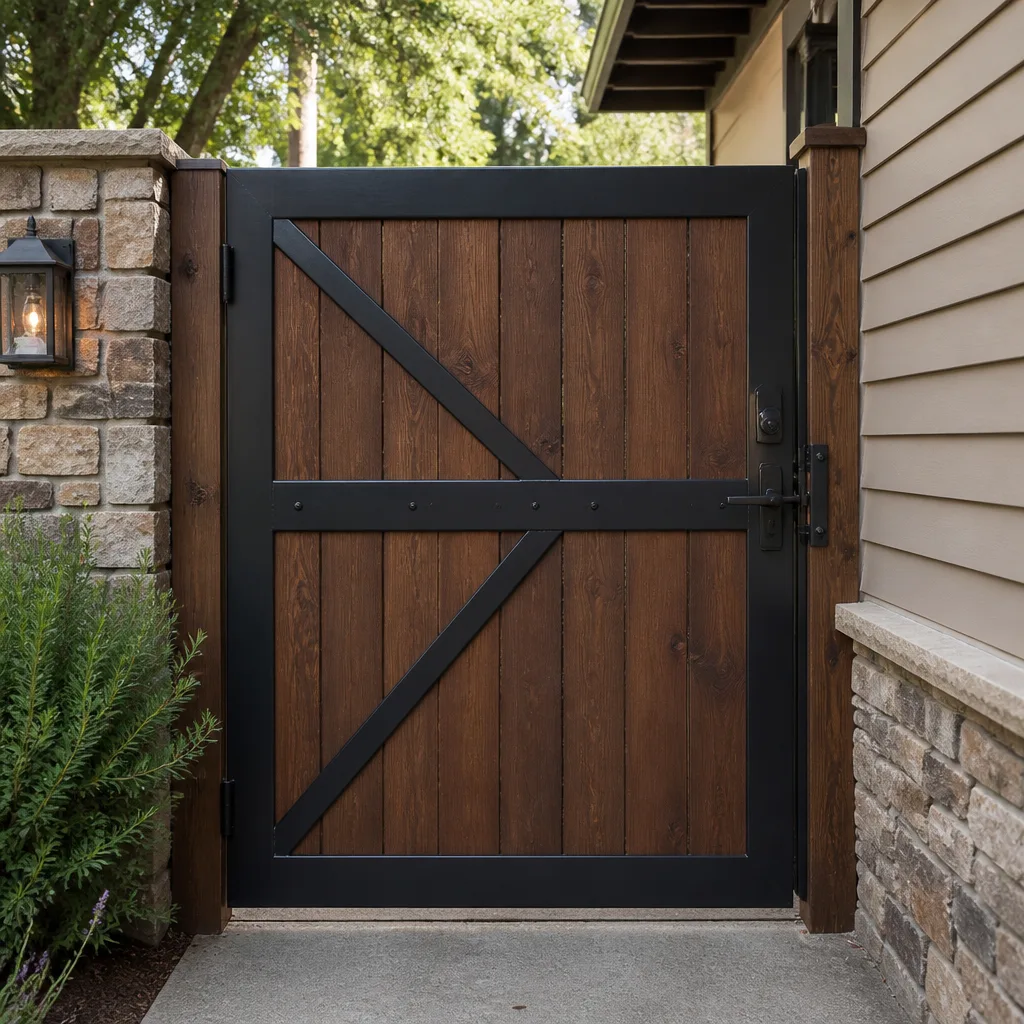 Wood & steel frame
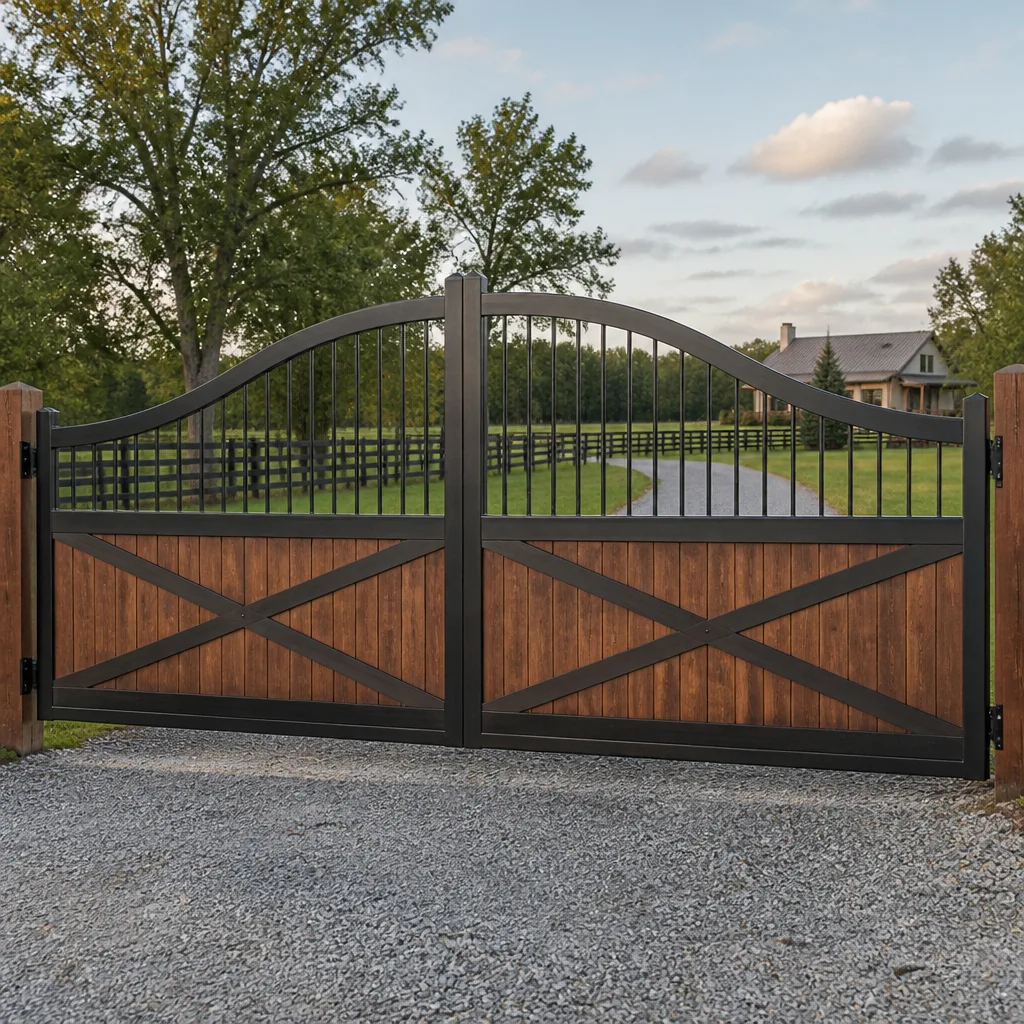 Farm & ranch
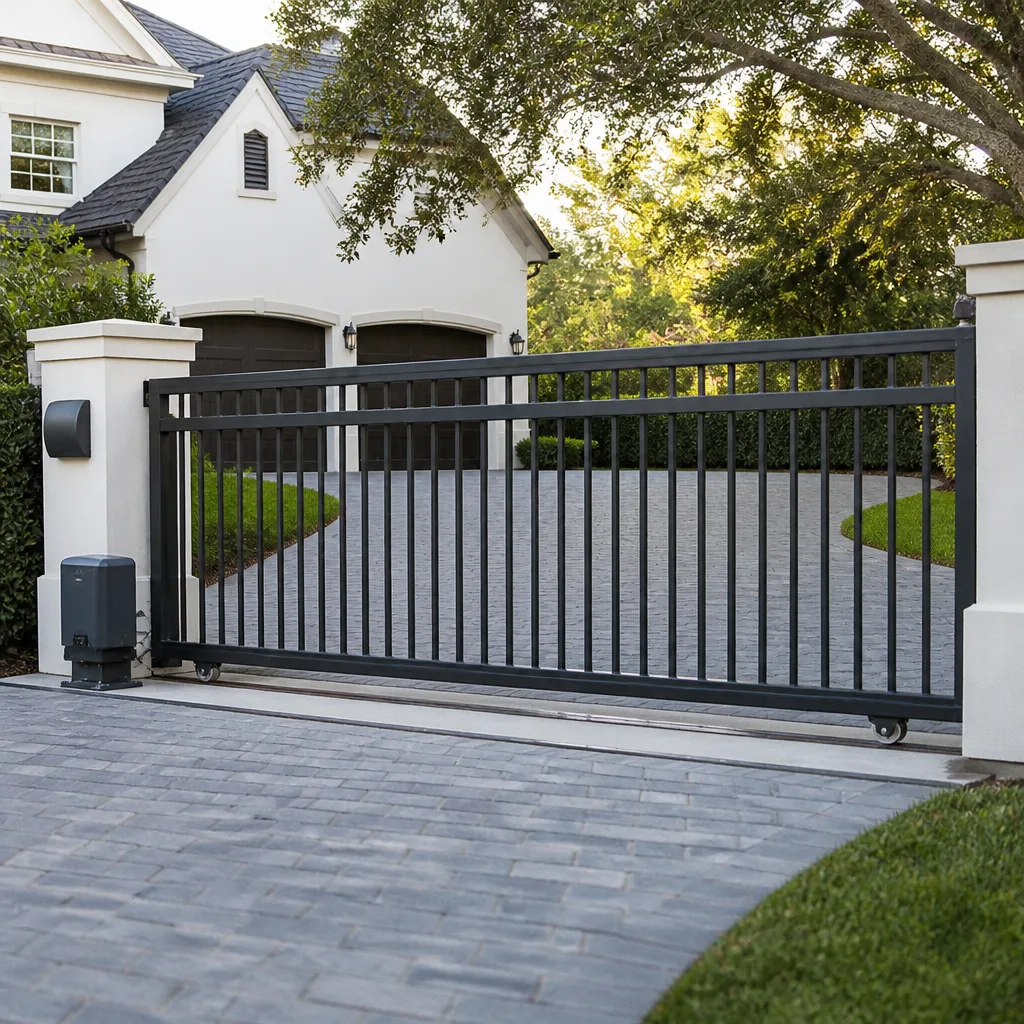 Sliding driveway gates
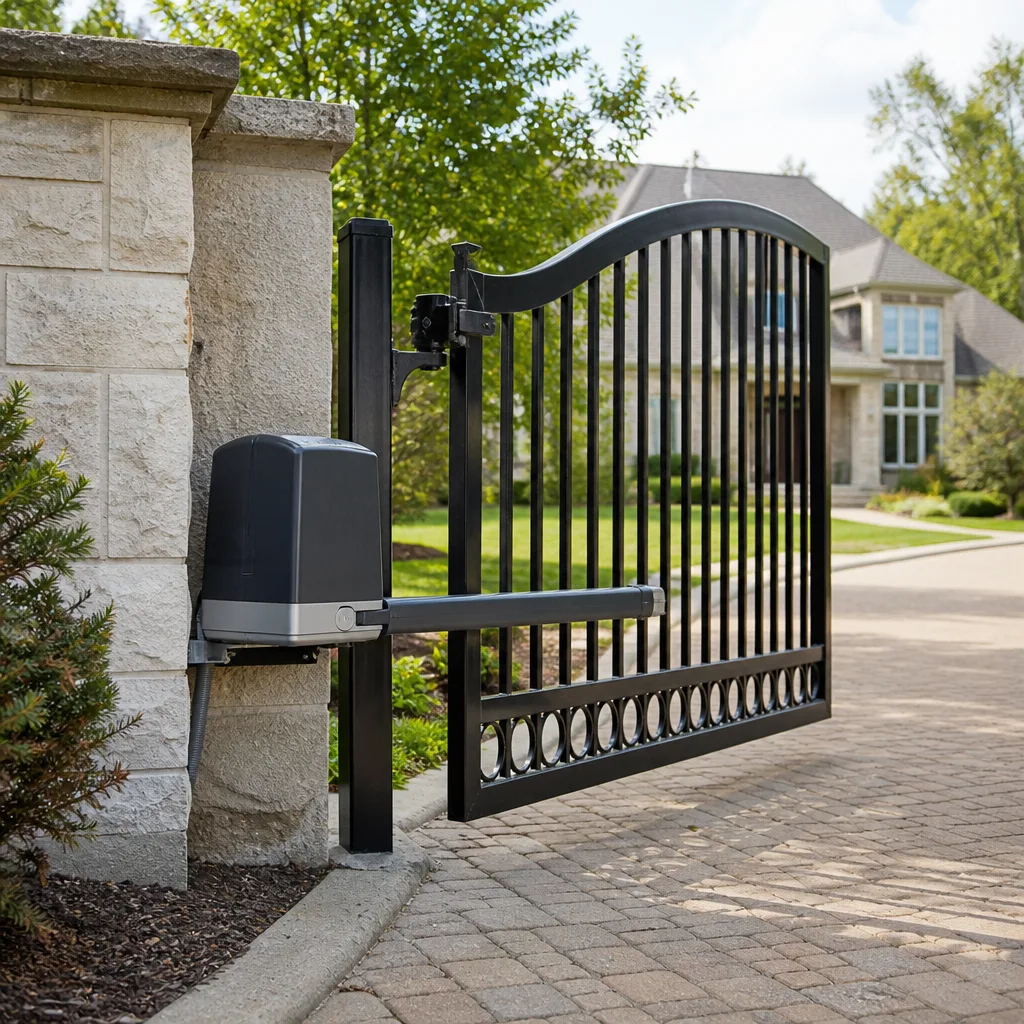 LiftMaster operators
Free on-site gate assessment - hinges, posts, and your LiftMaster or Nice gate operator checked before anything is quoted
The assessment is free and the quote is the invoice.
Get your free estimateSeasonal Gate Repair Care for Suffolk: Year-Round Homeowner’s Guide
The gate failures that show up most heavily in January usually aren’t caused by January. They start in September. A season of wind load and cycling has already cracked a weld or nudged an operator out of alignment, and the gate keeps running well enough that nobody looks closer. Then the first real cold snap contracts the metal, the gap widens, and the operator starts straining against a gate that no longer sits where it used to. By the time it stops working, the damage has been building for months.
This guide treats the Suffolk calendar as a maintenance tool. Each season puts stress on a different part of your gate, and the checks that matter most shift with the weather. We’ll walk through what to inspect and when, from spring post movement to winter grease viscosity, so your gate gets ahead of the failure instead of catching up to it.
Quick Answer
Seasonal gate care in Suffolk follows four threat profiles: spring flooding and saturated ground that shift posts, summer heat and humidity that wear on control boards and batteries, hurricane-season wind load that stresses panels and hardware, and winter ground freeze that contracts metal and thickens grease. Inspect after each seasonal shift, lubricate with a cold-rated product before winter, and have the operator re-aligned by a technician when the gate stops traveling smoothly.
Styles & brands we work with
- Wrought iron
- Wood & steel frame
- Farm & ranch
- Sliding driveway gates
- LiftMaster operators
Table of Contents
- Why Seasonal Gate Care Matters More Than You’d Think
- Spring: Post Movement and Wet-Season Damage
- When Operator Alignment Needs a Professional Reset
- Summer: Heat, Humidity, and Control Board Stress
- Hurricane-Specific Prep and Post-Storm Inspection
- Winter: Lubricants, Freeze, and Operator Strain
- Month-by-Month Action Calendar for Suffolk
- Common Mistakes to Avoid
Why Seasonal Gate Care Matters More Than You’d Think
A gate is a mechanical system bolted into the ground and wired to an electrical one. Both halves move, expand, contract, and take on load across the year. In a place like Suffolk, those movements are bigger than they look from the driveway, and they don’t happen evenly. The post that anchors a swing gate is one season under water and the next season wrapped in dry, shrinking soil. The operator that runs in mild spring temperatures is asked to push the same weight through a metal gate that has tightened against its hinges.
What that means in practice is simple: a gate that gets checked against the calendar fails less often than a gate that gets checked only after it stops. Not never, but less. And the failures you do catch early are the cheap ones – a loose bracket, a swollen hinge, a battery on its way out – rather than the expensive ones like a burnt-out control board or a bent operator arm.
Suffolk’s position in coastal Virginia gives it all four seasons with real teeth, so we see the full range here. If you’re dealing with a system that’s already acting up before you get to the calendar, our Gate Repair Suffolk overview is a good place to orient yourself, and the seasonal plan below still applies once the repair is done.
Below is a short summary of what each season asks of your gate, and then a deeper section on each one.
- Spring: saturated ground and post movement, plus the first real inspections of hardware after winter.
- Summer: extended heat and humidity on control boards, battery backups, and direct sun on the operator housing.
- Hurricane season: wind load on gate panels, barrier arms, and the structural hardware that holds everything down.
- Winter: contraction in metal, ground freeze at the posts, and grease that thickens below 40°F and strains the motor.
Spring: Post Movement and Wet-Season Damage
Spring is when the ground under a gate stops being solid. A wet season loads posts and anchors with moisture, and the soil under an improperly set or already aged footing starts to give. What you notice first is often not the post at all – it’s the gate. The leaf sags a little toward the ground. The latch doesn’t line up without a lift. The operator (if you have one) labors on the last foot of travel. All of those are the same story: the post moved and the gate geometry changed with it.
Here’s a spring inspection sequence we recommend for any Suffolk homeowner with a gate:
- Walk the full sweep of the gate and watch the gap to the ground. A gate that suddenly drops close to the ground at the leading edge usually has a leaning post under that hinge.
- Look for standing water near the post. If water sits at the base for hours after rain, the footing is being undermined slowly and will need attention.
- Test the hinges and latches with your hands. Any movement in the hinge back to the post is a sign the post has shifted or the anchor has loosened.
- Try the latch without lifting the leaf. If it doesn’t catch cleanly, the alignment has moved.
- Run the gate through a full cycle (manual or electric) and listen for any new sound. Creaks, pops, and a motor that seems to “push harder” at one end of travel are early warnings.
If the gate is a manual swing gate and it’s simply a case of a slightly out-of-line latch, adjusting the latch plate is often within reach for a homeowner. If the post itself has shifted, that’s a different job. Digging out a footing and resetting it is not a weekend project, and the gate has to be supported properly while it happens or it will twist.
The spring visit is also the natural time to address any cosmetic or structural damage the gate picked up over winter, before the ground dries out and a resident or vehicle gets closer than it should.
What a Spring Visit Should Catch
When we do a spring check on an automated gate in Suffolk, the list of things we look at is longer than most homeowners expect. It’s not because every gate needs all of it, but because a spring check is the cheapest point in the year to catch something small.
- Post plumb and anchor condition at every hinge point.
- Gate leaf sag or twist, measured across the full width.
- Hinge pin wear and lubrication state at the swing points.
- Latch, stop, and catch alignment.
- Operator arm brackets and mounting plates.
- Ground-level track wear on slide gates (track down, rollers, and end stops).
- Safety edge function on automated gates (this gets tested, not just looked at).
- Photo-eye or loop alignment on the operator.
- Manual release function (more on this below).
Notice that we’re not talking about lubrication yet. Spring is about structure and alignment; summer and fall are the seasons for the lubrication conversation, which is where most homeowner DIY damage happens.
When Operator Alignment Needs a Professional Reset
An automated gate operator only works when the gate is where the operator thinks it is. When the post shifts, the hinge sags, or the gate leaf takes on a slight twist over a wet spring, the operator’s travel points and limit settings no longer match the physical gate. The operator doesn’t know this. It keeps pushing, and every cycle now includes a moment of strain at the end of travel that wasn’t there before.
You can often tell the difference between “the gate needs a light adjustment” and “the operator needs a professional reset” by watching the full cycle:
- The gate stops short of the fully closed position. Usually a limit setting that’s drifted, or a safety device stopping the cycle.
- The gate bangs or lurches at one end of travel. Usually an alignment problem between operator and gate, not an operator problem.
- The operator runs but the gate barely moves. Could be a mechanical bind, a worn operator arm, or a failing clutch. Needs diagnosis, not guessing.
- The gate reverses at random. Often a safety edge or photo-eye issue, sometimes a control board symptom.
- The gate works manually but not under power. Usually an operator or power problem rather than the gate itself.
What we won’t do – and what you shouldn’t do – is start turning limit screws and force settings on your own to compensate for a misaligned gate. On a commercial-grade operator like a FAAC or a DoorKing, a forced setting is not a fix; it’s a temporary bridge to the next failure. The correct fix is to align the gate first, then reset the operator so it learns the new travel. When the gate and the operator are out of step, we reset them together. If you’re seeing any of the symptoms above on your own gate, the right move is a diagnosis rather than a guess. Our electric gate repair page goes deeper into the diagnostic side of this.
Summer: Heat, Humidity, and Control Board Stress
Summer in Suffolk is the season that pressures the electronics side of a gate. Control boards, battery backups, and transformer housings all live inside enclosures that get hot in the sun and stay humid in the air. Above roughly 100°F inside an enclosure, components start aging faster. Add coastal-Virginia humidity and you get condensation on circuit boards during the cooler nighttime hours, which is the worst-case environment for anything with a control board in it.
The single most effective summer measure is shade. A gate operator in direct western sun runs hotter through the afternoon than an operator in shade, and it runs hotter for more hours per day. That extra heat is what shortens capacitor life, ages relay contacts, and eventually causes the “the gate just stopped one day” failure that nobody saw coming.
Practical summer checks for a Suffolk gate:
- Look at your operator housing positioning during the hottest part of the afternoon. If the housing is in full western sun for most of the afternoon, that’s an environment issue worth discussing with a technician.
- Test the battery backup by unplugging the operator from AC and running the gate a few times. If the gate stops on battery power before you’ve run it a reasonable number of cycles, the battery is on its way out.
- Visually inspect the enclosure for insect nests, mud dauber activity, and any sign of water intrusion after a storm.
- Listen for a new hum or buzz from the operator that wasn’t there in spring. It’s often the first sign of a failing transformer or a straining motor.
- Check the gate’s obstacle detection by passing an object through the path (safely) while the gate is closing. If the gate doesn’t reverse, the safety device needs service.
Notice what we haven’t included: opening the operator housing and poking around. The interior of a gate operator carries line voltage, and opening the enclosure during a Suffolk summer is a good way to find out what a capacitor failure feels like. Leave the inside of the box to a technician. We service entry-level operators like Linear, Viking, and Ghost Controls as well as commercial-grade systems, so whatever brand is on your post, the summer check is the same conversation.
Heat and Batteries: What to Expect
Battery backups on automated gates have a limited lifespan, and summer heat accelerates the end of it. Most residential operator batteries work hard for a few years before their capacity drops enough to matter, and a battery that’s been sitting in a hot enclosure for a Virginia summer may reach that point sooner. The symptom is easy to miss: the gate works fine on AC power, but the backup no longer holds the gate through even a short power cut.
If your gate has ever failed open during a power interruption, that’s the battery telling you it’s done. A battery swap is straightforward, and doing it before the next storm season means the gate works when the power doesn’t.
Hurricane-Specific Prep and Post-Storm Inspection
Hurricane season runs June through November, and for a gate system, the preparation happens well before the first named storm appears on the forecast cone. Wind load on a gate panel is a real, calculable force. A solid gate leaf acts like a sail, and if the hinges, brackets, or operator arms aren’t sound, the load finds the weakest point. That weakest point is very often the hinge, the operator bracket, or a weld that was quietly fatiguing all year.
Here’s the preparation sequence we recommend for any Suffolk homeowner going into hurricane season:
- Test the manual release on every automated gate. This is the single most-missed check. The manual release lets you open the gate by hand when the power is out, and if it’s seized from lack of use, you won’t find out until you’re standing at a dead gate with a storm overhead.
- Inspect every hinge, bracket, and mounting plate for rust, cracks, or loosened fasteners. Wind load finds these first.
- Decide on barrier arms. Commercial barrier arms on a property manager’s site should typically be removed or lowered before a named storm. If you don’t know how yours detaches, that’s the question to answer now, not the night before landfall.
- Clear the swing path of anything that could become airborne and hit the gate (planters, loose fencing, anything movable).
- Note the gate’s condition with photos before the storm, so if there’s damage afterward you know exactly what changed.
After a named storm passes, walk the gate before you operate it. Check for:
- Visible cracks in welds or hinge brackets (this is where wind load damage shows up first).
- Newly leaning posts or shifted gate position in the fully closed and fully open positions.
- Debris in the track on slide gates.
- Water intrusion at the operator housing and any junction boxes.
- Loose panels or hardware on barrier arms and cantilever gates.
If anything has shifted, don’t run the operator before a technician has looked at it. An operator that thinks a storm-warped gate is a normal gate will keep pushing until something gives. That’s the exact chain that shows up as a January failure, so it’s worth cutting short in autumn.
Winter: Lubricants, Freeze, and Operator Strain
Winter doesn’t cause most Suffolk gate failures. It reveals them. The cold contracts metal, which opens existing cracks and gaps; the ground freezes, which moves posts in a different direction than the wet season did; and the grease you applied for summer viscosity thickens to the point that the operator motor has to work noticeably harder to move the gate. The result is a gate that was “fine” in October and is “straining” in December.
The lubricant conversation matters more than most homeowners realize. Grease and lubricant products are rated for a temperature range, and many general-purpose greases thicken drastically below 40°F. A grease that flowed freely in July can become almost paste-like in January, and that increased drag lands directly on the operator. Over a winter, the operator has been asked to work against a load it wasn’t designed for, and the motor, gearbox, or control board is the part that finally gives.
The correct winter lubrication approach:
- Use a cold-rated lubricant on hinges and swing points that stays fluid below 40°F. Ask your technician which product they use on your operator type; using the wrong one is worse than using none.
- Avoid general-purpose grease on the operator arm or chain unless it’s rated for cold conditions. Thickened grease is a motor strain problem, not a chain problem.
- Re-lubricate before winter, not after. The point of a cold-rated product is to be in place before the first cold snap.
- Don’t over-lubricate. Excess grease holds grit, and grit accelerates wear faster than dry metal does.
Winter is also when ground freeze around the posts does its work. A post that’s already moved a fraction of an inch in spring will move again as the ground freezes and thaws. If a gate that was working in October suddenly drags on the ground in January, the post is moving, and the fix is structural.
Month-by-Month Action Calendar for Suffolk
Here’s a general seasonal rhythm for a Suffolk gate, aimed at a homeowner or property manager who wants to get ahead of failures rather than react to them. The exact months will vary by year, but the order of operations is consistent.
Early Spring (March – April)
- Full structural inspection: post plumb, hinge attachment, latch alignment, bracket condition.
- Run the operator through full cycles and listen for new sounds.
- Diagnose any alignment drift before it becomes a strain problem.
Late Spring (May)
- Lubricate hinges and swing points with a moderate-temperature product.
- Test safety devices on automated gates (safety edges, photo-eyes, loops).
- Check for standing water at post bases and address drainage if needed.
Early Summer (June)
- Inspection of operator housing and enclosure for sun exposure, insect intrusion, and water intrusion after storms.
- Battery backup test on automated gates.
- Clear debris from slide-gate tracks.
Peak Summer (July – August)
- Repeat enclosure and battery checks if the gate has a history of summer issues.
- Watch for operator overheating symptoms (frequent thermal shutdowns, gate stopping mid-cycle on hot afternoons).
Hurricane Season (June – November)
- Before any named storm: test the manual release, inspect all hardware, decide on barrier-arm removal, clear the swing path, and photograph the gate’s current condition.
- After any named storm: walk the gate for structural damage before running the operator.
Fall (October – November)
- Re-lubricate hinges and swing points with a cold-rated product.
- Check post stability before the ground freezes.
- Battery backup test before storm season turns into winter.
Winter (December – February)
- Monitor for dragging, straining, or new sounds from the operator.
- Watch post positions through freeze-and-thaw cycles.
- Any failure to close or open cleanly in cold weather should be diagnosed, not ignored.
Common Mistakes to Avoid
Most of the gate failures we see in Suffolk were avoidable. These are the patterns that come up again and again.
- Replacing the operator when the gate is the problem. A bent hinge or shifted post makes an otherwise healthy operator look like it’s failing. Always diagnose the whole system before quoting a replacement.
- Forcing limit settings to compensate for misalignment. Turning limit screws to get a misaligned gate to close “for now” is a temporary fix that wears out the operator faster. Align the gate first, then reset the operator.
- Using general-purpose grease in summer and winter. A summer grease that flows freely can thicken past the operator’s tolerance in January. Use a cold-rated product before winter and don’t assume one grease works all year.
- Skipping the manual release test until a storm is coming. A manual release that’s seized from disuse only shows up when you actually need it. Test it while the weather is still calm.
- Running an operator on a storm-damaged gate. After a named storm, walk the gate before you power it up. Running a warped gate can crack a weld that would have been a simple repair.
- Ignoring a slowly changing latch or drag. A latch that needs a lift and a gate that drags on the ground are both signs that the post moved. Fix the post; don’t just adjust the latch plate.
- Working inside the operator housing on your own. Control boards, capacitors, and transformer wiring are dangerous. The inside of the box is a job for a technician.
- Skipping the battery backup test. The gate works on AC all year, then fails open during the first autumn power cut because the battery quietly died in the summer heat.
What to Check When You Call
The more you can tell us when you call, the faster we can diagnose. A few details speed up the process.
- Manufacturer and model of the operator (visible on the housing, usually on a label).
- What the gate is doing – not opening, not closing, reversing, straining, or making a new sound.
- Whether the gate works by hand when the operator is disengaged.
- What the gate has done since the last time it worked correctly (a storm, a power cut, a new season).
- Photos of the gate, the operator housing, and any visible damage.
If the gate is a manual gate, tell us what style it is (swing, slide, cantilever) and where the problem shows up – at the hinge, the latch, or along the track.
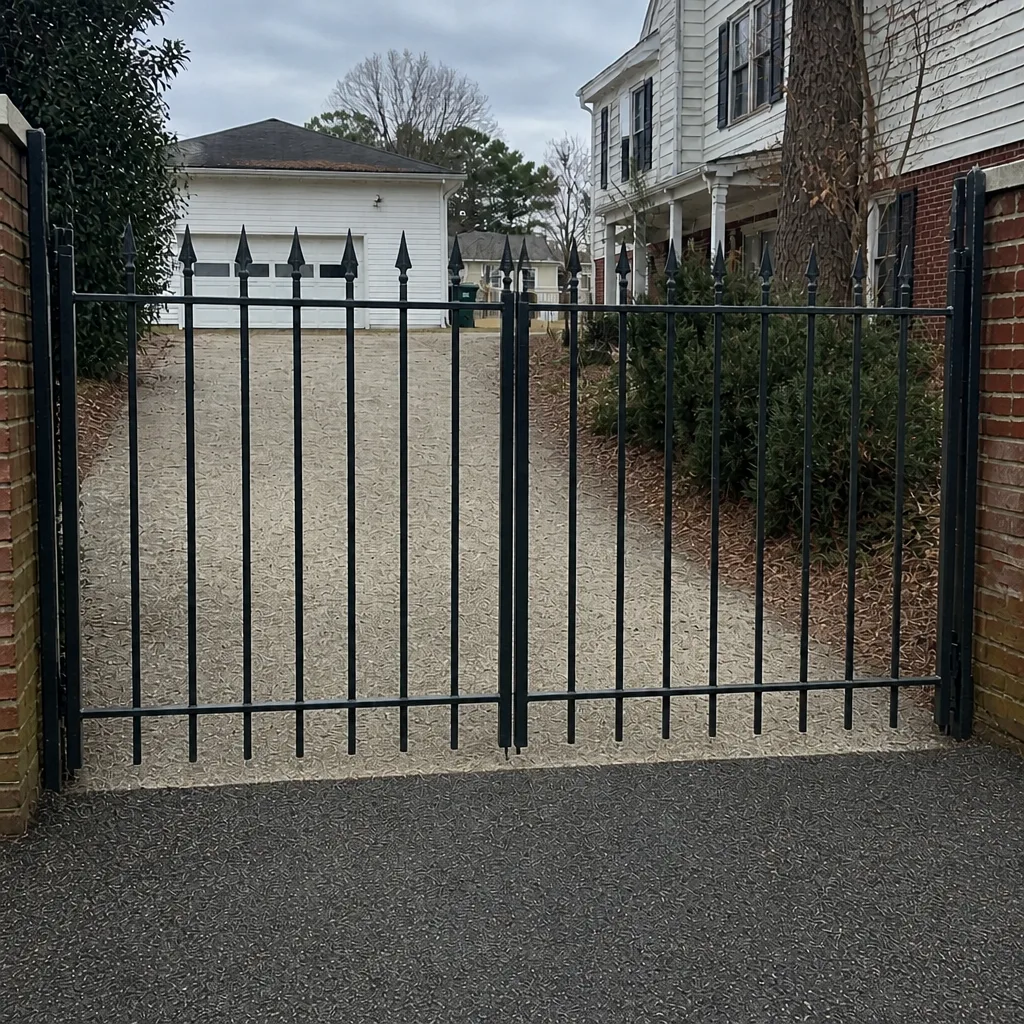
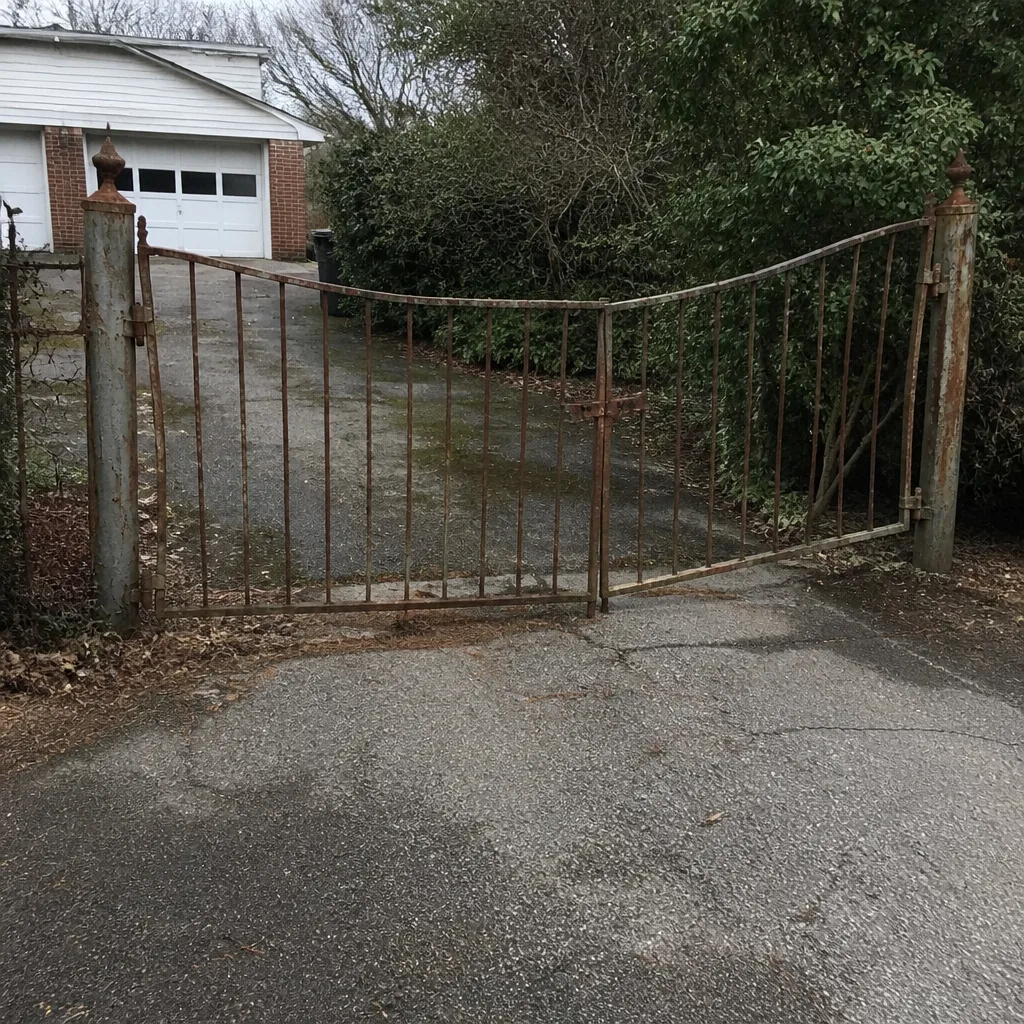
See the difference
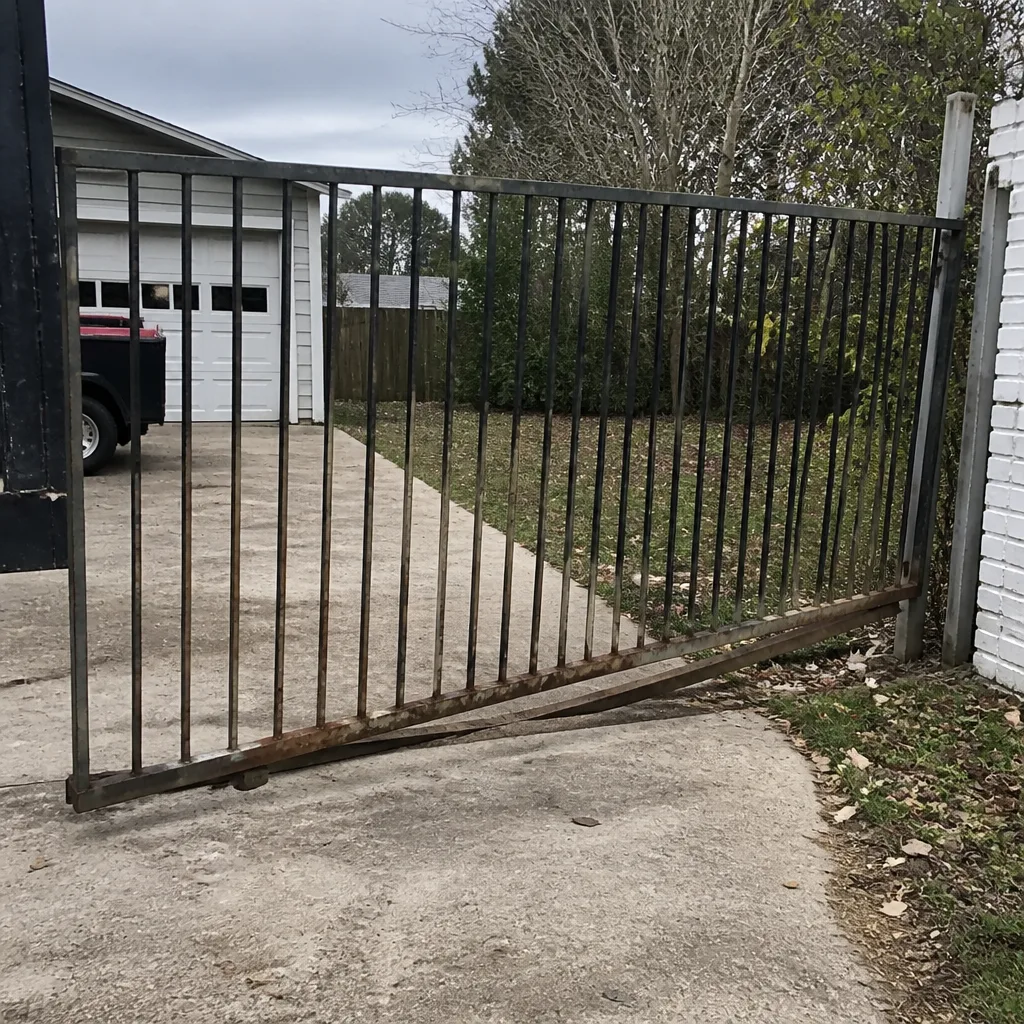 Before
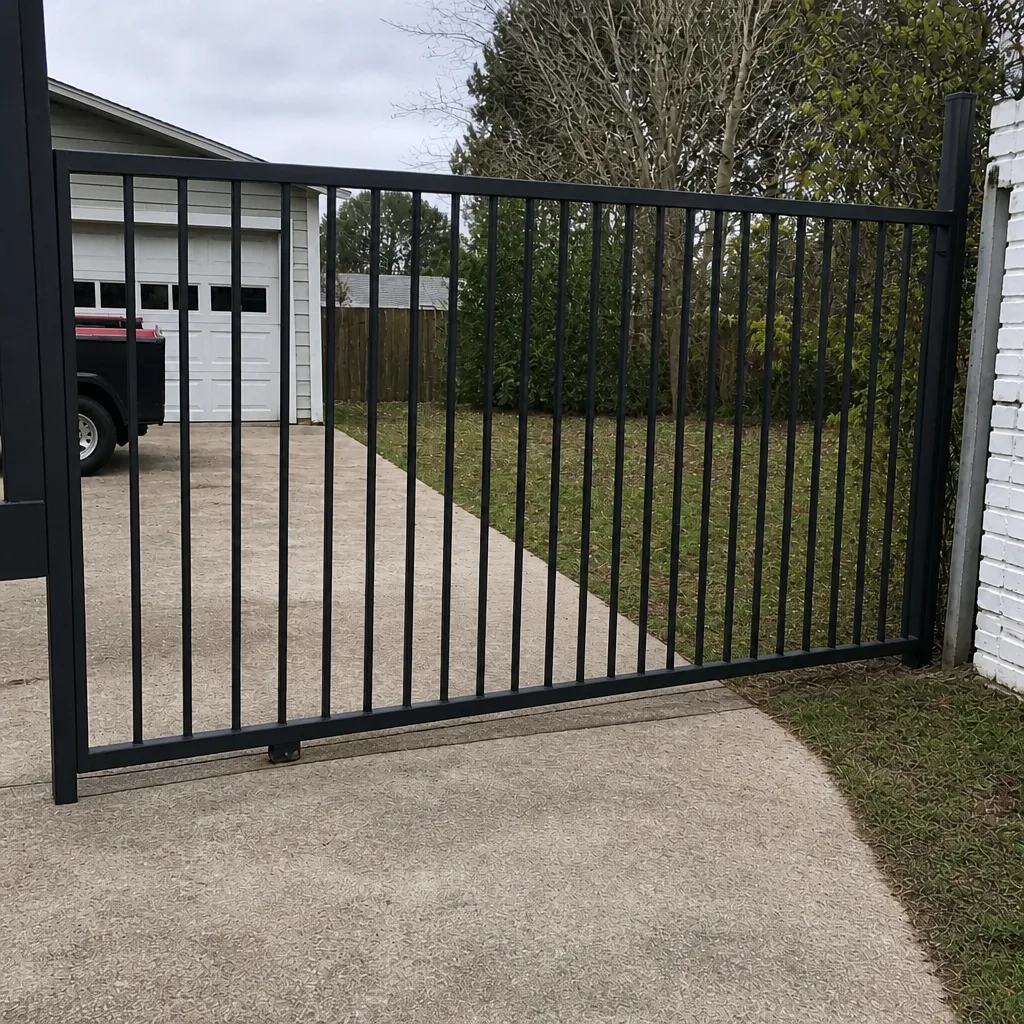 After
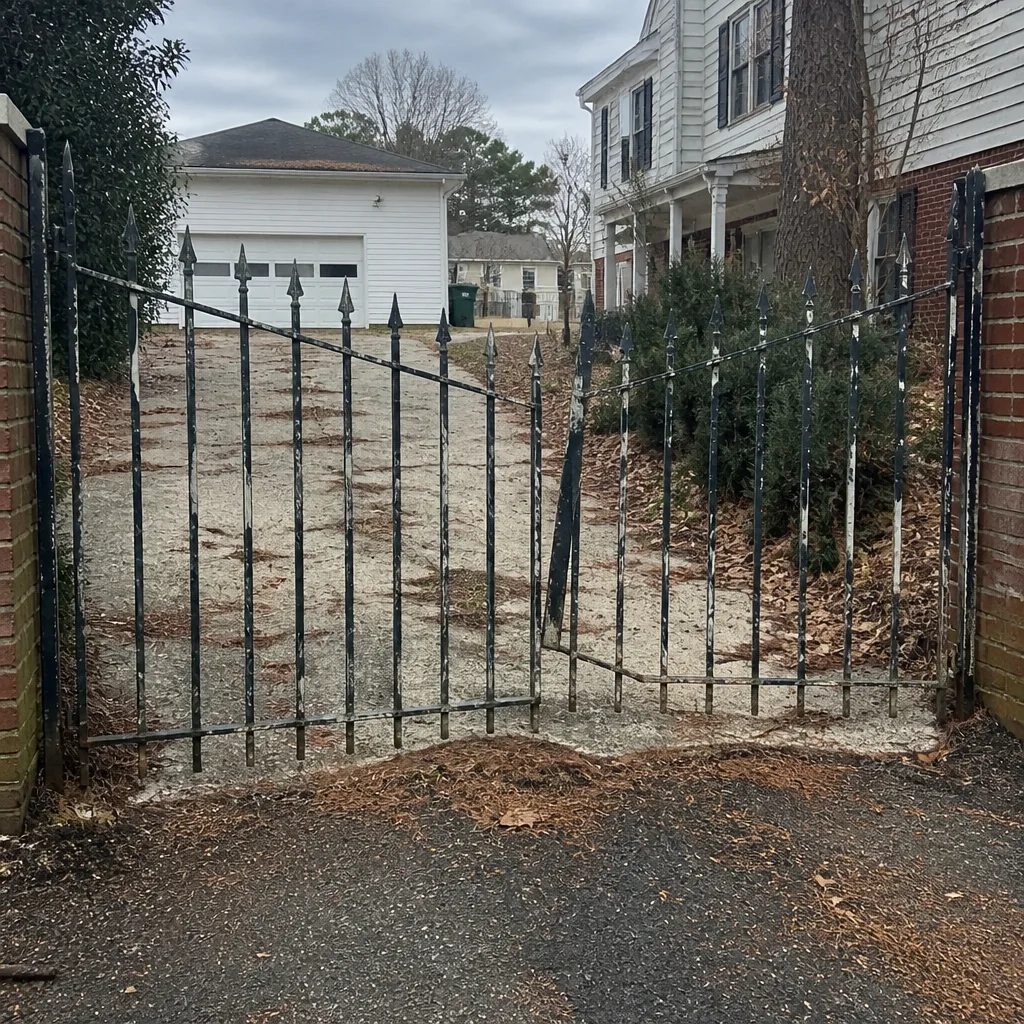 Before
 After
 Before
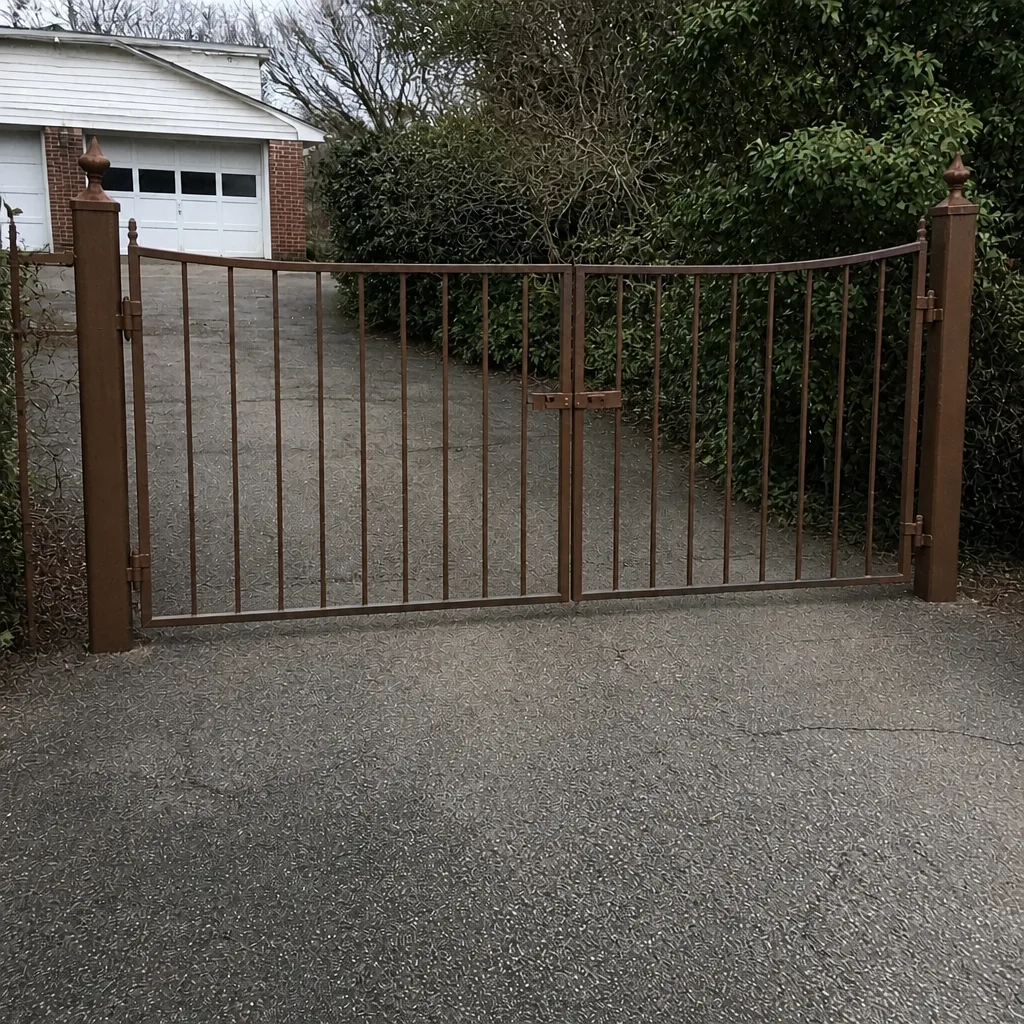 After
When to Call a Professional
Most gate problems aren’t a question of whether to call, but when. Call when:
- The gate has developed a new sound (creak, groan, pop, or hum) since the last seasonal check.
- The gate stops short of fully closed or fully open, or reverses at random.
- A post is leaning, or the gate drags on the ground in a position it used to clear.
- The operator runs but the gate doesn’t move, or the gate moves but the operator strains at the travel ends.
- Any named storm has passed through and the gate hasn’t been re-inspected since.
- A commercial site has a barrier arm that hasn’t been tested on its removal or lowering procedure since last hurricane season.
For an automated gate the safest default is this: don’t test anything that involves opening the operator housing, and don’t force anything to close “for now” to get through the week. Call a technician.
Gate repair for a Suffolk property can usually be planned around a free estimate. Gate Repair Suffolk offers free estimates across Suffolk, and we work on every brand from LiftMaster and FAAC to BFT, Linear, Viking, Ghost Controls, DoorKing, Elite, and Mighty Mule. Call (855) 360-8054. We answer 24/7. Fast dispatch from 7am to 7pm, Sunday through Friday.
Frequently Asked Questions
Twice a year is a reasonable baseline for a residential automated gate in Suffolk: once in spring to catch wet-season post movement, and once in fall to lubricate with a cold-rated product and check the battery before winter. Manual gates can often stretch to an annual inspection unless something changes. A commercial gate with heavy daily cycling needs more frequent checks, especially before and after hurricane season.
Winter usually reveals a problem that was already developing. Cold contracts metal, which widens existing cracks and moves posts in ways summer didn’t; grease thickens below 40°F and puts extra drag on the operator; and any alignment drift from the wet spring gets worse in the cold. The fix is to address the underlying cause (alignment, post position, or lubricant) rather than just clearing the immediate symptom.
On most commercial sites, barrier arms should be removed or lowered before a named storm, because wind load on an extended arm is significant. The exact procedure depends on the arm and the operator model. If you don’t know the removal procedure for your arm, that’s the question to answer before hurricane season, not the night before landfall. Call (855) 360-8054 for a free estimate on getting your arms storm-ready.
Use a cold-rated lubricant that stays fluid below 40°F on hinges and swing points. The right product depends on the gate type and operator, so it’s worth asking a technician which one they use on your system. General-purpose grease that flows freely in summer can thicken enough in January to put real drag on the operator motor. Re-lubricate in fall, before the first cold snap, not after.
Gate operators in direct western sun run hotter than shaded operators, and control boards and capacitors slow down or fail when they get too hot. If your operator is in full sun most of the afternoon, an enclosure-placement conversation with a technician is worth having. Thermal shutdowns that happen only on hot afternoons are often a housing environment issue, not a board failure.
Yes. Gate Repair Suffolk repairs both manual and automated gates, so you don’t have to source separate contractors for the gate leaf and the operator. We also work on the full range of brands, including LiftMaster, FAAC, BFT, Linear, Viking, Ghost Controls, DoorKing, Elite, and Mighty Mule, and we can handle new gate installation as well as Suffolk repairs. Call (855) 360-8054 for a free estimate. We answer 24/7. Fast dispatch from 7am to 7pm, Sunday through Friday.
The Bottom Line
Treat the Suffolk calendar as a maintenance tool and your gate stops surprising you. Spring is for structure and post alignment. Summer is for keeping the operator housing cool and the battery backup alive. Hurricane season is for testing manual releases and preparing for wind load. Winter is for cold-rated lubrication and watching how the gate behaves through freeze-and-thaw. The failures you catch in the season they start are the cheap ones. The failures you catch in January are usually from September. Any gate that shows a new sound, new drag, or new misalignment this season is worth a free estimate before it becomes next season’s repair.
Call Gate Repair Suffolk at (855) 360-8054 for a free estimate. We answer 24/7, with fast dispatch from 7am to 7pm, Sunday through Friday.
Written by the team at Gate Repair Suffolk.