
Last updated November 15, 2026
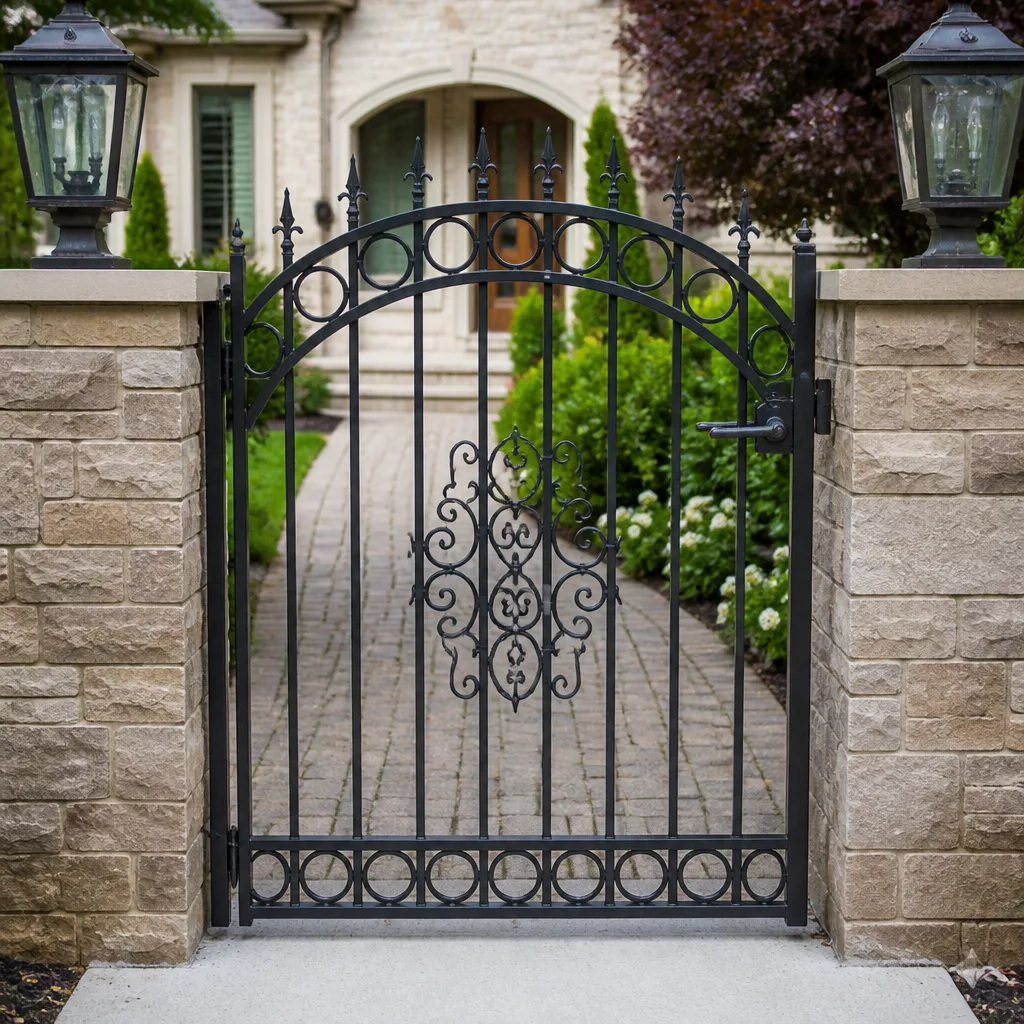 Wrought iron
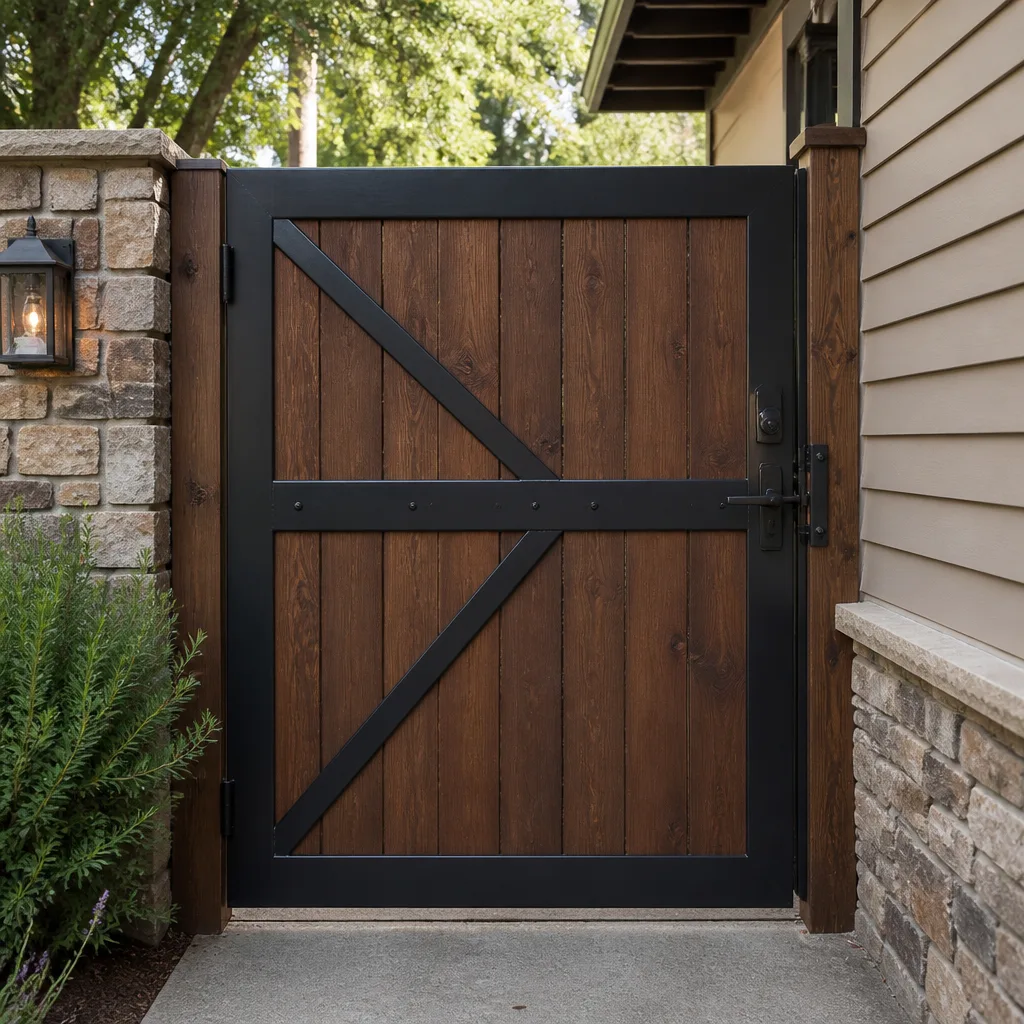 Wood & steel frame
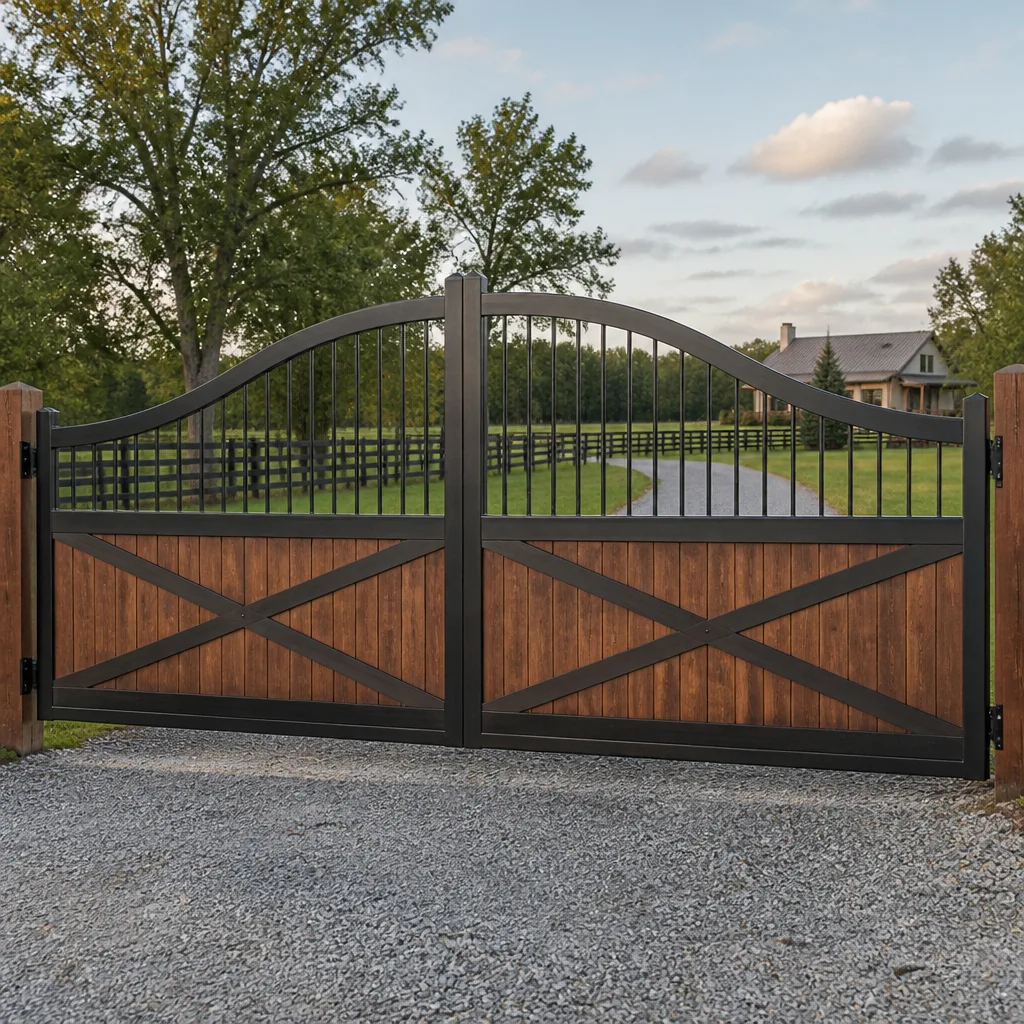 Farm & ranch
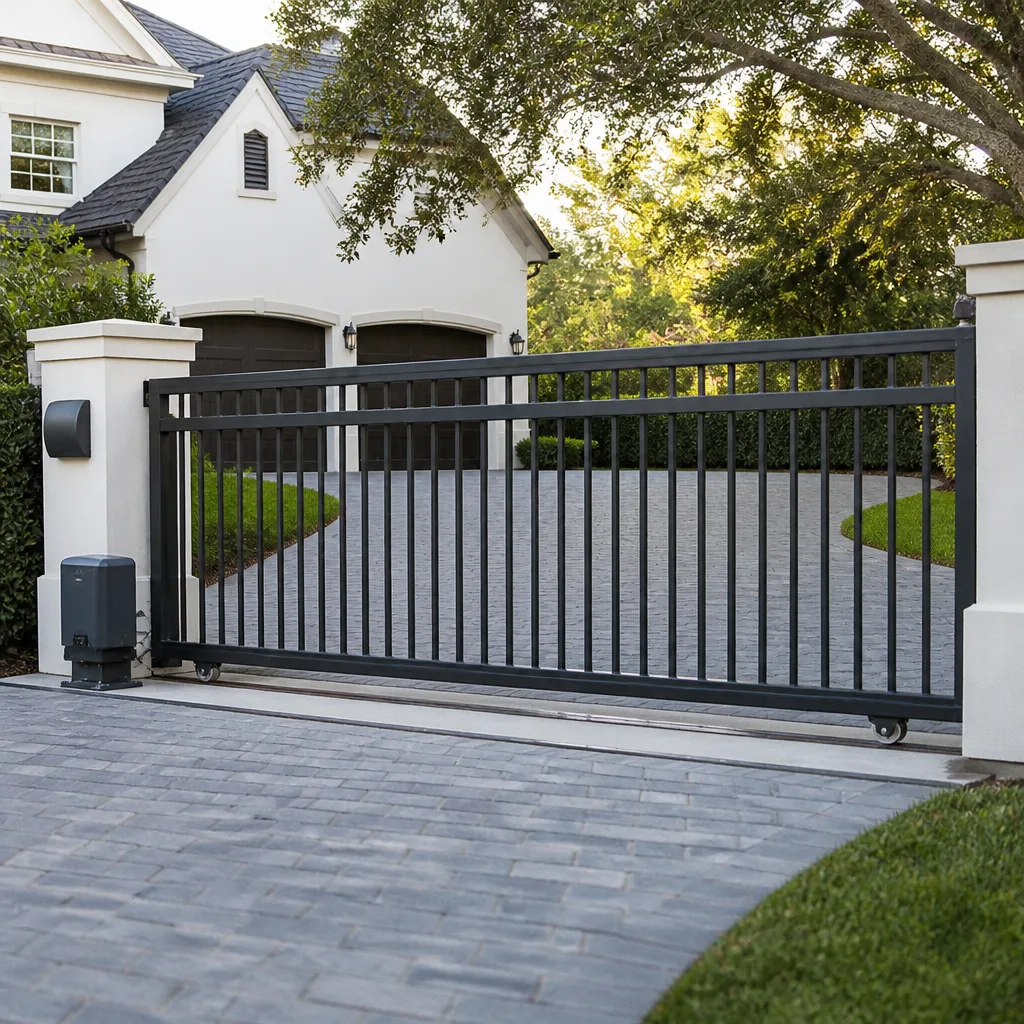 Sliding driveway gates
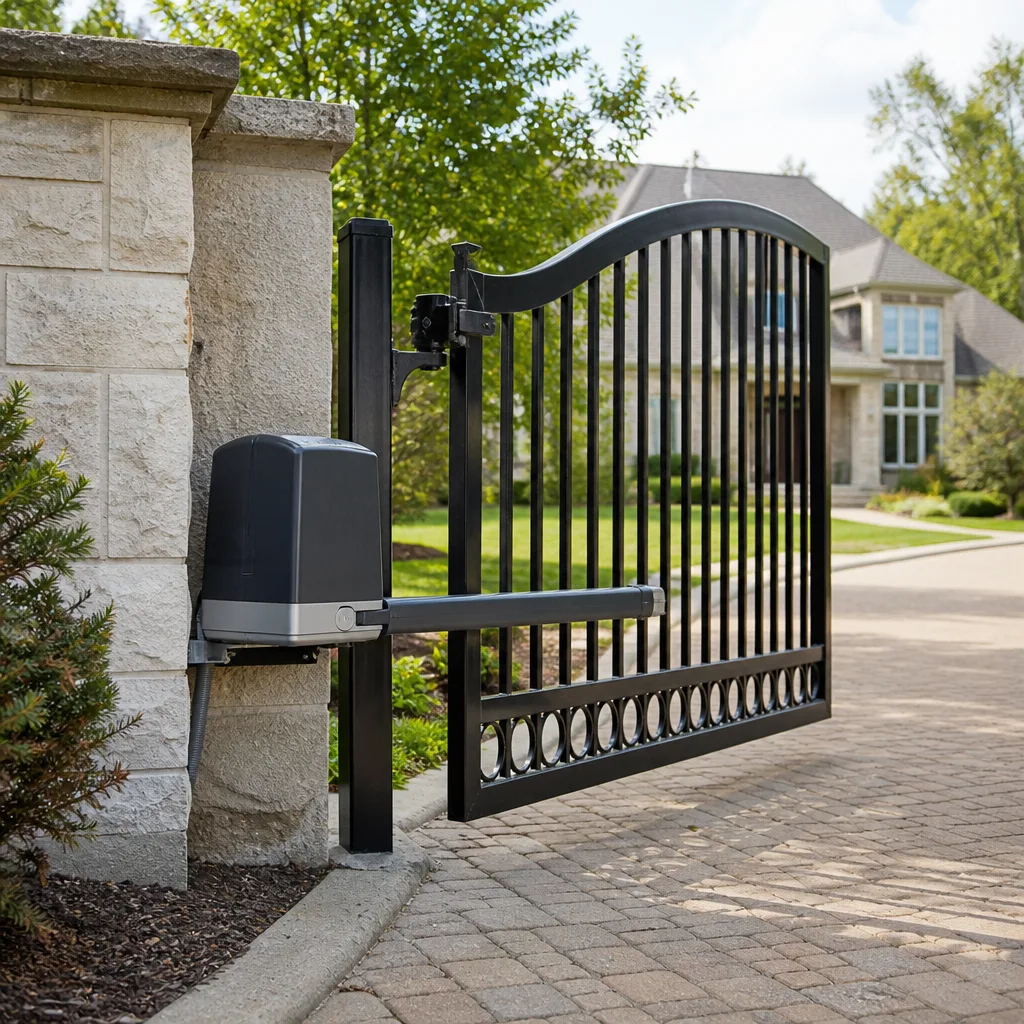 LiftMaster operators
Free on-site gate assessment - hinges, posts, and your LiftMaster or Nice gate operator checked before anything is quoted
The assessment is free and the quote is the invoice.
Get your free estimateThe Complete Guide to Gate Repair in Suffolk
Most people treat a sticking gate as a hardware problem. In Suffolk, it usually isn’t. The gate is just where the ground movement, the damp air, and a mismatched part all show up at once. We’ve seen gates that were hung less than two years earlier start dragging because nobody accounted for how much the clay-heavy coastal plain soil under the posts shifts between wet and dry seasons. This guide maps every common gate type to its likely root cause, explains which failures are genuinely Suffolk-specific, and helps you decide whether the fix is a repair or a replacement. You’ll finish with a way to think about your gate instead of guessing.
Quick Answer
Gate repair in Suffolk usually comes down to one of three root causes: soil movement that throws the gate out of alignment, humidity-driven corrosion of hinges and control contacts, or a replacement part that doesn’t match the original operator. Diagnosis should always start with the gate’s physical alignment and mounting before anyone touches the motor or control board. Repairs are quoted and agreed before any work starts.
Styles & brands we work with
- Wrought iron
- Wood & steel frame
- Farm & ranch
- Sliding driveway gates
- LiftMaster operators
Table of Contents
- Why Suffolk Soil Causes So Many Gate Problems
- Gate Type to Failure Mode: The Suffolk Matrix
- Why Fixing the Symptom Causes Repeat Failures
- Brand-Specific Repair Notes for Common Operators
- How We Diagnose an Electric Gate Step by Step
- Repair or Replace: How to Decide
- Common Mistakes to Avoid
- Frequently Asked Questions
Why Suffolk Soil Causes So Many Gate Problems
Suffolk sits on tidal-influenced clay soil, and that single fact explains more gate failures here than any brand defect. Clay holds water, expands when saturated, and shrinks and cracks when it dries. Over a season, a gate post set in that ground can move more than the hardware tolerates. The gate doesn’t fall over. It leans by a fraction and starts dragging.
Here’s what actually happens downstream of that movement:
- Post lean throws the gate leaf out of plumb, so it no longer meets the strike post cleanly and starts to bind.
- Hinge stress builds as the gate fights the lean every time it swings, wearing bushings faster than the manufacturer expects.
- Operator misalignment follows, because an arm or a rack riding a moving gate slowly loses its timing. The motor is running fine; the geometry around it isn’t.
This is why a gate can look perfectly new and still misbehave. The common mistake is setting posts at a fixed depth with no allowance for local soil behavior. When a gate is installed on the Virginia coastal plain, the mounting has to account for seasonal movement from the start. When it doesn’t, the homeowner ends up paying for adjustments that have nothing to do with the quality of the gate itself. If you’re seeing recurring drag, a leaning post is often the first thing to check, and it’s the reason we always look at the ground before the motor. Call Gate Repair Suffolk for an on-site look if your gate has started catching where it used to swing free.
Gate Type to Failure Mode: The Suffolk Matrix
Different gate types fail in different ways, and in Suffolk the local conditions push certain failures to the front. Here’s how we map it. This matrix is the fastest way to understand what’s likely going on with your gate before anyone arrives.
- Swing gates (single and double): The dominant failure is hinge wear driven by post movement. Sagging on the free end and a hard time latching are the tell. On the electrical side, arms and operators misalign as the leaf drops.
- Slide gates: Track and roller problems come first. Soil movement under the track causes it to go out of level, and the gate starts to jump or drag. On coastal-plain clay, the track is especially vulnerable because the ground under it isn’t stable through a wet-dry cycle.
- Barrier arm gates: The arm mechanism, the pivot, and the balance springs take the wear. A barrier arm that slows or won’t fully raise is usually a counterbalance issue, not a motor that’s dying.
- Ornamental and estate gates: Corrosion at the welds and hinge points from humidity, plus alignment drift as posts settle. Heavy leaves stress hinges sooner.
- Commercial and multi-unit entrances: Duty cycle failures. Operators on heavy traffic hit their cycle limits, and control boards take the brunt. On these, the mechanical gate is usually fine while the operator is not.
The pattern worth noticing: most of these are mechanical failures that get misread as electrical ones. A slide gate that “won’t open” often has a control board doing exactly what it should, refusing to drive a gate that’s jammed on its track. Our electric gate repair work starts with the gate’s physical path, then moves inward to the operator and control board. Getting that order right is the whole game.
Why Fixing the Symptom Causes Repeat Failures
The most expensive gate repair is the one you do twice. When a gate drags because a post has moved, and someone replaces only the worn hinge, the gate works for a few weeks. Then the new hinge starts fighting the same lean, and it wears out too. By the next season you’re back where you started, minus the cost of the first fix.
This is the core principle we follow: repair the root cause, not the most visible worn part. It applies across every gate type and every brand.
- Trace the failure back to its origin. A dragging hinge usually means a moving post. A burned-out operator usually means a gate that’s been binding for months and forcing the motor to work harder than it should.
- Fix the geometry before the hardware. Realign or reset the gate’s mounting and travel path first. A motor or hinge installed onto a misaligned gate is a temporary fix by definition.
- Match replacements exactly. The third root cause in Suffolk is mismatched parts. A control board, an arm, or a hinge swapped for something close-but-not-right will run, but it won’t run correctly, and it often shortens the life of whatever it connects to.
When we diagnose an electric gate, we check alignment, then the operator, then the control board, in that order. Skipping straight to the control board because it’s the electronic part is how people replace a $400 board to fix a $40 alignment problem. Diagnosing in the right order is also what keeps a repair a repair instead of a cascade of replacements. You can read more about how we approach the full range of work on our gate repair page.
Brand-Specific Repair Notes for Common Operators
Brand matters more than people expect. A technician who only knows one system will tend to see every problem through that system’s lens, which is exactly how unnecessary replacements happen. We work across nine major gate brands, so we can meet your gate on its own terms rather than pushing you toward what’s familiar to us. A few notes on the operators we see most in Suffolk:
- Ghost Controls: Common on residential swing gates. When these misbehave, it’s frequently an alignment or limit issue rather than a failed operator. The electronics are usually sound; the gate around them has drifted.
- Mighty Mule: Another entry-level residential favorite. Hinge wear and post movement show up as operator strain, so the fix is often mechanical before it’s electrical.
- DoorKing: Commercial and multi-unit systems. These are built for duty cycle, so when one fails it’s typically control board, loop detector, or a specific sensor, and the diagnosis needs to be precise rather than broad.
- Elite: Found on slide and swing gates. Track and roller alignment matters here, and the operator tolerates misalignment worse than the gate does.
The same thinking applies to LiftMaster, FAAC, BFT, Linear, and Viking systems we service. Each has its own logic, its own common failure points, and its own parts. Working with your existing operator rather than steering you to a replacement is how a repair stays economical. If you want a straight answer about your specific brand, call us and describe the symptom; we’ll tell you what we typically see.
How We Diagnose an Electric Gate Step by Step
Electric gates fail in layers, and the order you check those layers determines whether the diagnosis is accurate. Here’s the sequence we use, and the one you can use to understand what a proper diagnostic visit should cover.
- Observe the gate in motion. Does it move freely by hand when the operator is disengaged? If not, the problem is mechanical and you’ve found it in the first minute.
- Check the gate’s physical alignment. Plumb posts, level track or clear swing path, clean hinges. Any binding here will show up as an “electrical” fault.
- Move to the operator. Is the arm or rack driving the gate evenly? Is the operator straining, skipping, or reversing mid-travel? That narrows it to the drive mechanism.
- Examine the control board and inputs. Limit switches, safety edges, loop detectors, remote receivers. This is where commercial systems like DoorKing live or die.
- Test under load and under repeat cycles. A gate that works once isn’t fixed. It has to cycle cleanly several times before we call it done.
Two safety notes matter throughout. Automated gates carry real risks: heavy panels that can crush, operators with dangerous wiring and power, and slide gates that can come off their track and fall. This is work for a trained professional, not a weekend project. The wiring side is not a place to experiment. If your gate’s operator is dead, don’t open the control box to see if you can fix it; call us instead. We’re set up to diagnose and repair both the mechanical gate and the electrical operator without handing you off to a second contractor. We handle the full arc, from the Suffolk properties we service every week to commercial systems, so nothing falls between two trades.
Repair or Replace: How to Decide
A true repair makes sense when there’s a single identifiable root cause and the rest of the gate and operator are in sound shape. Replacement becomes the better call when the damage is cumulative: a gate that has been fighting misalignment long enough to wear multiple components, an operator pushed past its duty cycle, or posts that have moved so much that the mounting can’t be trusted anymore. The deciding question isn’t “how old is it?” It’s “how much of the system is compromised?”
Use this as a rough guide:
- Repair: One failure point, clear root cause, the rest of the gate and operator are healthy. A hinge, a control board, an alignment, a single sensor.
- Evaluate carefully: Two or three related failures that trace back to the same root cause. Fixing the root cause may restore everything, or may reveal that worn parts were masking more.
- Replace: Widespread wear, a post system that’s moved beyond safe correction, an operator that’s repeatedly failed under current gate weight, or a part that no longer matches the original system.
We’d rather repair than replace, and that bias is deliberate. Replacement is a bigger decision and should only follow a real diagnosis. When a repair genuinely isn’t worth it, we’ll say so plainly. And when you do reach the point of a new system, we handle installation as well, so the relationship carries through. If your gate has failed more than once this year, call (855) 360-8054 for a free estimate and we’ll tell you honestly which side of that line you’re on.
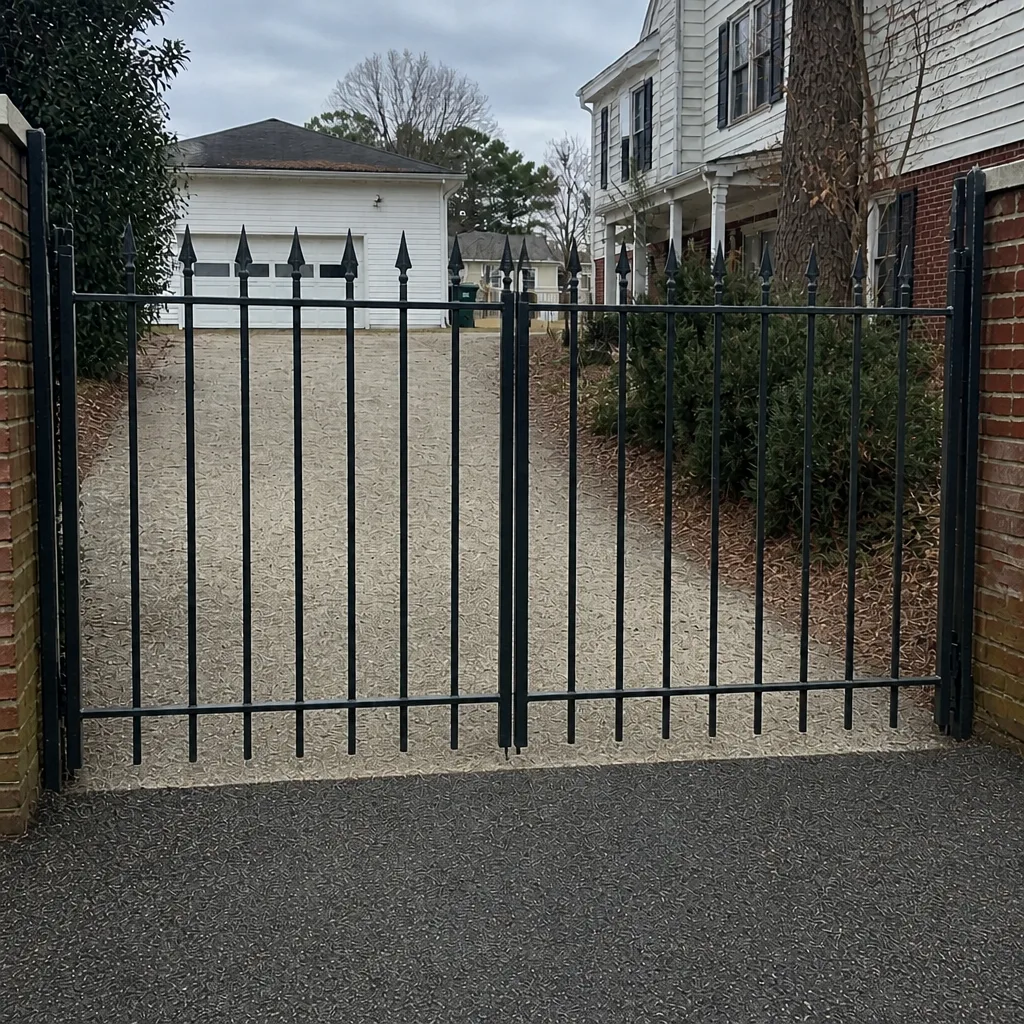
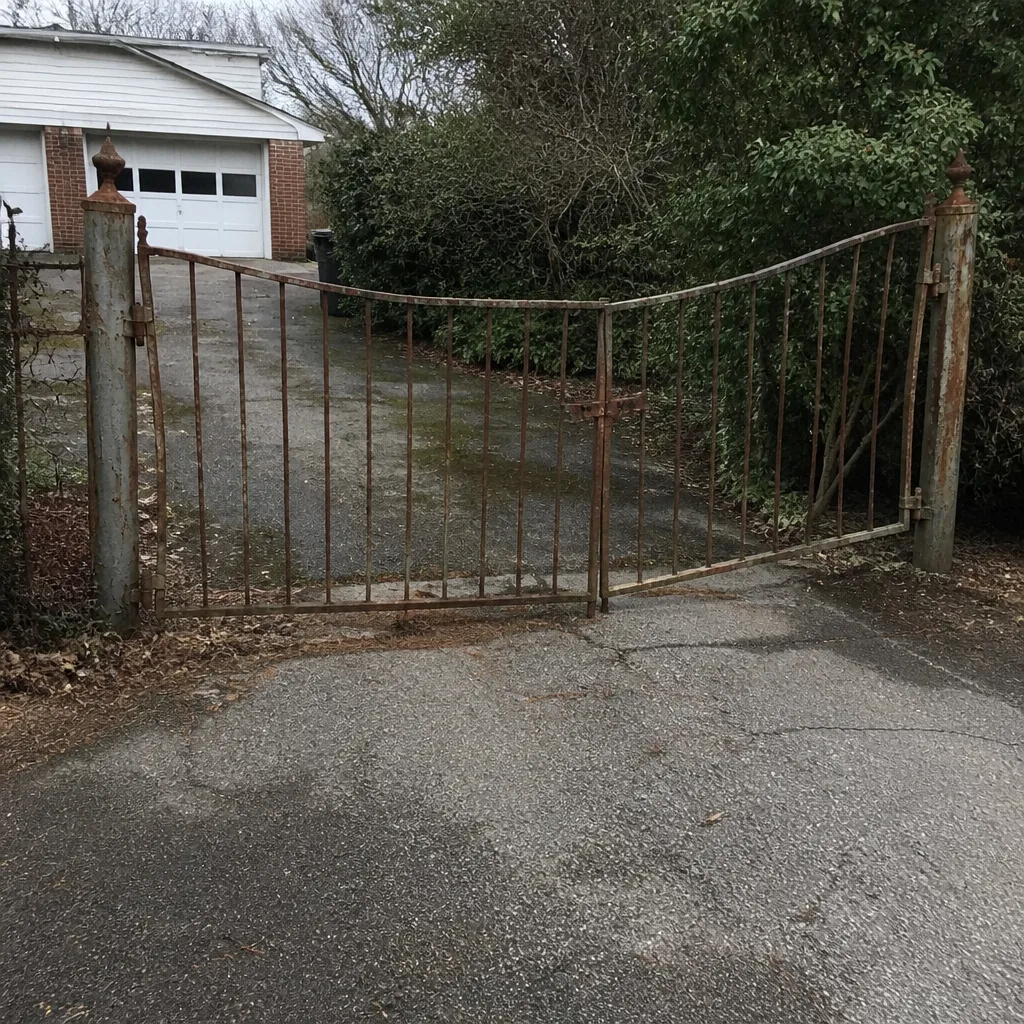
See the difference
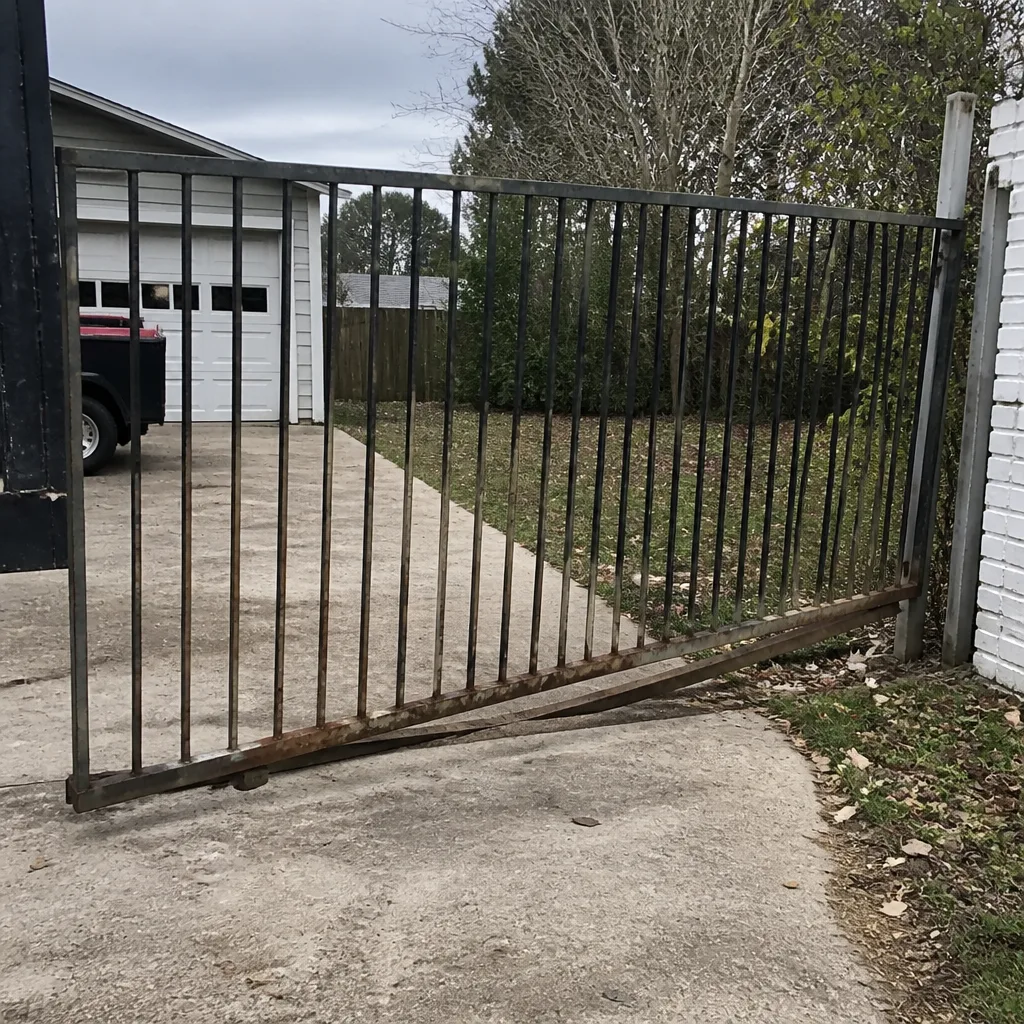 Before
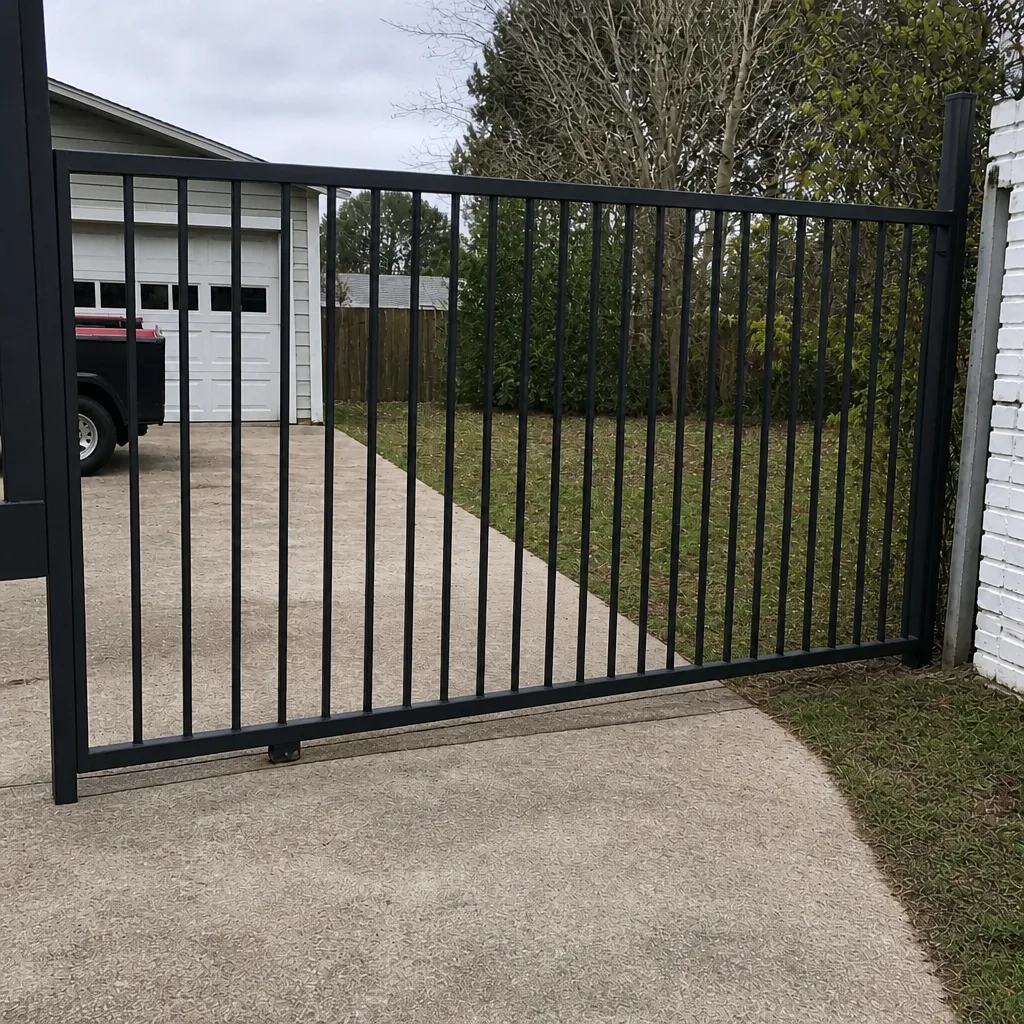 After
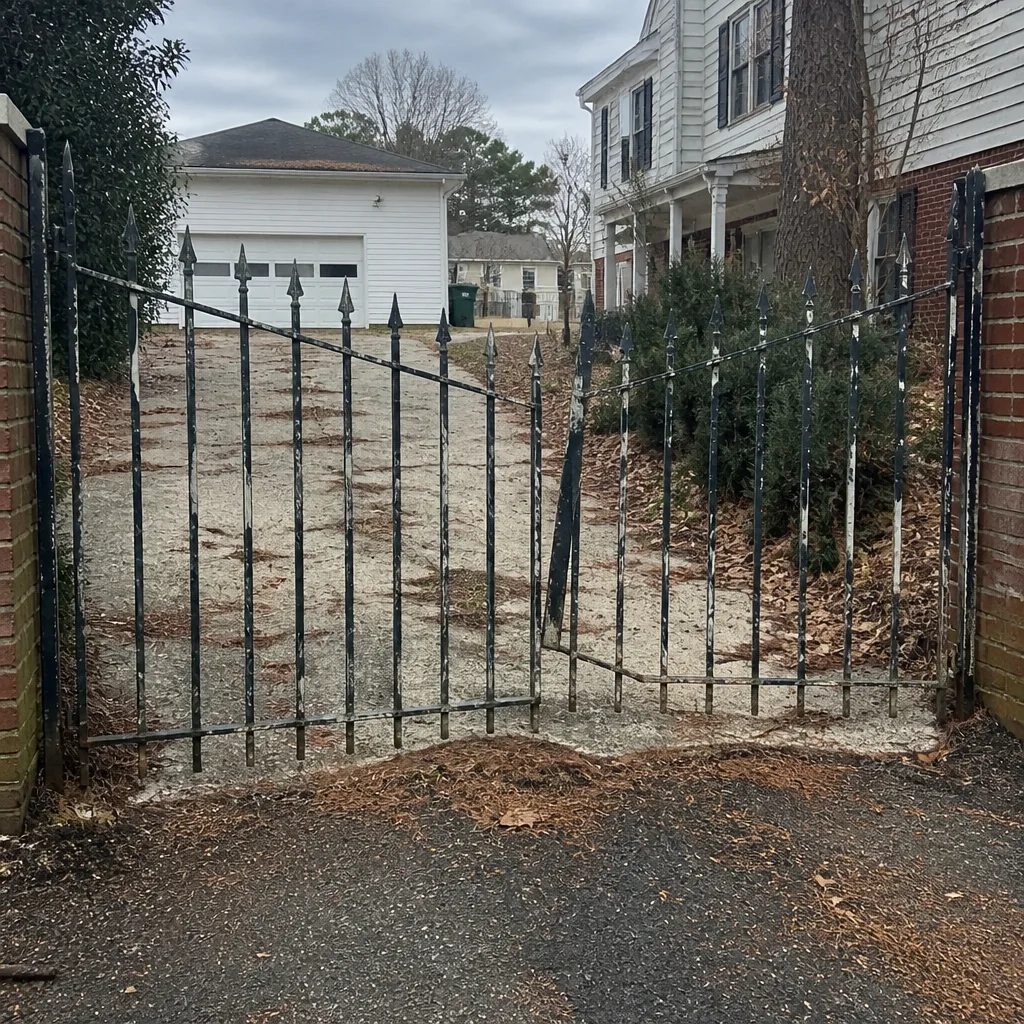 Before
 After
 Before
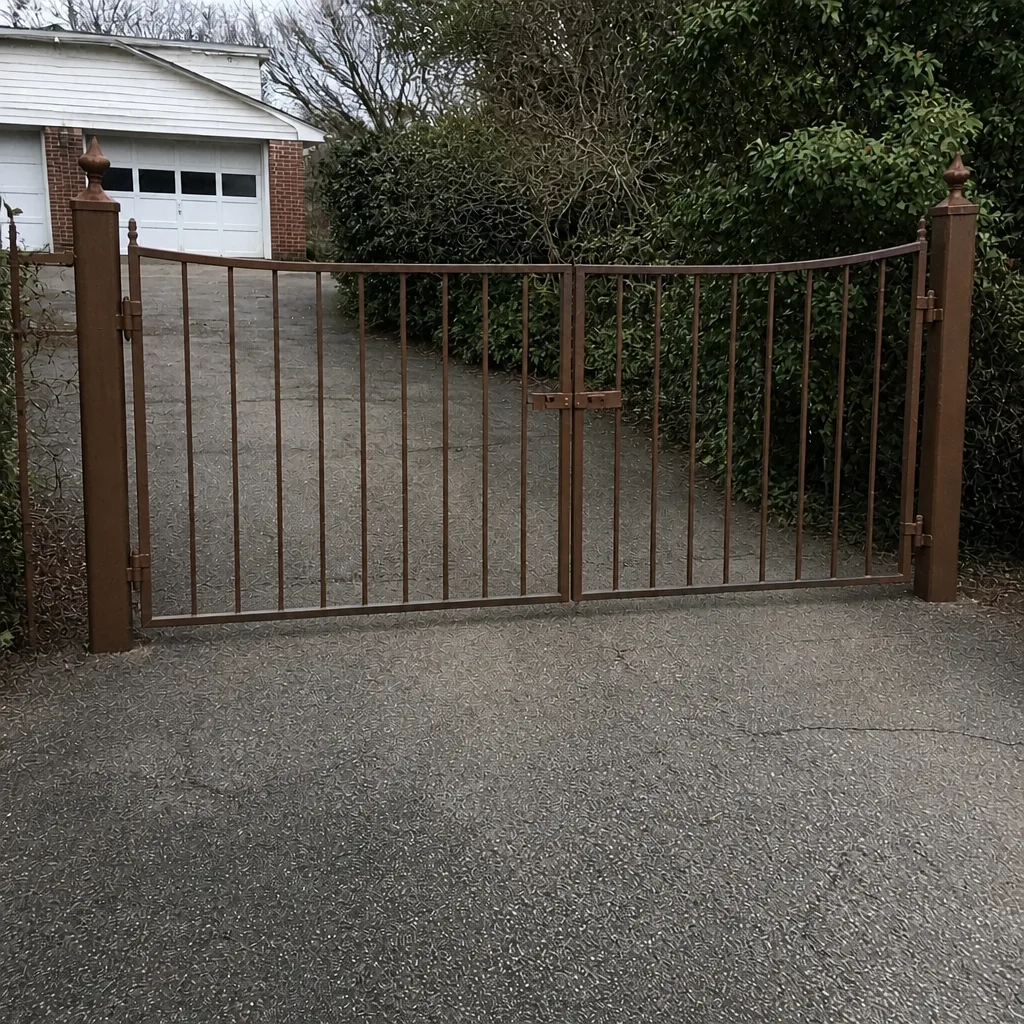 After
Common Mistakes to Avoid
- Treating a dragging gate as an operator problem. Usually the gate is binding and the operator is struggling. Fix the gate first, then judge the motor.
- Replacing a single worn part without checking why it wore. A worn hinge with a straight post is a hinge problem. A worn hinge with a leaning post is a post problem, and the hinge will just wear again.
- Assuming brand equals reliability. Every brand we service has good systems and weak points. The fix is knowing your specific system, not switching brands.
- Ignoring post movement because the gate “still works.” A gate that’s slightly off plumb is wearing its hinges and straining its operator every cycle, even if it opens.
- Opening the control box to “just check.” Live wiring inside a gate operator is dangerous. Diagnostics belong with a trained technician.
- Mismatching a replacement part. A close-enough control board or arm will run, but it can shorten the life of the operator it’s connected to. Match the original system.
- Putting off a small alignment issue. In a climate that shifts ground seasonally, a small misalignment is a bigger problem by the next wet season than it is today.
When to Call a Professional
Call a gate specialist when the gate has changed how it moves, not just when it has stopped. A gate that drags, sags, scrapes, or latches with effort is telling you the mounting has moved and the wear is underway. Call immediately if the operator reverses mid-travel, if the control board shows faults, if a slide gate comes off its track, or if wiring is exposed or damaged. Those are the safety-critical cases. Call also when a fix you tried didn’t hold, because a repeat failure is the strongest sign the root cause wasn’t addressed. Gate Repair Suffolk offers free estimates in Suffolk: call (855) 360-8054. We answer 24/7, with fast dispatch from 7am to 7pm, Sunday through Friday.
Frequently Asked Questions
Because the clay-heavy coastal plain soil under your posts expands and shrinks across seasons, and a gate set without allowance for that movement drifts out of true. The gate itself isn’t faulty; the ground under it is active. Correcting alignment properly means accounting for that movement, not just resetting the gate to level once. Call (855) 360-8054 for a free estimate.
We work on the major brands you’re most likely to have, including LiftMaster, FAAC, BFT, Linear, Viking, Ghost Controls, DoorKing, Elite, and Mighty Mule. Because we service the full range of systems, we’re not tied to one brand or pushing one replacement. Tell us what you have and what it’s doing, and we’ll get you to the right fix.
Two failures in a year usually point to cumulative damage or an unaddressed root cause, which is worth a careful look rather than another quick fix. It may still be repairable if the failures trace back to one cause. Call (855) 360-8054 and we’ll give you an honest assessment before you commit to anything.
Yes. We handle both, which means you don’t need one contractor for the gate and another for the operator. That matters because most “operator” problems are actually gate alignment or mechanical binding in disguise. Having both in one place keeps the diagnosis straight.
No. Gate operators involve live wiring and power, and automated gates carry real risks from heavy moving panels and slide gates that can come off track. Leave wiring and control-board work to a trained technician and call us instead. A repair priced and agreed on paper is far cheaper than an injury.
Every repair is priced per job by a written estimate, and we quote and agree the price before any work starts, with no surprise invoices afterward. The estimate is free. Call (855) 360-8054 and describe the problem so we can set up an on-site look.
The Bottom Line
In Suffolk, most gate problems trace back to three things: soil that moves under the posts, humidity that works at hinges and contacts, and replacement parts that don’t quite match the original system. Diagnose the root cause before anyone touches a part, and a genuine repair usually beats a replacement. Get the gate’s alignment right first, then judge the operator. If your gate is dragging, reversing, or failing a second time, don’t wait for the next season to make it worse. Call (855) 360-8054 for a free estimate. We answer 24/7, with fast dispatch from 7am to 7pm, Sunday through Friday. Estimates are free and the price is agreed before any work begins.
Written by the team at Gate Repair Suffolk.