
Last updated November 15, 2026
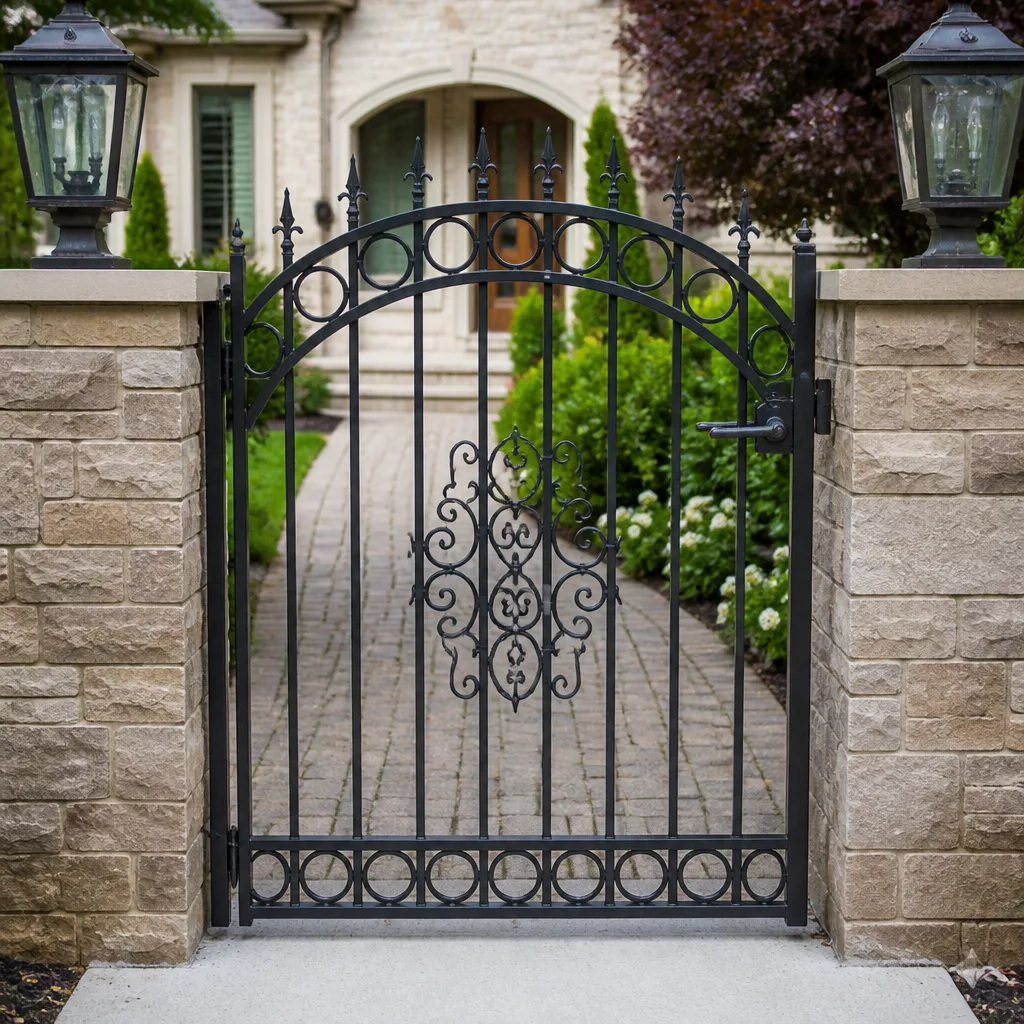 Wrought iron
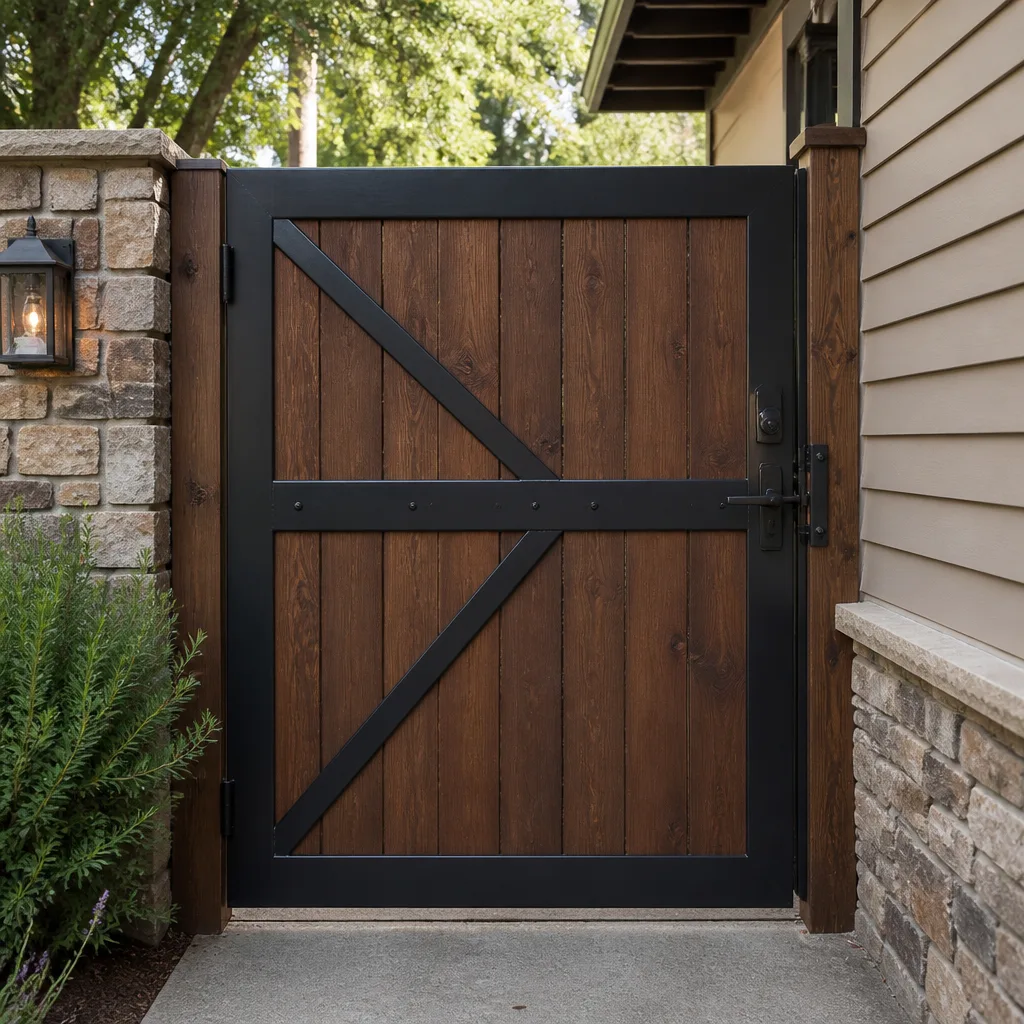 Wood & steel frame
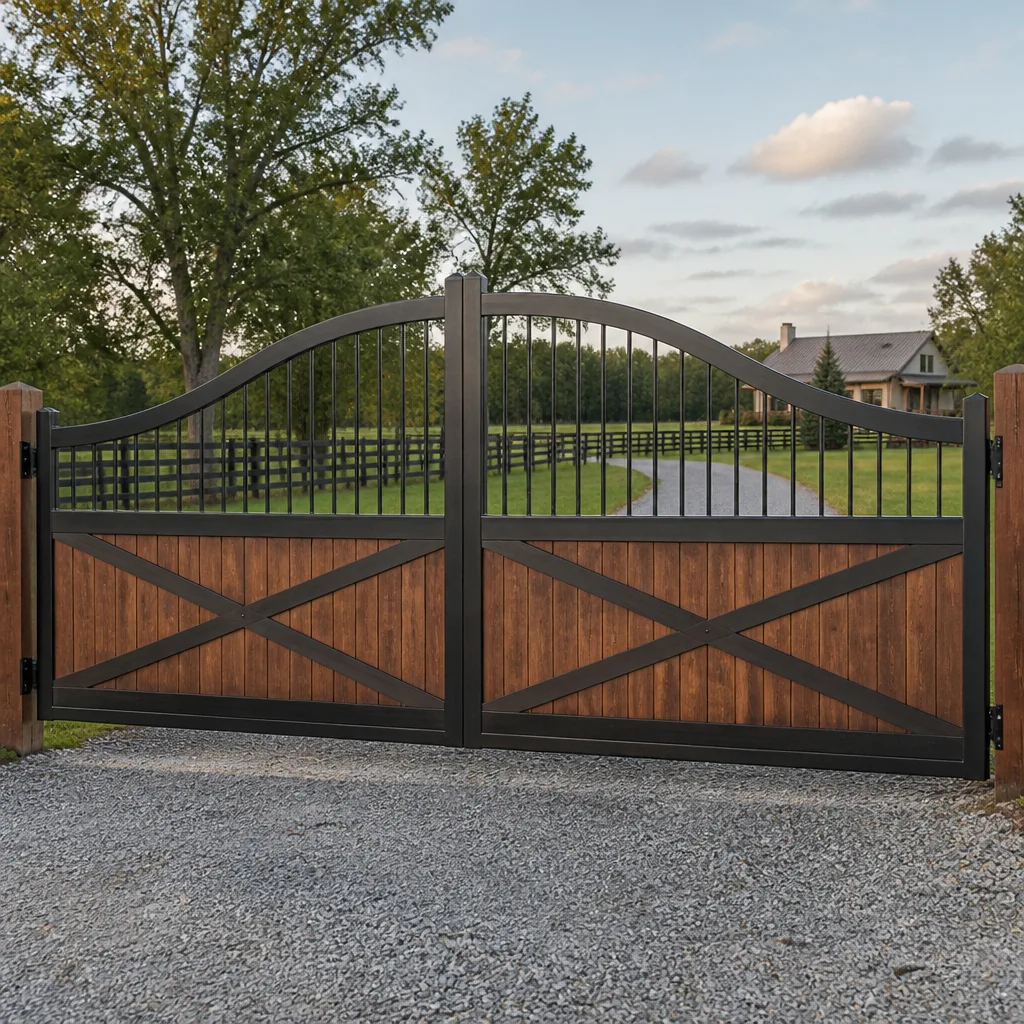 Farm & ranch
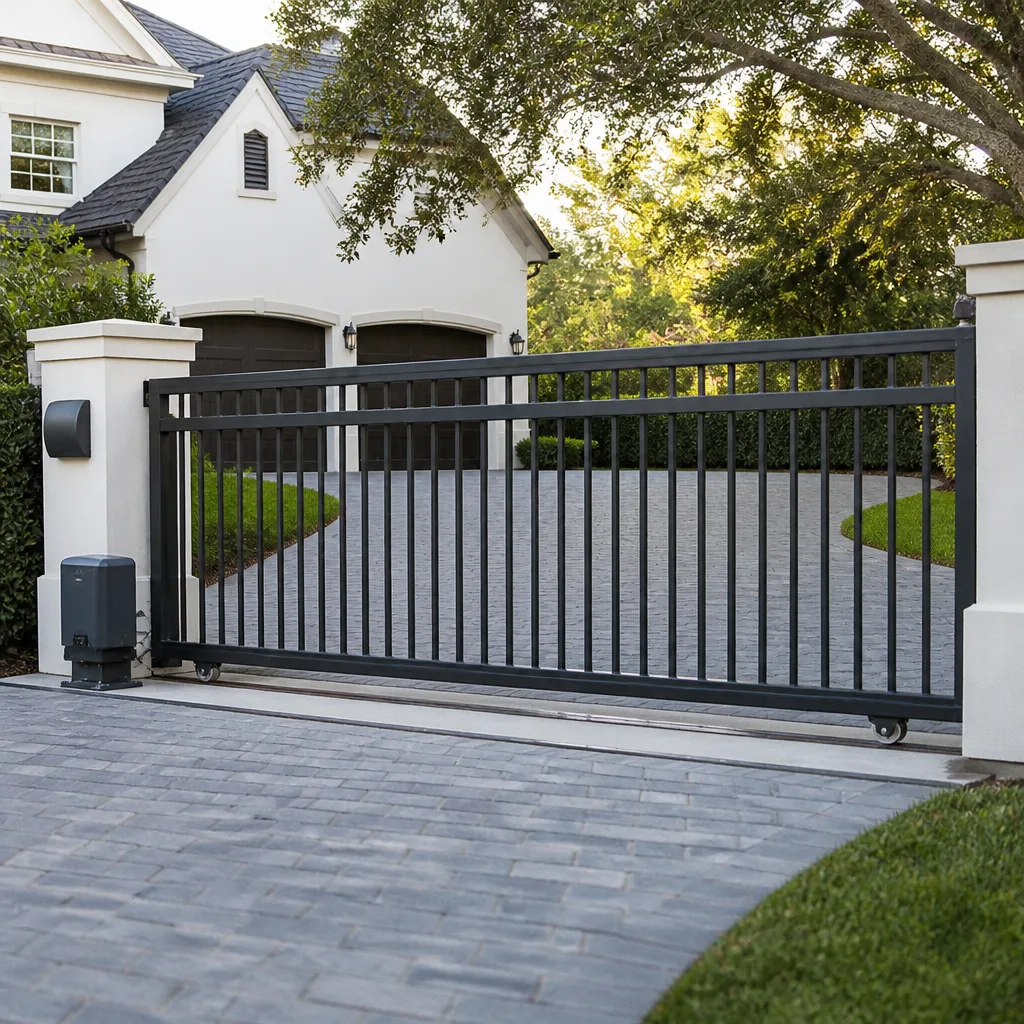 Sliding driveway gates
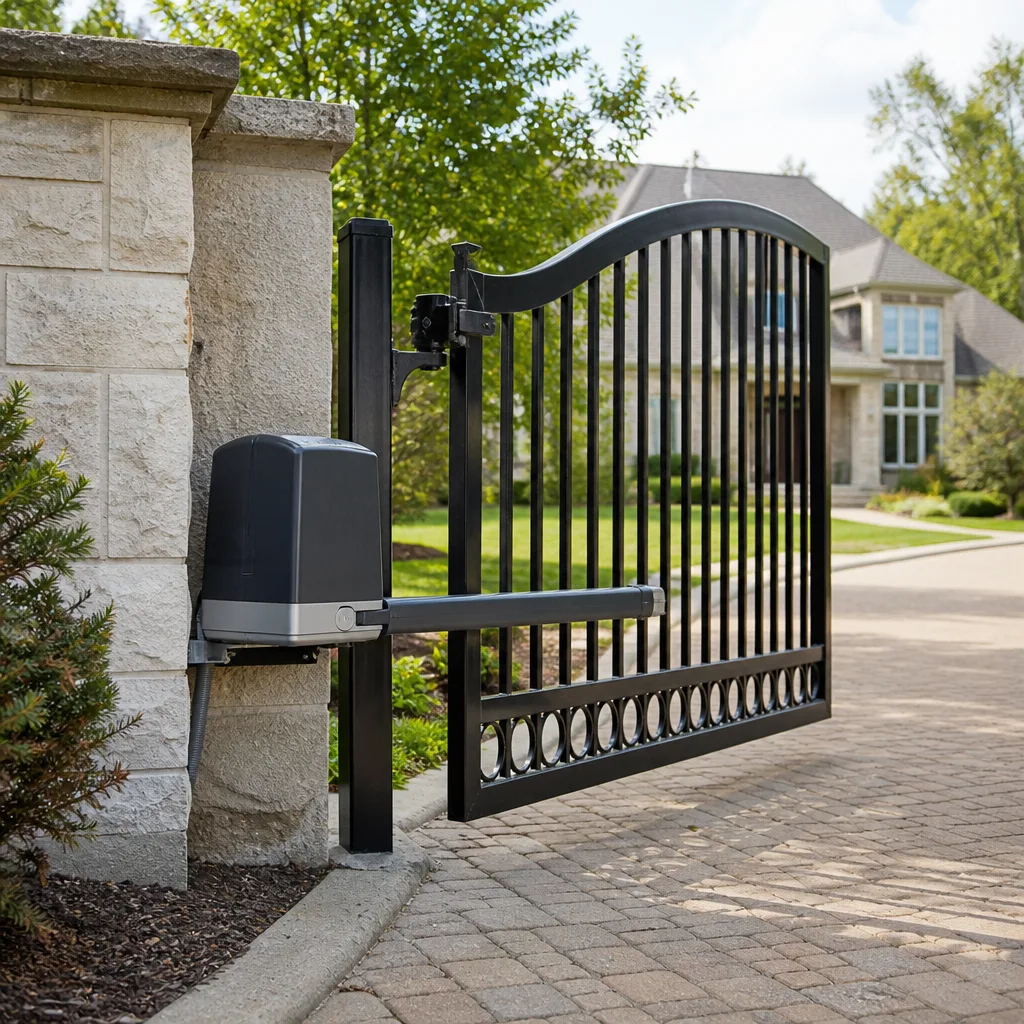 LiftMaster operators
Free on-site gate assessment - hinges, posts, and your LiftMaster or Nice gate operator checked before anything is quoted
The assessment is free and the quote is the invoice.
Get your free estimateGate Repair Emergency Preparedness Guide for Suffolk Homes
Most gate failures we hear about don’t happen in a storm. They happen the day after, when the power is still out and nobody in the household knows how to release the gate by hand. During the extended power outage that followed Tropical Storm Ophelia, several Suffolk households with automatic gates couldn’t get vehicles out for more than 12 hours because they had never tested their manual release and didn’t know where it was. The gate wasn’t broken. The preparation was. This guide walks through what an actual gate emergency looks like in Suffolk, where the release mechanism sits on the operators we see most often, what belongs in a gate emergency kit, and how to set up a household protocol so anyone in the family can get the gate open when it matters.
Quick Answer
Gate emergency preparedness in Suffolk means three things: knowing exactly where your operator’s manual release is and how to use it, keeping a small kit (spare remote, written release instructions, offline contact number) ready before storm season, and knowing the difference between a gate stuck closed and a gate stuck open so you respond correctly. Test the release yourself at least twice a year so a power outage never becomes a safety problem. If a fault appears during storm weather, Gate Repair Suffolk offers free estimates and can diagnose the issue once conditions allow.
Styles & brands we work with
- Wrought iron
- Wood & steel frame
- Farm & ranch
- Sliding driveway gates
- LiftMaster operators
Table of Contents
- Why Gate Preparedness Matters in Suffolk
- Where Your Manual Release Is, By Operator Brand
- Building Your Gate Emergency Kit
- Stuck Closed vs. Stuck Open: Response Priorities
- Flood and Storm Surge Damage to Gate Operators
- Creating a Household Emergency Protocol
- Common Mistakes to Avoid
- When to Call a Professional
Why Gate Preparedness Matters in Suffolk
Suffolk sits at the head of the Nansemond River and the Great Dismal Swamp, and that geography shapes how storms hit the city. Flooding during tropical systems and nor’easters moves inland through low-lying neighborhoods along the river corridor, and the power outages that follow often last longer than the storm itself. For a home with an automatic gate, that combination is the real problem. The gate itself is fine; the operator has no power, and the homeowner has no plan.
We’ve seen how quickly this turns practical. A gate that won’t open means a car that can’t leave for work in the morning, a delivery that can’t get in, or in a serious case, an emergency vehicle that can’t reach the house. The Virginia Department of Emergency Management advises households to plan for utility outages before storm season, and a gate belongs in that plan alongside food, water, and medication.
What makes Suffolk different from many inland cities is the frequency of named storms and the length of outages. Homes near the downtown historic district, in neighborhoods around Harbour View, and in rural parts of the city where the nearest substation is farther away all feel this. The same storm can leave one household with power back in hours and another waiting a day. A gate that was never tested for manual operation is the difference between a minor hassle and a blocked driveway.
We treat gate readiness as a maintenance topic, not an emergency one. It’s something you handle on a calm weekend, before you need it. That’s the whole point of this guide.
Where Your Manual Release Is, By Operator Brand
Every automatic gate operator has a way to disconnect the gate from the motor so it can be moved by hand. The mechanism isn’t always obvious, and it varies by brand. When we service a gate in Suffolk, finding and demonstrating the release is part of what we do, because a release the homeowner can’t find is useless in the moment they need it. Our technicians have up to 10 years of experience across the brands below and know where each one hides its release.
Here’s what to look for by brand. These are the most common operators we see on residential and small commercial gates locally:
- LiftMaster swing and slide operators: the release is usually a key-lock or a manual release lever on the side of the operator housing near the motor. Insert the key, turn, and pull the lever or arm to disengage the drive. On some LiftMaster models the release is on top of the housing.
- FAAC operators: the manual release on FAAC swing operators is typically under a cover on the bottom or side of the housing. Unscrew or lift the cover, then pull the release lever or insert the key provided. FAAC slide operators have a similar release near the drive gear.
- BFT operators: BFT swing and slide units usually have a release key entry on the housing. Insert the release key and turn until the gate can be moved by hand. On some BFT models the release requires lifting a small access flap first.
- Linear operators: Linear slide gate operators often use a release handle or lever near the manual override. The exact location depends on the model, so check the inside of the housing cover or the underside of the operator if the outer face doesn’t show it.
Two general points apply to all four brands. First, the release is designed to be operated by hand, not forced. If it won’t move easily, don’t wrench it. Second, always test the release on a calm day with the gate in a safe position and no vehicles nearby. That way you learn the motion before you ever need it under pressure.
If you can’t locate the release on your operator, that’s not a sign of a broken gate; it’s a sign you need a professional to walk you through it. Our gate repair service includes showing homeowners where the release is on their specific unit.
Building Your Gate Emergency Kit
A small, prepared kit near the gate or in the garage does more for gate readiness than any app or service call. The goal is to have every item you’d need to open the gate by hand and to contact help, ready before the storm hits. Here’s what belongs in it:
- A spare remote. Keep a backup remote in a drawstring bag or on a hook in the garage, not in the car. If the gate stops responding, you’ll want to test a different remote to rule out a dead battery versus a bigger fault.
- Written manual release instructions. Print the release steps for your specific operator brand, laminate the page, and post it on the wall of the garage near the gate. Include a simple diagram if you can draw one. Someone who has never released the gate before should be able to follow it.
- A battery backup test schedule. Most operators with battery backup need the battery tested periodically. Write the test date on the laminated sheet and check it twice a year, before storm season and mid-season. A dead backup battery in an otherwise healthy operator is the most common failure we find when we inspect gates that sat through an outage.
- Technician contact stored offline. Save (855) 360-8054 in a phone that works when the internet is down, and write it on the laminated sheet too. If your phone is dead or the cellular network is overloaded during a storm, you’ll want the number somewhere physical.
- A small flashlight and a set of release keys. Some operators require a release key to disengage; keep the key where the instructions are posted, not in a drawer somewhere else.
One other item that’s easy to forget: a photo of the operator’s model and serial plate. If you ever need a part or a diagnosis, that photo saves time and avoids guessing. Snap it once, print it, and keep it with the kit.
We’ve seen what happens when a household has no kit and no plan. The gate fails, the family improvises, and the response takes longer than it should. A five-minute setup on a calm day fixes that.
Stuck Closed vs. Stuck Open: Response Priorities
A gate stuck closed and a gate stuck open are two different emergencies, and they call for different priorities. Getting this backward during a storm wastes time and can create a safety problem.
Gate stuck closed
This is the situation most homeowners worry about, and rightly so. A closed gate blocks vehicles, including emergency vehicles, and can prevent a household from leaving during a crisis. The priority is to get the gate open manually or to clear an alternate route. Follow the numbered steps:
- Confirm the gate is actually stuck (operator has no power, remote doesn’t respond) and not just delayed.
- Locate your manual release using the laminated instructions.
- Disengage the operator and move the gate open by hand, slowly and steadily.
- Secure the gate in the open position using a physical prop or the operator’s manual lock, so it doesn’t swing back.
- Write down what happened so a technician can diagnose the fault quickly.
Gate stuck open
A gate stuck open is a security risk, not an access problem. The priority is to secure the property, not to reopen passage. If the gate is stuck open because of a power failure mid-cycle, the gate may be partially open with the motor disengaged. Move it by hand to a secure position if you can, close it manually, and lock it with a padlock or chain if the operator won’t hold it. If the gate is stuck open because of a mechanical failure (a bent hinge, a jammed track), don’t force it; a heavy gate panel that isn’t supported can fall or crush someone.
In both cases, call us if you need help. Our electric gate repair team diagnoses operator and control-board faults quickly, and we’ll help you decide whether the gate can be secured safely or needs a technician on site.
Flood and Storm Surge Damage to Gate Operators
Storm surge and flooding along Suffolk’s low-lying areas can damage gate operators in ways that aren’t obvious from a quick look. A flooded operator might still turn on after the water recedes, which makes it tempting to restore power right away. That’s a mistake. Water in the control board, the battery compartment, or the wiring can cause shorts, false triggering, or sensor failure, and sometimes the damage doesn’t show until weeks later.
Before restoring power after a flood event, do the following inspection:
- Look inside the operator housing. If you see water, mud, or damp residue inside, don’t power it up. The control board needs inspection and likely drying or replacement.
- Check the sensors. Safety sensors (photocells) at the gate posts are vulnerable to water. A submerged sensor can cause the gate to refuse to close or to reopen unexpectedly.
- Inspect the wiring runs. Low-voltage wiring along the fence line can pull water into junction boxes. Look for corrosion at connections and any swollen or cracked insulation.
- Test the battery backup. Water exposure can damage the backup battery even when the main board looks fine. A failed battery won’t show up until the next outage.
- Don’t run the gate until the operator is dry and the housing is resealed. Opening the gate on a wet control board risks shorting components that were fine before the flood.
If you’re in a low-lying part of Suffolk near the river and your operator has been underwater, play it safe and have it inspected before you use it. We handle post-flood inspections as part of our Gate Repair Suffolk service, and we can tell you what needs drying, what needs replacing, and what’s fine.
Creating a Household Emergency Protocol
The single most effective thing you can do to prevent a gate emergency is make sure more than one person in the household can operate the gate manually. During a power outage, the person who usually maintains the gate may not be home. A protocol that everyone understands solves that.
Here’s how to build one:
- Write a one-page gate protocol. Include where the manual release is, how to use it, where the kit lives, and the emergency contact number.
- Walk every adult in the household through the release motion once. Show them the release, then have them do it themselves while you watch.
- Post the protocol in the garage and near the gate, laminated so it survives weather and humidity.
- Set a recurring reminder twice a year, before storm season and again mid-season, to test the release and check the backup battery.
- Add the gate number to the household’s emergency contacts, with a note that it’s the gate specialist, not a general contractor.
- Keep the spare remote and release keys in a known location, and tell everyone where that location is.
What we like about this protocol is that it doesn’t require any technical skill. It just requires that the information is written down and that one person in the household has actually done the motion. A teenager who has never touched the operator can follow a laminated sheet with a diagram. That’s the whole test.
If you’d like us to walk your household through the release on your specific system, Suffolk homeowners call us for a quick visit and we’ll show you where everything is and how it works. We work on your brand, so you’re not getting a generic explanation.
See the difference
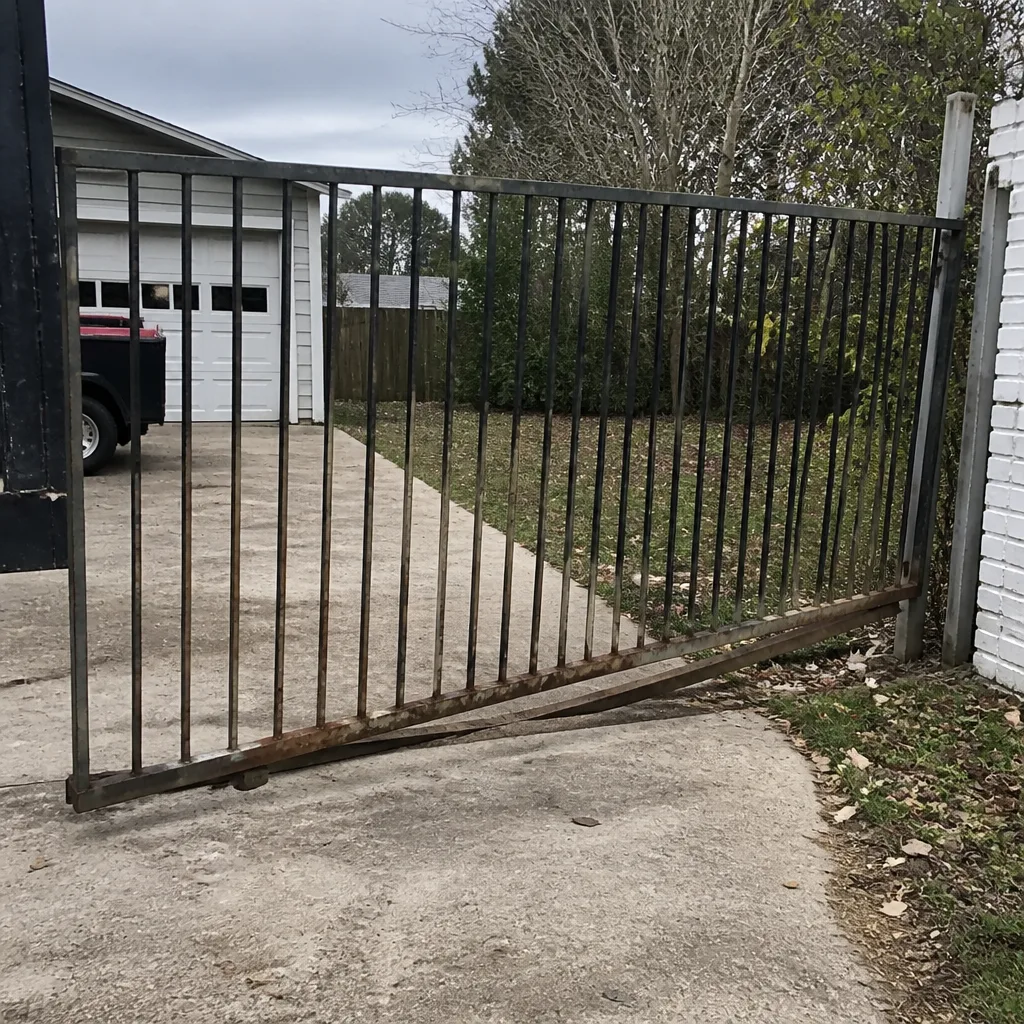 Before
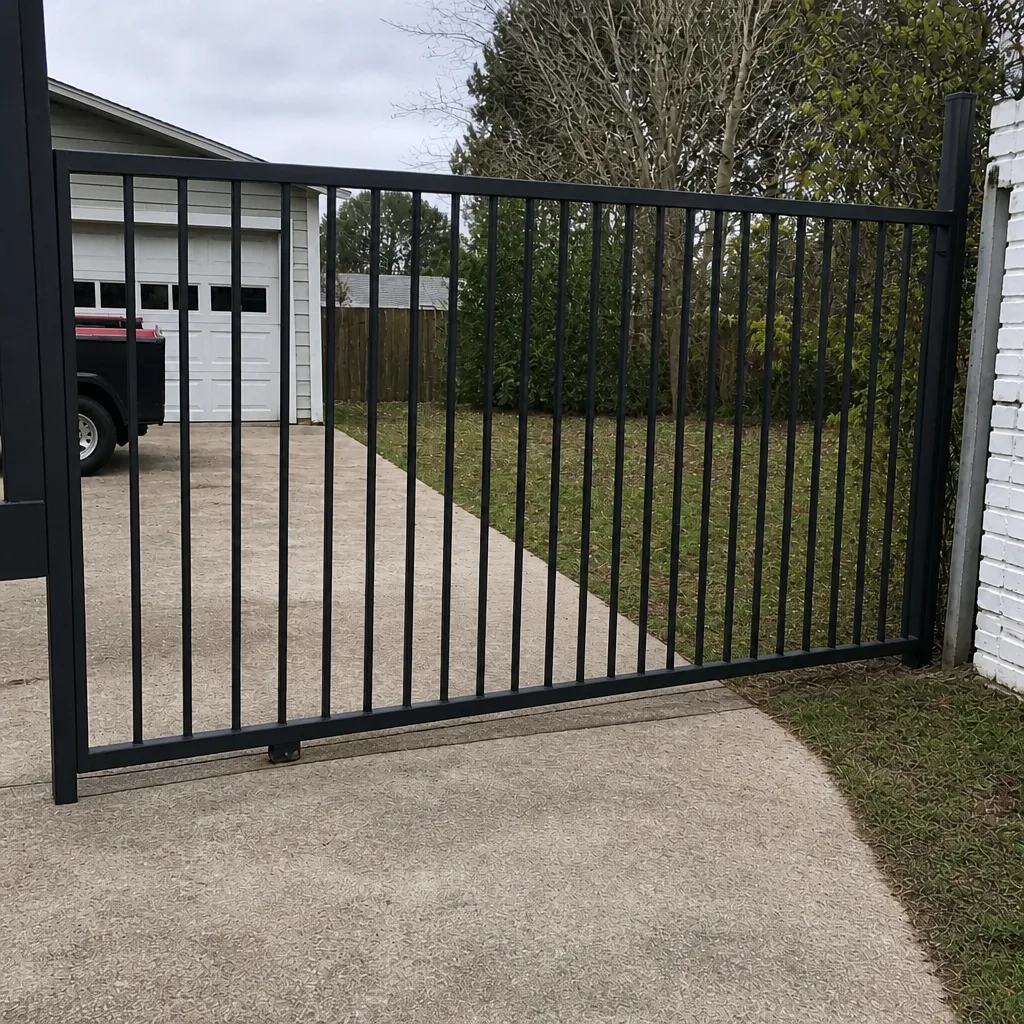 After
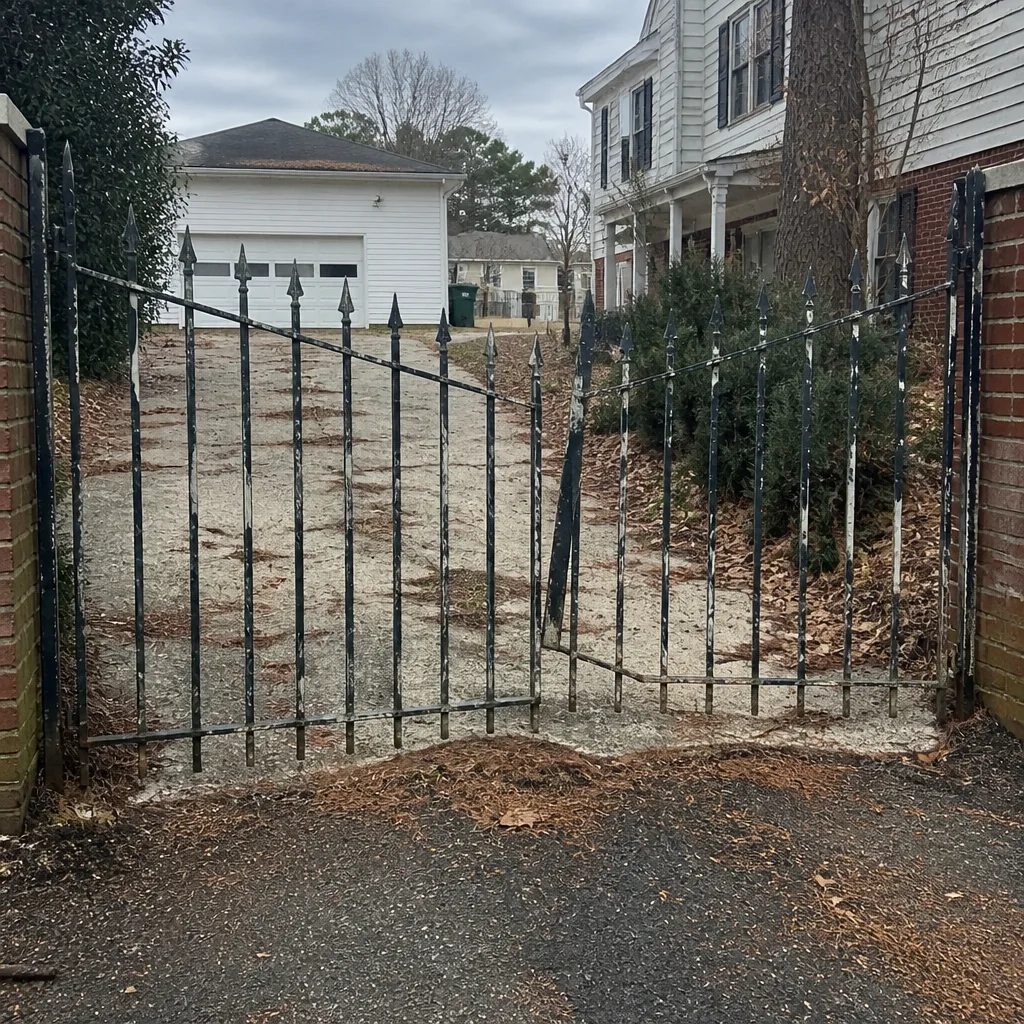 Before
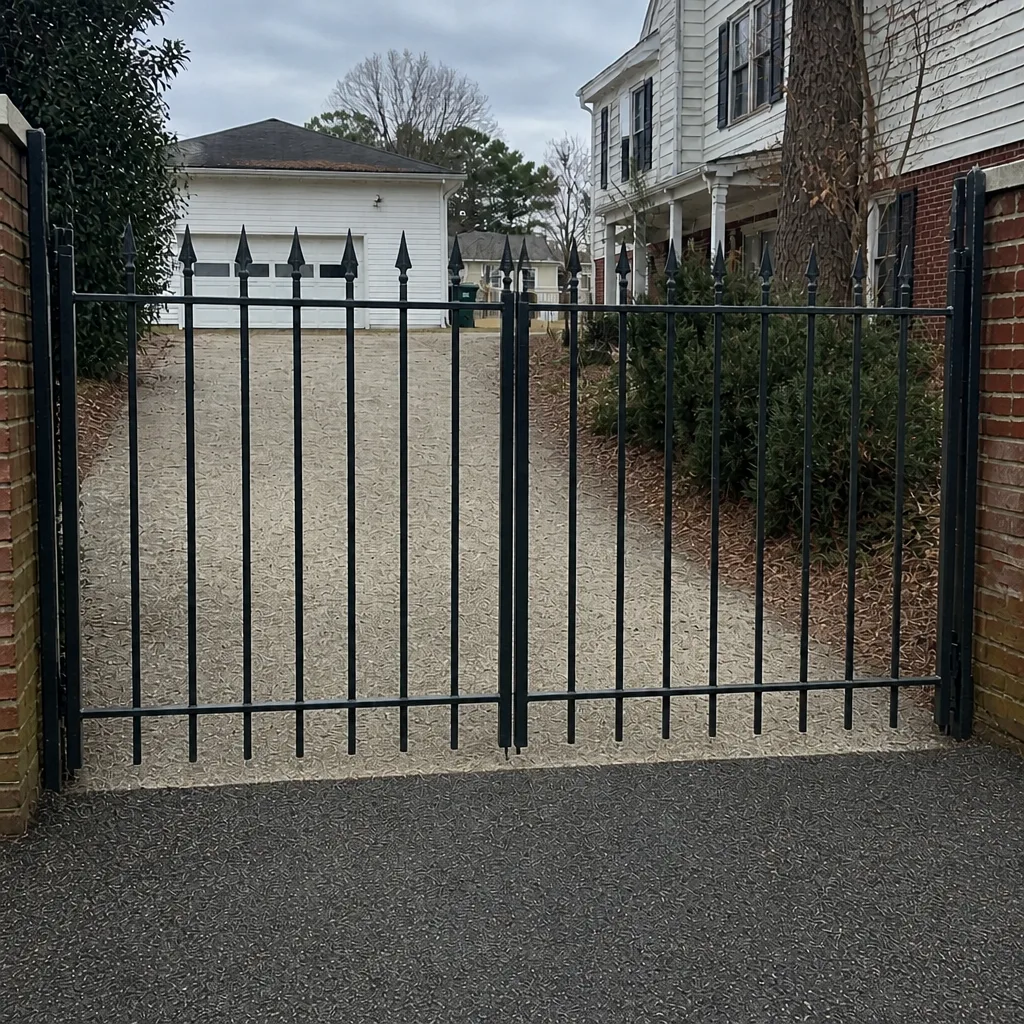 After
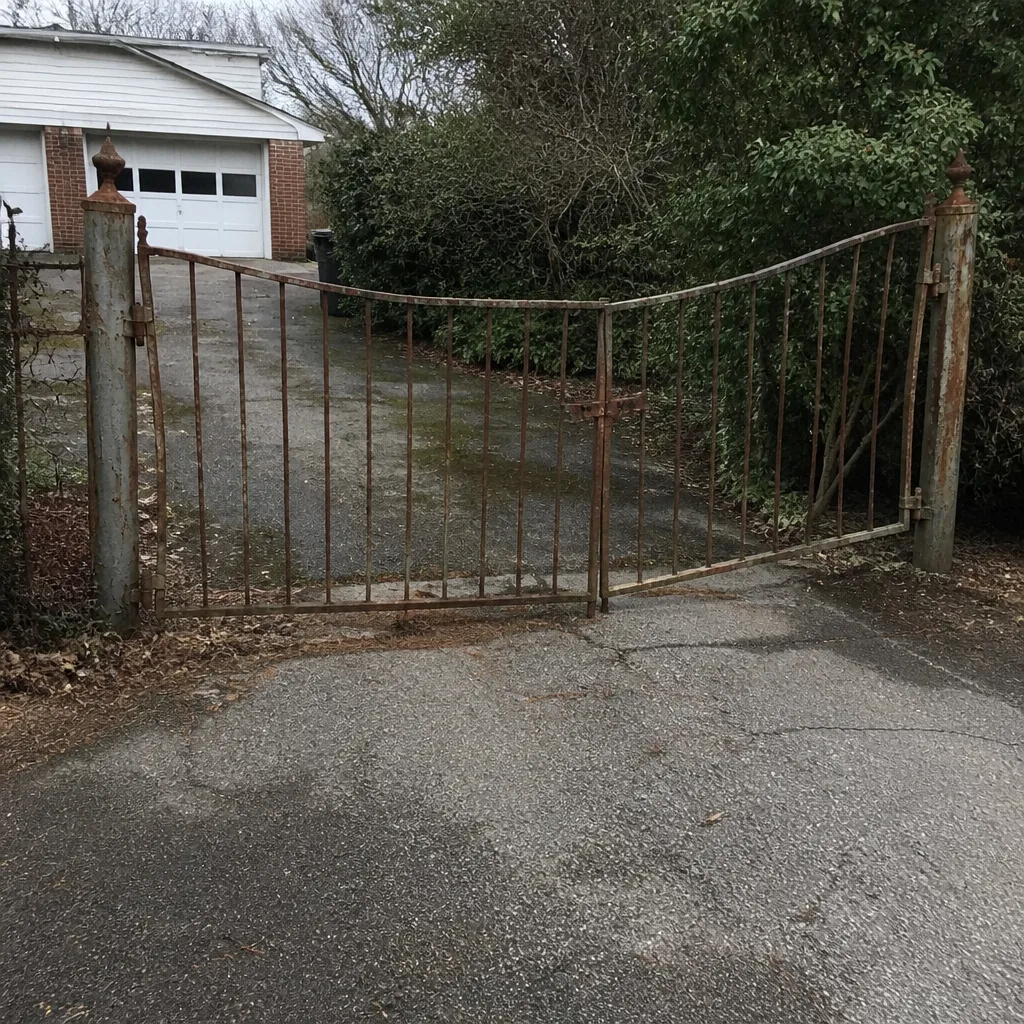 Before
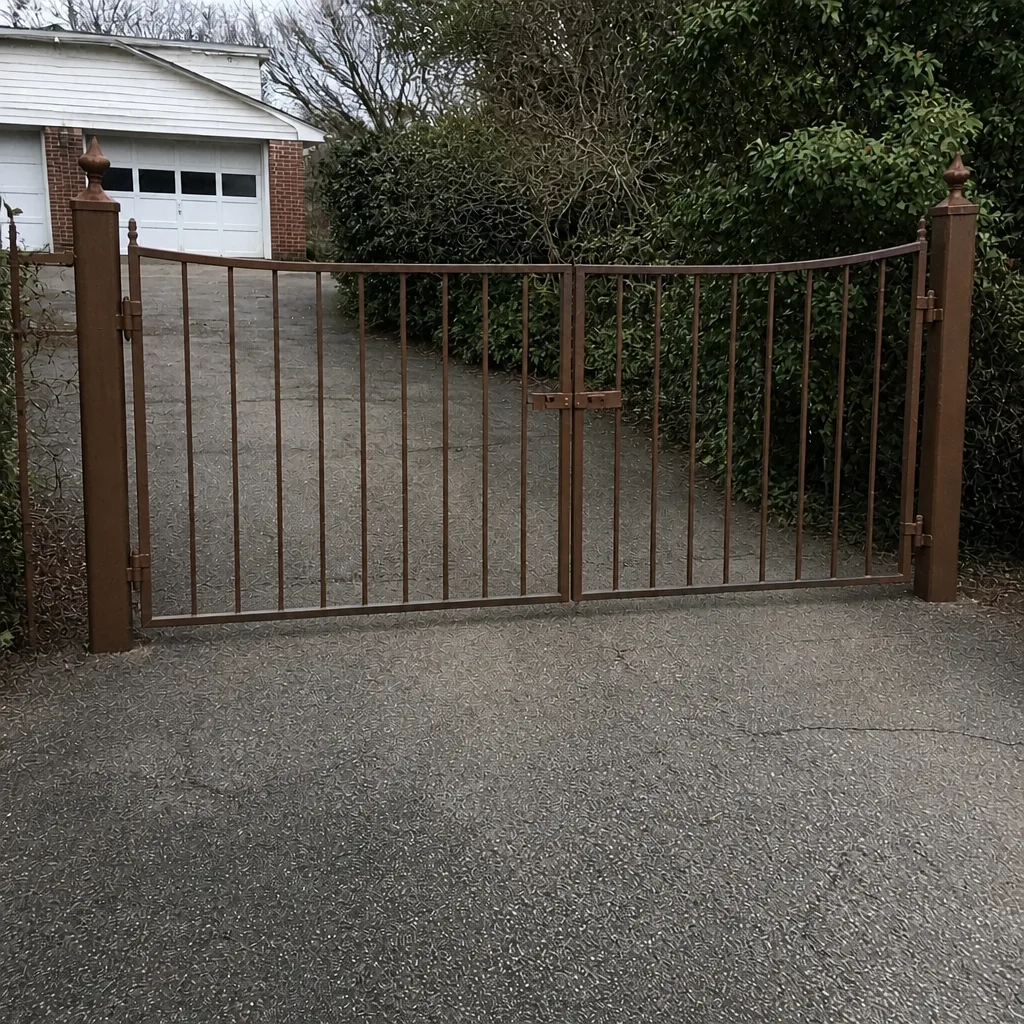 After
Common Mistakes to Avoid
- Never testing the manual release. Most homeowners assume the release works because it came with the gate. If it’s stiff, seized, or hidden behind a cover they didn’t know about, they find out during a power outage. Test it twice a year, on a calm day.
- Forcing a stuck release with a wrench. A manual release is designed to move by hand after a key turn or lever pull. If it won’t move, something is jammed. Forcing it can break the release mechanism or damage the drive. Call a professional instead.
- Restoring power to a flooded operator. In Suffolk’s low-lying areas near the river, an operator that sat through a flood may look dry on the outside. Powering it up before checking the control board can cause shorts that cost more to fix than a preemptive inspection.
- Keeping the only release key in the glove box of one car. If that car is blocked by the closed gate, the key is useless. Keep release keys with the kit, posted near the operator, and definitely not in a single vehicle.
- Assuming the backup battery is fine because the gate worked last month. Backup batteries degrade quietly. A battery that passed a test a year ago may not hold a charge now. Test on a schedule, not on a hunch.
- Ignoring repeated false triggering. A gate that opens or closes unexpectedly often has a failing sensor. In storm season, false triggering can disengage the gate mid-cycle and leave it stuck open. Get it checked before the next named storm.
- Trying to fix operator wiring yourself. The operator runs on line voltage, and the control board and wiring aren’t a DIY repair. A shock or a short from an amateur fix is the kind of mistake that turns a minor fault into a replacement.
When to Call a Professional
Call a professional when the release won’t move, when the operator shows signs of water damage, when the gate is stuck open and won’t secure, or when the gate behaves erratically during or after a storm. Call us if the gate is heavy or commercial-grade and you’re not sure how to move it safely; heavy panels that come off their track can crush, and that’s not a homeowner’s job. Call us if your operator is a brand you haven’t worked with and you can’t find the release, or if the control board is misbehaving after an outage. Gate Repair Suffolk covers both manual gate repair and electric gate repair under one roof, so we can diagnose the whole system, not just the operator or just the gate panel.
We offer free estimates in Suffolk. Call (855) 360-8054. We answer 24/7. Fast dispatch is from 7am to 7pm, Sunday through Friday, and we’re closed Saturday. If a call comes outside dispatch hours, it’s booked into the next opening, Sunday through Friday, 7am to 7pm.
Frequently Asked Questions
Locate your operator’s manual release, use the release key or lever to disengage the drive, and move the gate by hand. The release location varies by brand: on LiftMaster it’s typically a key-lock or lever on the side or top of the housing; on FAAC and BFT it’s often under a cover or behind a release key entry; on Linear it may be a handle or lever near the manual override. Test the release twice a year so you’re not learning it during an outage.
Keep a spare remote, laminated manual release instructions posted in the garage, a battery backup test schedule, and a technician contact number stored offline. Add a small flashlight and any release keys your operator requires, and snap a photo of the operator’s model plate so a technician can identify the unit quickly. The kit lives near the gate or in the garage where everyone can find it.
Yes. Water in the control board, battery compartment, or wiring can cause shorts and sensor failures that don’t show until later. If your operator sat through flooding in a low-lying part of Suffolk, inspect it and have it checked before restoring power. A flooded operator that powers up once isn’t necessarily undamaged, and running it on a wet control board risks a more expensive failure.
A gate stuck closed blocks access, including emergency vehicles, so the priority is getting it open manually and securing an alternate route. A gate stuck open is a security risk, so the priority is moving it to a secure position, closing it if possible, and locking it. Never force a heavy gate panel that’s jammed; call a technician if you’re unsure.
A gate that triggers on its own usually has a failing safety sensor or a control-board fault, and storm weather can make it worse. False triggering mid-cycle can leave the gate stuck open. Have the sensor and operator checked before the next named storm; a small fault is easier to fix than a gate that failed during an outage.
Yes. We work on your brand and will show every adult in the household where the release is and how to use it on your specific operator. Gate Repair Suffolk offers free estimates in Suffolk. Call (855) 360-8054. We answer 24/7. Fast dispatch is from 7am to 7pm, Sunday through Friday, and we’re closed Saturday.
The Bottom Line
Gate emergency preparedness in Suffolk comes down to knowing your system before you need it. Find the manual release and test it twice a year, build a small kit with a spare remote and laminated instructions, keep a technician number offline, and post a household protocol so anyone can open the gate by hand. Understand that a gate stuck closed is an access problem and a stuck open is a security problem, and that floodwater can damage an operator that still turns on. Our technicians have up to 10 years of experience across the brands we service, and we treat gate readiness as routine maintenance, not an emergency topic. Handle it on a calm day and the next storm is just weather.
Written by the team at Gate Repair Suffolk.