
Last updated November 15, 2026
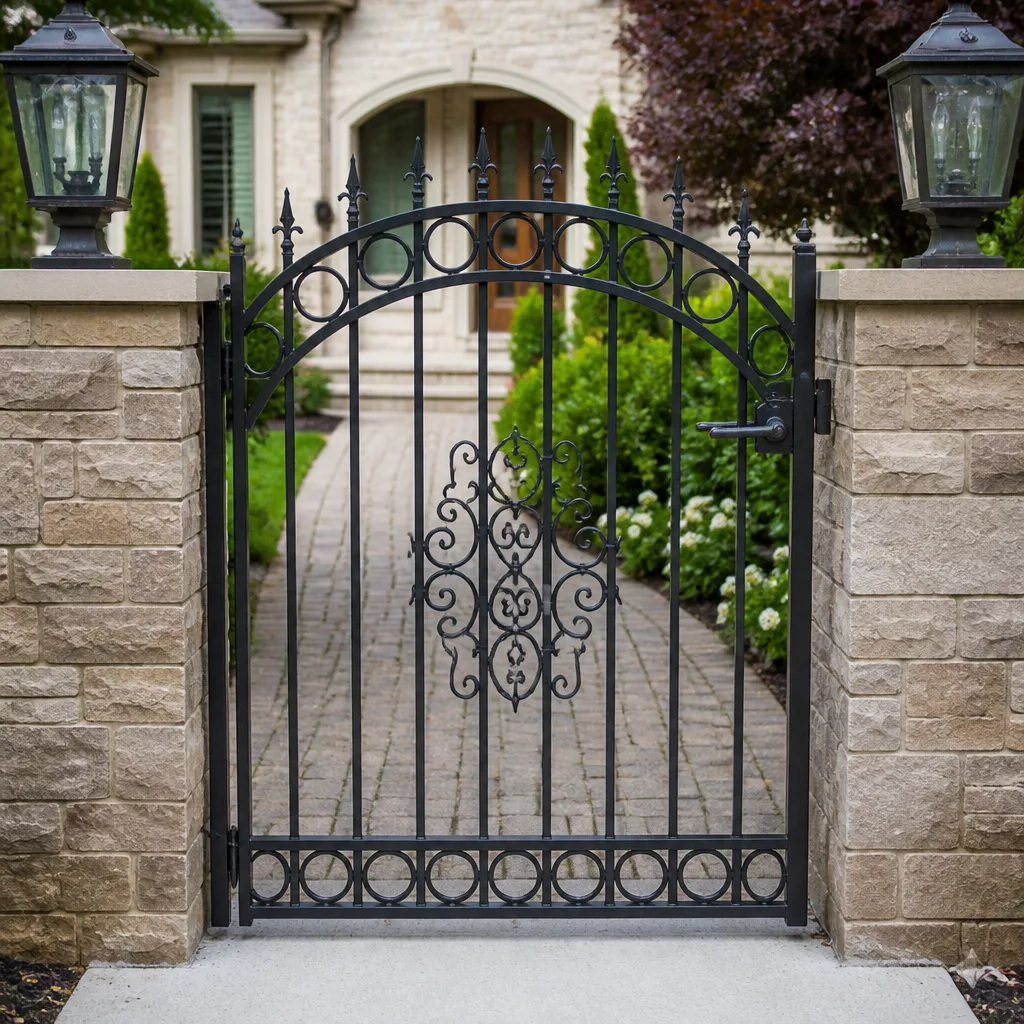 Wrought iron
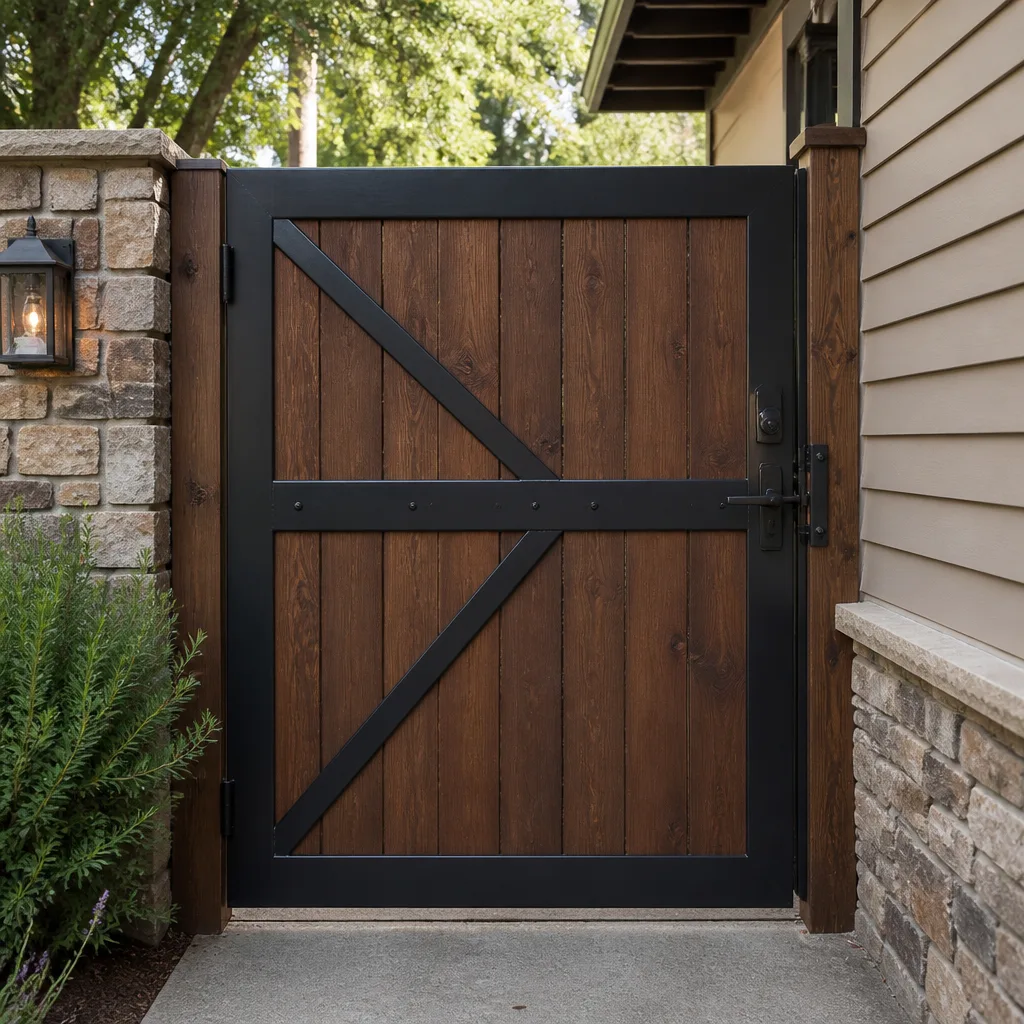 Wood & steel frame
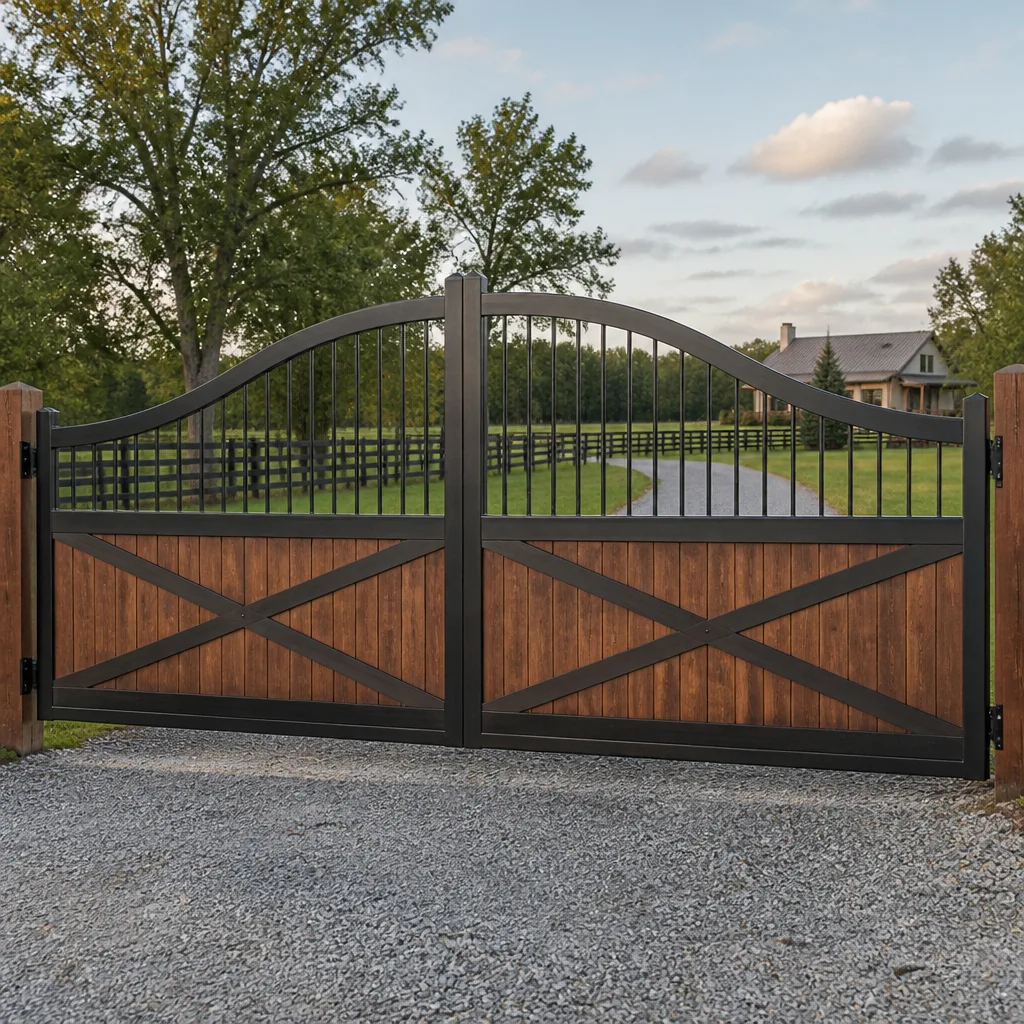 Farm & ranch
 Sliding driveway gates
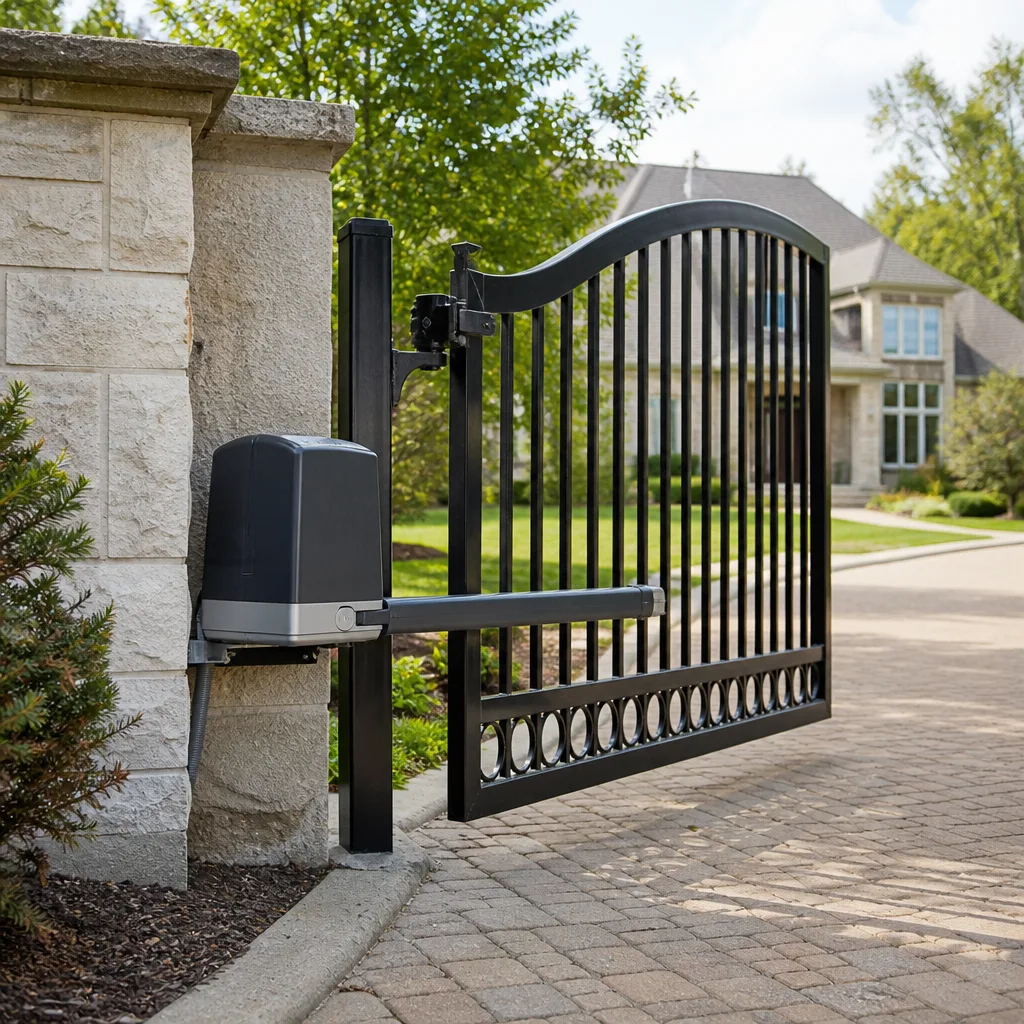 LiftMaster operators
Free on-site gate assessment - hinges, posts, and your LiftMaster or Nice gate operator checked before anything is quoted
The assessment is free and the quote is the invoice.
Get your free estimateHow to Hire a Gate Repair Contractor in Suffolk: A Step-by-Step Guide
Most homeowners hire a gate contractor the same way they hire a plumber: get three quotes, pick the cheapest. That approach works when the job is simple. It fails badly on a gate operator, because the person diagnosing the problem matters more than the price on the estimate. A technician who has never touched a LiftMaster control board can fry it during diagnosis, turning a simple limit-switch repair into a board replacement. This guide teaches you to judge technical competence before you ever look at a number, walk through the five diagnostic questions that separate specialists from generalists, and explain how licensing, written scopes, and brand-specific parts all factor in. Suffolk is full of difficult gates to work on, and the right contractor makes the difference.
Quick Answer
To hire a gate repair contractor in Suffolk, verify their Virginia contractor license, confirm they work on your specific brand (not just gates in general), ask for a written scope of work with line-item pricing, and test their diagnostic knowledge with five technical questions before they touch the gate. Price is the last thing you compare, never the first. A specialist charges what the job is worth; a low bid from a generalist often costs more once the damage is done.
Styles & brands we work with
- Wrought iron
- Wood & steel frame
- Farm & ranch
- Sliding driveway gates
- LiftMaster operators
Table of Contents
- Why gate work is a different trade from general repair
- Five diagnostic questions to ask before anyone touches the gate
- Virginia licensing and credentials: what to verify
- How to read a gate repair bid (and spot a bad one)
- Brand-specific parts vs. generic substitutes: why it matters
- What a proper written scope of work includes
- Red flags specific to gate repair
- What happens when you call
Why Gate Work Is a Different Trade from General Repair
A gate looks like a fence with a motor. It isn’t. A residential automated gate combines three distinct disciplines: mechanical structure (hinges, posts, tracks, panels, rollers), electrical power (the run from your panel to the operator), and low-voltage control electronics (the motor, control board, safety edges, sensors, remotes, and photo-eye wiring). A skilled gate technician reads all three at once. A generalist reads the mechanical part and guesses at the rest.
That gap is why a gate that “just needs a new remote” can end up with a replaced control board, and why “the gate stopped working” can be a broken hinge, a dead photo-eye, a power fault, or a failed operator. The diagnosis is where the skill lives. On a branded operator, that diagnosis requires knowing the specific fault codes, the board layout, and the typical failure points of the manufacturer. LiftMaster, FAAC, BFT, Linear, and every other major brand fail differently and reset differently.
In our experience, the caller with the worst outcome is usually the one who hired a fencing contractor or handyman first. Not because they did shoddy mechanical work, but because they lacked the equipment and familiarity to test the operator safely. When a control board is misdiagnosed or back-fed, the cost climbs fast. That’s why we tell people: judge the technician by what they ask you, not what they quote you.
Suffolk makes this especially important because the housing stock is mixed. There are newer subdivision gates with modern opener systems and older rural properties where the gate was built on-site and retrofitted later. A contractor who only knows one brand, or one style of gate, will spend half the visit learning on your property. You want someone who recognizes your operator on sight and knows what fails on it.
Five Diagnostic Questions to Ask Before Anyone Touches the Gate
These five questions work on any brand and any gate type. Ask them on the phone, before you schedule. A confident gate specialist answers them clearly, in about two minutes. A generalist hedges, generalizes, or says they’ll have to come out to look. That last answer is fine for a genuinely complex job, but a working gate specialist should be able to say what they’d normally expect.
- “What’s the brand on my operator, and what’s the most common failure on that model?” A specialist asks you to check the color and label, or knows the brand already from your description. They name a specific part: a control board, a limit switch, a photo-eye, an arm. A generalist says “we work on all gates” without naming any brand.
- “How do you test the operator before replacing parts?” The right answer involves voltage testing, manual release, diagnostic readings from the control board, and photo-eye testing. The wrong answer is “we’ll swap the battery” or “we’ll put a new opener on it.” Replacing first and diagnosing second is how board damage happens.
- “Do you carry brand-specific parts, or do you order them and come back?” There’s no single right answer here, but a specialist knows what’s stocked locally, what’s ordered, and what the timeline is. Vague promises and unusually fast part-turnaround claims are a warning sign.
- “Can you work on both the mechanical gate and the electrical operator side?” Somebody who only repairs the gate panel and not the operator has to hand you off to a second contractor mid-project. A single-source gate contractor handles both.
- “What’s your process if the failure is a control board fault vs. a mechanical one?” A specialist describes a diagnostic sequence. A generalist describes a replacement sequence. Listen for the word “test,” not the word “replace.”
If a contractor answers all five confidently and adds something you didn’t know, you’re talking to a specialist. If they answer two and bluff three, thank them and move on.
Virginia Licensing and Credentials: What to Verify
Virginia licenses contractors through its Department of Professional and Occupational Regulation (DPOR), and gate work with an electrical component often falls under categories that go beyond general handyman work. Ask for the license classification and verify it with the state. This isn’t a formality, it tells you whether the contractor is legally permitted to work on the electrical side of your operator or whether they’re only authorized for the mechanical panel.
Here’s how to verify a gate contractor in Suffolk:
- Ask for the contractor’s license classification and number, and check it on the Virginia DPOR license lookup.
- Confirm the classification covers the work you need. A license limited to structure repair may not cover control-board or operator work.
- Ask about insurance and bonding, and request a certificate of insurance before work begins.
- Ask whether the contractor handles the electrical and low-voltage side of the operator themselves or brings in a second party.
- Ask about permits. Gate installations and electrical work often need a city permit, so ask the contractor how they handle that, and check with the City of Suffolk’s building department on the requirements for your job.
- Get the license, insurance, and scope details in writing on the estimate.
On a repair job, the license question matters most when the failure could be electrical. A technician qualified to open a control board and trace a fault is not the same as a handyman who can rehang a hinge. If a contractor is cagey about their license classification, that alone is your answer. Do not let anyone unlicensed touch the electrical side of your operator.
How to Read a Gate Repair Bid (and Spot a Bad One)
A good gate repair bid is short, specific, and diagnostic. A bad one is long, vague, and heavy on scope creep. Read the following before you compare prices. If you do this once, you’ll never be fooled by a low number again.
What a good bid looks like:
- A line-item diagnosis of the fault, or a stated diagnostic step if the cause isn’t known yet.
- The brand and model of the part being replaced, not just the category.
- A clear labor line item, separate from parts.
- An explicit statement of what’s included (testing, adjustment, disposal of old parts) and what isn’t.
- A written price agreed before work starts.
- A note on what the contractor will do if a second fault appears during repair.
What a bad bid looks like:
- One lump-sum price with no breakdown at all.
- No mention of your operator’s brand or model.
- “Full replacement” offered as the first option rather than a repair.
- Parts quoted by a generic category (“operator control board”) instead of a specific brand part.
- An unusually fast turnaround promise on a part that normally has to be ordered.
- No written scope, only a verbal estimate.
If a bid gives you a very quick number but no diagnosis, ask the contractor to specify the fault and the part. If they can’t, you’re not looking at a bid. You’re looking at a guess. Ask for the written estimate before you commit, and don’t be afraid to compare two written scopes side by side before you decide.
Brand-Specific Parts vs. Generic Substitutes: Why It Matters
Every operator is engineered as a system, and the parts inside it are matched. A control board, limit switch, motor, or photo-eye built for a LiftMaster operator has specific voltage tolerances, connector layouts, and firmware behavior. A generic substitute may fit, may look similar, and may even work for a while. It frequently doesn’t. The failures range from “won’t respond” to “board damage,” and the latter is the expensive one.
When a contractor says they carry “universal” or “compatible” parts, ask them to specify which manufacturer’s part number that corresponds to. A specialist will tell you whether the part is OEM or an approved aftermarket equivalent, and will explain the difference. A generalist will tell you it “works fine.” The difference matters most on branded operators like FAAC, BFT, and Linear, where the control electronics are proprietary and the tolerance for substitutions is narrow.
The other side of the parts question is stock. Some jobs can be done with parts a technician keeps on hand. Others need a manufacturer order. There’s no universal standard here, and any contractor who promises a fast turnaround on an obscure part is either guessing or planning to fit something that fits badly. Ask up front: “Are we using an OEM part, and if so, how long does it take to get?” A straight answer is a good sign, even if the answer is “a few days.”
What a Proper Written Scope of Work Should Include
A written scope of work is the single best filter you have. It tells you whether the contractor thinks like a specialist. Here’s what a complete scope for a gate repair should contain:
- Property and gate details: the address, gate type (swing or slide), and the operator brand and model.
- Reported problem: what you told them, in their words, plus what they observed on site.
- Diagnosis: the identified fault, or the diagnostic process for a fault that isn’t yet pinned down.
- Proposed work: the specific parts and labor described line by line, not lumped together.
- Parts: brand, part name, and confirmation of OEM or approved aftermarket.
- Safety checks included: testing of safety edges, photo-eyes, and reversal behavior on the operator.
- Price: a written price agreed before work begins, including whether it’s a firm price or a price range pending further diagnosis.
- Exclusions: what’s not included, so there’s no surprise later.
- Next steps if a second fault appears: the process for reporting it and getting approval before proceeding.
What’s missing matters as much as what’s there. If the scope doesn’t name the brand, doesn’t separate parts from labor, or doesn’t include safety testing, ask why. On an electric gate, safety testing is not optional. Homeowners in Suffolk who skip that step sometimes find the gate closes on a vehicle or a person without reversing. The scope tells you if the contractor takes that seriously.
For a new installation or a major repair, the scope should also cover the electrical run to the operator, the placement of safety edges, and the permit process. If any of those are missing, ask whether the contractor handles them directly or expects you to arrange them. A gate specialist should be able to tell you without hesitation.
Red Flags Specific to Gate Repair
Generic contractor red flags (no license, no written estimate, no references) apply here too. But gate work has its own warning signs, and they’re worth knowing well.
- They push replacement before diagnosis. A working operator that suddenly stops is usually a part failure, not a dead unit. If the first recommendation is a full replacement without a diagnostic step, walk away.
- They can’t name the brand. Every operator label is legible. A gate specialist reads it, or asks for it. A generalist hears “it’s a gate” and stops there.
- They promise a same-day part for a rare operator. Suppliers don’t stock every control board for every brand. A fast promise on an uncommon part is either a lie or a plan to fit something that doesn’t belong.
- They quote before you describe the fault. A responsible quote starts with a description, ideally a photo of the operator label. A number given before the fault is described is a generic estimate.
- They don’t mention safety testing. On an electric gate, safety edges and photo-eyes are the difference between a working gate and a dangerous one. A scope that doesn’t mention them is a scope that skips them.
- They treat the electrical side as somebody else’s problem. If a contractor can’t test the control board or trace a low-voltage fault, they can’t fix an electric gate. They can only fix the mechanical gate, and then call for help.
In our experience, the single most common red flag is a bid that doesn’t mention your operator’s brand anywhere. If they don’t know the brand, they don’t know how to test it safely. That’s a hard line for us, and it should be a hard line for you.
What Happens When You Call
A call to a gate specialist starts with diagnosis, not a price. You’ll describe the gate, the operator, and the fault; the technician will ask a few questions about the brand, whether the gate is swing or slide, and what you’ve already tried. Then they’ll talk through likely causes. If the job needs a visit, they’ll schedule one and confirm a written estimate is provided before work starts.
Many issues that seem like a dead operator turn out to be a stuck limit switch, a misaligned photo-eye, or a remote that’s lost its programming. A good technician will try the safe, low-cost fixes first. If the problem is genuinely a board failure or a mechanical fault, they’ll tell you so, with a written scope and a clear price. That’s the process we follow at Gate Repair Suffolk: diagnose, explain, then agree a written price before anyone puts a tool to the gate. We work on your brand, LiftMaster, FAAC, BFT, Linear, and the rest of the major line, and we keep mechanical repair and operator repair under one roof so you’re not handed off mid-project.
If you’re in Suffolk and you’re not sure whether your gate needs a repair or a new installation, call and describe it. It’s one conversation and it saves you the cost of guessing.
Common Mistakes to Avoid
- Picking the lowest quote without reading it. A cheap bid on a gate repair usually hides the diagnosis step. The cheapest number is often the number that produces the most expensive outcome.
- Hiring a fencing contractor for an electrical problem. Fencers build gates. They don’t usually diagnose operators. A gate that’s lost power or behaves erratically is an electrical fault, and it needs someone who tests the control board.
- Accepting a verbal estimate. In Suffolk, a verbal estimate leaves you exposed if a second fault appears. Insist on a written scope with a line-item price.
- Skipping the license check. Gate work that touches the electrical side can fall under licensing categories that a handyman’s license doesn’t cover. Verify with the state before work begins.
- Ignoring safety testing on the scope. A reversal test and photo-eye check belong in every electric gate repair. If they’re missing from the scope, ask about them before you sign.
- Letting a contractor order a generic part. Generic parts on a branded operator can work briefly and then fail, and often take the control board with them.
- Not asking what happens if a second fault appears mid-repair. A professional contractor explains the process before it happens. An amateur surprises you with it on the invoice.
See the difference
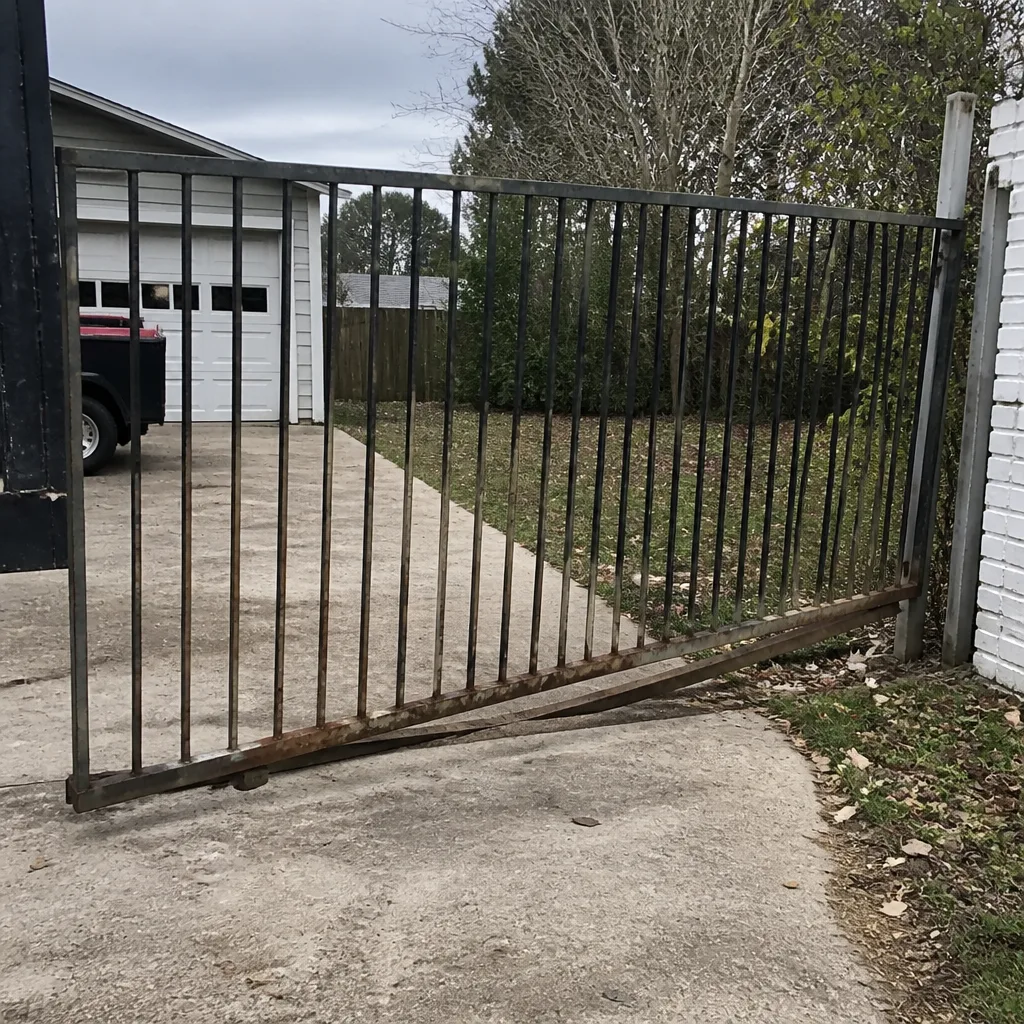 Before
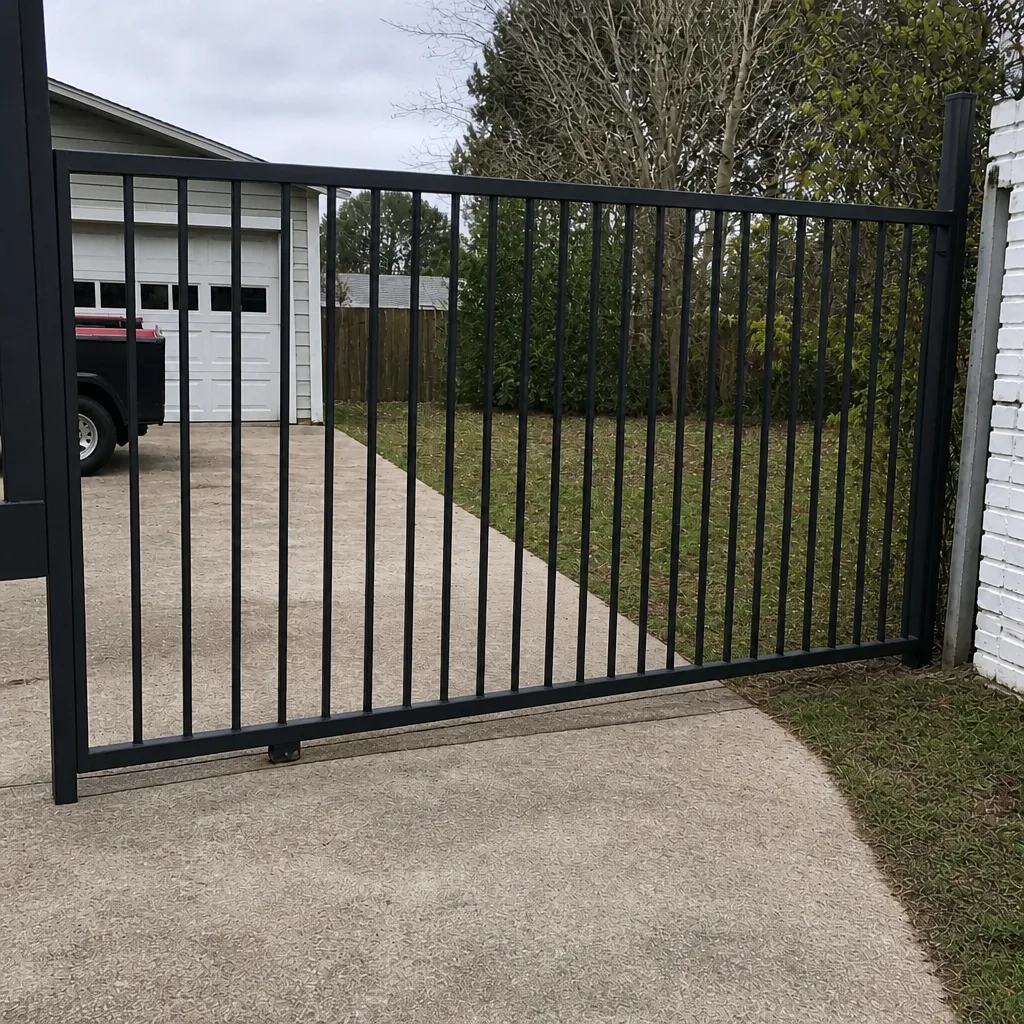 After
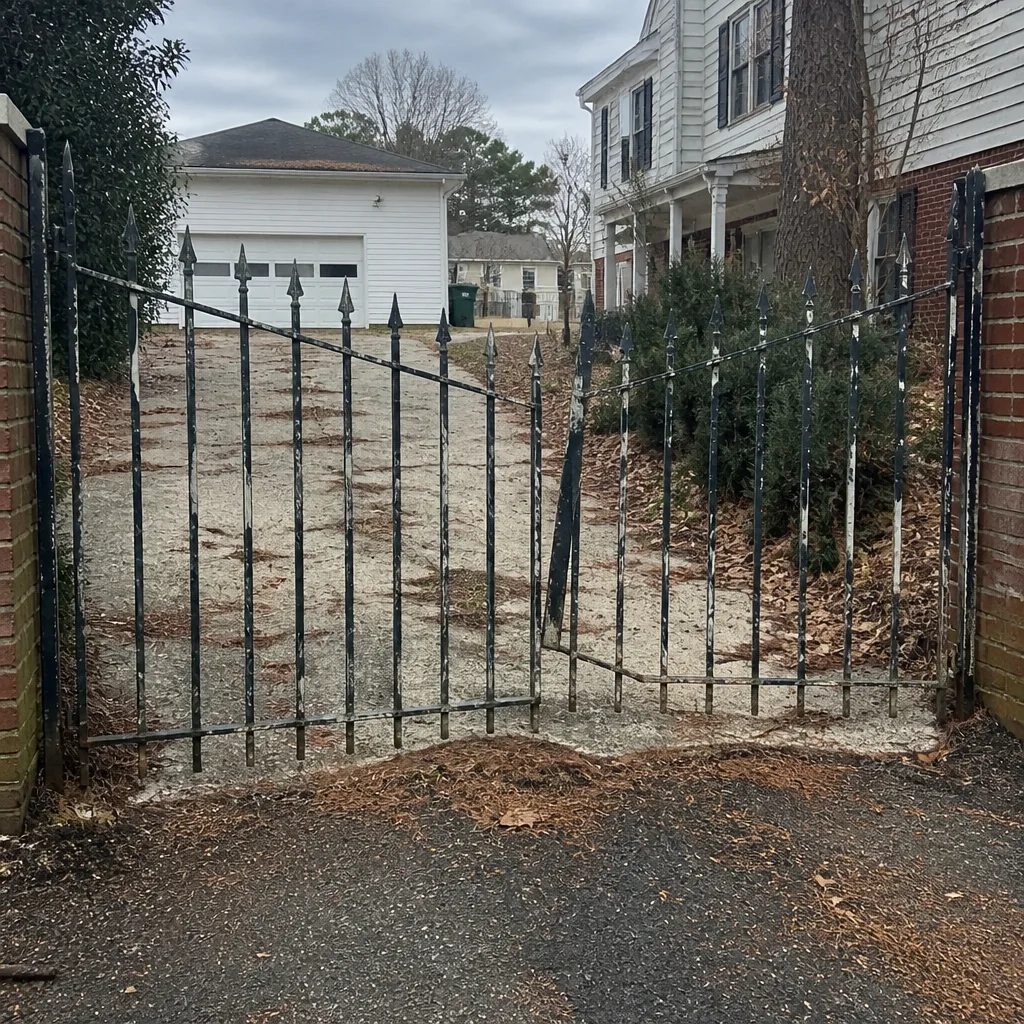 Before
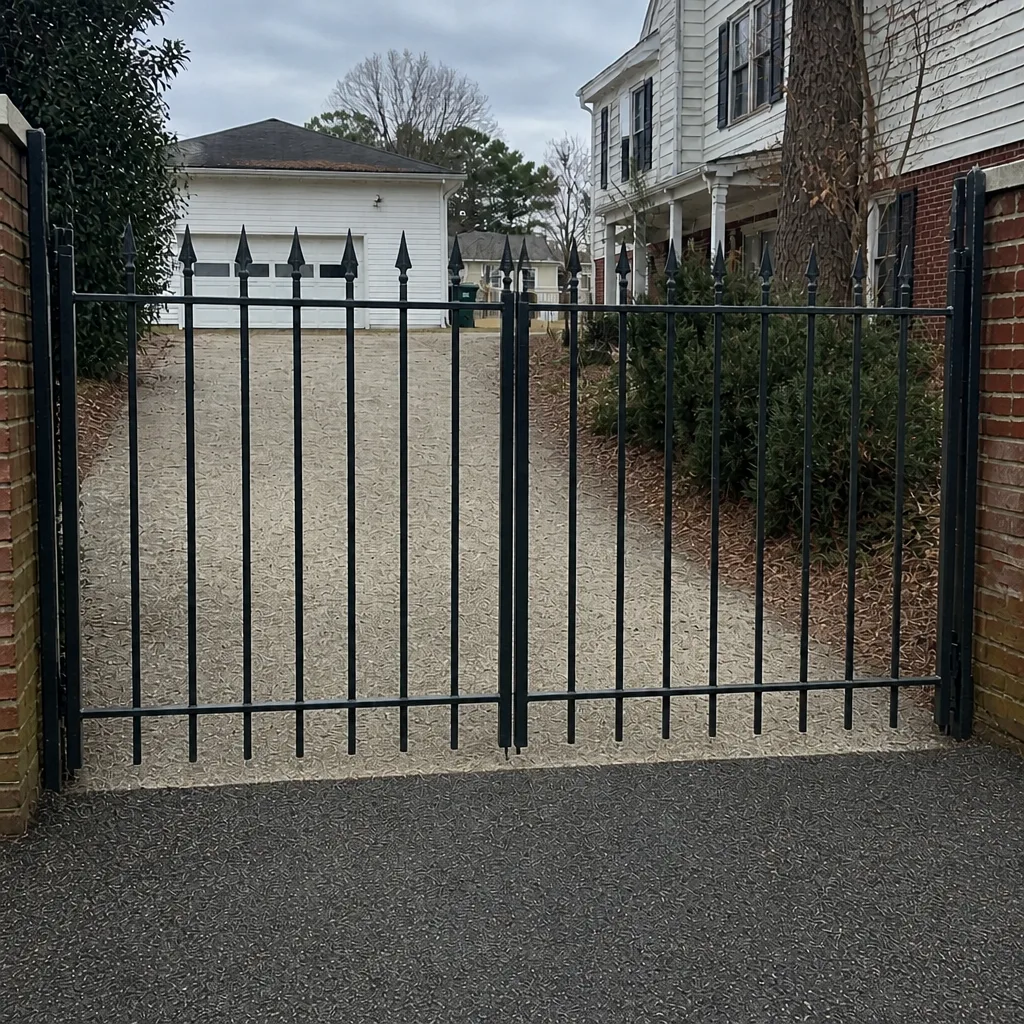 After
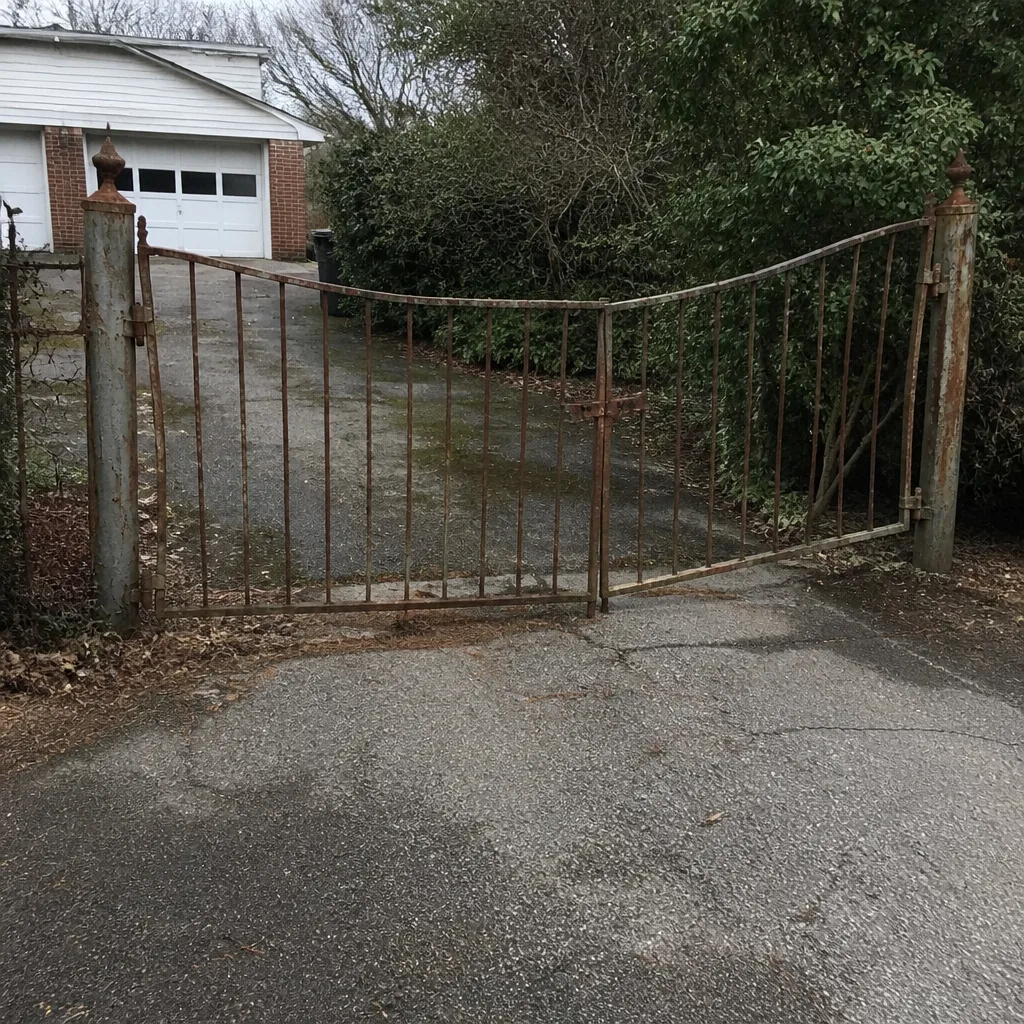 Before
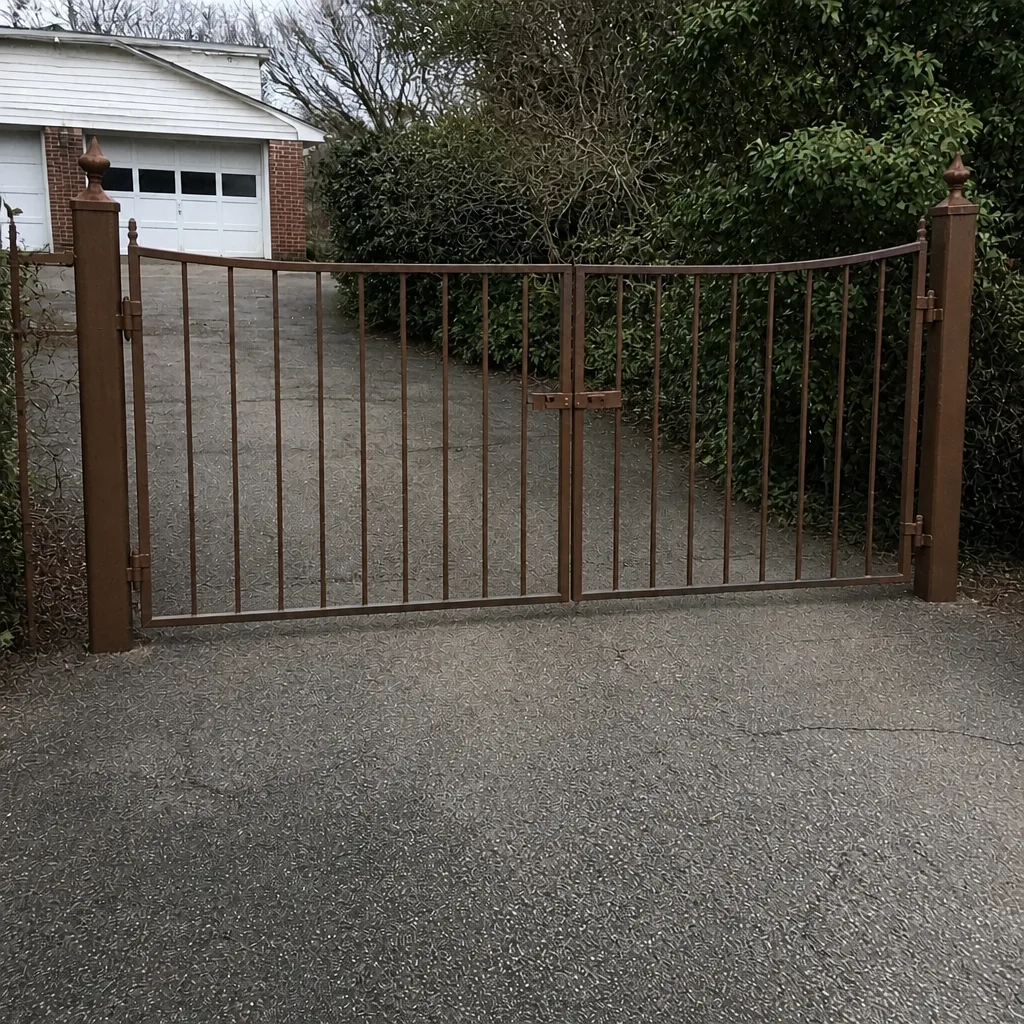 After
When to Call a Professional
Call a professional whenever the gate has an electrical or automated component and the fault isn’t immediately obvious. That includes an operator that runs but doesn’t reverse, a gate that stops partway, a gate that opens on its own, a remote that stops working after battery replacement, a control board with a fault light, or any physical damage to the gate panel on a heavy gate. Manual gates with a binding hinge or a loose post can sometimes be handled by a qualified contractor rather than a specialist, but on a motorized gate, the electrical side is the risk. Never open a control box or test voltage on an operator yourself; the stored energy and mains wiring are genuinely dangerous, and a technician trained on your brand can trace a fault safely in a fraction of the time. A gate that fails unpredictably on a busy driveway is the clearest case for a trained professional. If you’re unsure whether your issue is electrical or mechanical, call and describe it.
Gate Repair Suffolk offers free estimates in Suffolk, and we’ll talk through the fault with you before anyone visits. Call (855) 360-8054. We answer 24/7. Fast dispatch from 7am to 7pm, Sunday through Friday.
Frequently Asked Questions
A gate repair in Suffolk is priced per job after a diagnosis, not from a fixed list. A simple fix like a limit switch or photo-eye adjustment costs far less than a control board or operator replacement, so the written estimate after the technician sees your gate is the real number. The estimate is free, and the price you agree in writing is the price you pay. Call (855) 360-8054 for an exact quote on your gate.
We work on your brand, and we’re familiar with LiftMaster, FAAC, BFT, Linear, and the other major operators. If you’re not sure of the brand, look at the label on the operator housing and read it to us over the phone. Knowing the brand before a visit is the single most useful piece of information you can give a gate technician. Call (855) 360-8054 and we’ll confirm whether we work on yours.
Yes, gate work that includes electrical components generally requires a licensed contractor, and the license classification must cover the work being done. Ask for the classification and verify it with the Virginia DPOR before work begins. A contractor who can’t tell you their classification is telling you something. Call (855) 360-8054 if you want to talk through what your job involves.
Repair first is almost always the right starting point. A gate that stops working is usually a failed part (control board, limit switch, motor, or safety device) rather than a dead operator, and a diagnostic step will tell you which. Replacement makes sense when the operator is obsolete, parts are unavailable, or the failure is structural. We diagnose before we recommend anything. Call (855) 360-8054 to talk it through.
Yes, we repair both the mechanical gate and the electrical operator, which means you’re not handed off to a second contractor mid-project. That includes hinges, posts, tracks, rollers, panels, control boards, motors, and safety devices. Hiring one contractor for the whole system saves time and usually money. Call (855) 360-8054 for a free estimate.
Don’t open the control box or touch the wiring. Note the brand and model on the operator label, check whether the gate is swing or slide, and call a gate technician who works on that brand. Describe what happens when you press the remote: nothing, a click, a partial movement, or a reversal. That description narrows the fault before anyone arrives. Call (855) 360-8054. We answer 24/7. Fast dispatch from 7am to 7pm, Sunday through Friday.
The Bottom Line
Hiring a gate repair contractor in Suffolk starts with competence, not price. Verify the license, confirm the brand experience, ask the five diagnostic questions, and insist on a written scope with line-item pricing and public safety checks. A specialist charges what the job is worth and diagnoses before replacing; a generalist quotes low and guesses. Our gate repair service covers both the gate and the operator, so you don’t have to coordinate two trades. We work on your brand, from LiftMaster and Linear to FAAC and BFT, and we’ll talk through the fault before you commit to anything.
If you’re looking for a one-page rule: don’t hire anyone who can’t name the brand on your operator. Everything else follows from there. For help in Suffolk or to understand the full scope of what we handle, see our electric gate repair service and our coverage around Suffolk. For a free estimate, call (855) 360-8054. We answer 24/7. Fast dispatch from 7am to 7pm, Sunday through Friday.
Written by the team at Gate Repair Suffolk.