
Last updated November 15, 2026
 Wrought iron
 Wood & steel frame
 Farm & ranch
 Sliding driveway gates
 LiftMaster operators
Free on-site gate assessment - hinges, posts, and your LiftMaster or Nice gate operator checked before anything is quoted
The assessment is free and the quote is the invoice.
Get your free estimateDIY vs Professional Gate Repair: The Suffolk Homeowner’s Decision Guide
Most gate repair advice online starts with the wrong question. It asks how handy you are, then tells you to try it yourself if the answer is “pretty handy.” That’s backwards. The real dividing line isn’t your skill level. It’s the specific component that failed. A gate is a mix of low-voltage electronics, high-tension mechanical parts, and heavy panels that can crush. Some of it you can safely handle in an afternoon. Some of it can put you in the emergency room. This guide draws that line precisely for Suffolk homeowners, so you neither pay for a service call you didn’t need nor take on a repair that could hurt you.
Quick Answer
Some gate repairs are genuinely safe for a homeowner to do: reprogramming a remote, cleaning photo-eye sensors, lubricating hinges and rollers on a manual gate, and checking a tripped breaker. Everything involving high-tension springs or torsion hardware, live electrical work inside the operator, control-board rewiring, and resetting posts in unstable soil should go to a technician. The dividing line is not skill. It’s the consequence of a mistake.
Styles & brands we work with
- Wrought iron
- Wood & steel frame
- Farm & ranch
- Sliding driveway gates
- LiftMaster operators
Table of Contents
- Why a gate isn’t a fence: the forces at work
- What’s genuinely DIY-safe on a Suffolk gate
- What needs caution and knowledge
- What should never be DIY
- How to do a manual release during a power outage
- How DIY repairs affect your warranty
- The hidden costs of a free DIY repair
- What to prepare before a technician arrives
Why a gate isn’t a fence: the forces at work
A manual gate and an electric gate share a body but not a nervous system. The manual gate is a lever and a hinge. The electric gate is a machine, with a motor, a control board, safety sensors, and a mechanism built to move hundreds of pounds of steel or wood on command. That changes the safety math entirely.
A gate spring or counterbalance under load stores energy. When it’s properly tensioned it holds a heavier panel in balance. When you loosen the wrong bolt on a loaded spring, that stored energy releases all at once. The result is not a scraped knuckle. It’s a broken wrist or a hand injury serious enough for an urgent care visit. Suffolk urgent care staff see these injuries from time to time, more often than most homeowners expect from something that looked like a simple adjustment in a video.
Electric gates add a second layer. The operator runs on mains voltage, and the control board sits next to a transformer and a battery backup. Work inside the housing without isolating the power and you’ve added a shock risk to the mechanical one. Gate Repair Suffolk technicians treat every operator cabinet as live until proven otherwise, and that’s the habit that keeps a repair from becoming an accident.
On top of the physical risk sits liability. A residential gate is a moving machine on your property. If a badly adjusted operator closes on a child or a guest’s car, the homeowner carries the consequences. That’s why the safety edges and photo-eyes exist, and why a “quick fix” that bypasses them is never worth it.
What’s genuinely DIY-safe on a Suffolk gate
Plenty of gate problems have nothing to do with the mechanism. These are the jobs that reward a homeowner with ten minutes and a screwdriver. None of them involve tensioned parts, exposed wiring, or heavy panels.
Remote and keypad reprogramming
Lost a remote? Bought a replacement? Most modern operators, from Mighty Mule residential units to LiftMaster and FAAC systems, have a learn button or a menu sequence that pairs a new remote in under a minute. The manual that came with your operator will walk you through it. If you don’t have the manual, a model number search online usually finds the PDF.
Cleaning photo-eye and safety sensors
If your gate stops mid-travel or reverses for no obvious reason, dirty sensors are the single most common cause in Suffolk. Pollen, spider webs, and yard debris cloud the lens. Wipe both sensors with a soft cloth, make sure they’re aimed at each other, and check that nothing has grown into the beam path. This fixes a surprising share of “my gate is broken” calls before a technician is needed.
Lubrication on a manual gate
Hinges, rollers, and latches on a manual swing or slide gate benefit from a light application of a proper gate lubricant a couple of times a year. A gate that squeals or drags usually just needs this. Don’t overdo it. Excess lubricant attracts grit and turns into grinding paste.
Checking the obvious electrical basics
Before you call anyone, confirm the operator has power. Check the breaker at the panel. Check whether the operator’s battery backup has drained. Look for a tripped GFCI outlet near the gate. If the gate is completely dead and the breaker is fine, the problem is inside the operator, and that’s where DIY stops.
Clearing the track and the swing path
A slide gate that grinds to a stop often has a twig, a stone, or a buildup of leaves under the track. A swing gate that won’t close often has a settled hinge or debris in the arc. Clear the path, sweep the track, and see if the gate moves freely by hand (with the operator disengaged). If it still binds, the issue is mechanical and needs a proper look.
What needs caution and knowledge
These jobs are not automatically dangerous, but they require you to understand what the system is doing before you touch it. If you’re not sure, stop and get it looked at. The cost of a diagnostic visit is far less than the cost of a mistake.
Control board resets
Most operators have a reset procedure, and it’s often just a power cycle or a button sequence. That’s fine to try. What is not fine is pulling wires or swapping board components to “see if it helps.” Control boards are matched to their operator, and a wrong connection can fry a board that would otherwise have been repairable. On a FAAC or BFT commercial-grade operator, a replacement board can run into real money.
Manual release operation
Every automatic gate has a manual release so you can open it by hand in a power outage. Using it correctly is safe and important to know. Using it incorrectly, especially on a slide gate with the operator under load, can damage the gearbox. We cover the correct procedure below.
Adjusting limit switches
Limit switches tell the operator where fully open and fully closed are. A small adjustment is often all that’s needed when a gate stops short or over-travels. But move them too far and the gate drives into its own stop, which damages the operator over time. If you adjust them, do it in small increments and test after each one.
Battery replacement in the operator
Swapping the backup battery is usually straightforward, and the manual will tell you the correct type. Just make sure you isolate power before you open the housing, and dispose of the old battery properly.
What should never be DIY
This is the list that matters most. These are the jobs where a YouTube tutorial can turn a $200 repair into a hospital visit or a full operator replacement. On a gate, the dangerous parts are the operator’s wiring and power, the heavy panels that can crush, and the slide gate that can come off its track. None of these belong in a homeowner’s toolkit.
- Any work on a high-tension spring or counterbalance. These parts are loaded with enough force to break bones. Only a trained technician with the right tools and the right procedure should touch them.
- Electrical work inside the operator. Mains voltage lives in that cabinet. Isolate the power at the breaker, and let a professional handle anything beyond a battery swap or a fuse check.
- Rewiring the control board or the safety loop. A mis-wired photo-eye or safety edge defeats the entire safety system silently. The gate will run, and it won’t stop when it should.
- Resetting posts in unstable soil. A gate post that has shifted is a structural problem. Digging it out and re-setting it by hand without knowing the proper footing depth just moves the failure down the road, and often makes the gate panel itself fail next.
- Replacing a slide gate track or re-hanging a heavy panel. A steel or solid-wood slide gate can weigh several hundred pounds. One that comes off its track is a crushing hazard, and re-hanging it safely takes two people and proper equipment.
- Bypassing a safety edge or photo-eye “just for now.” A gate that closes without a working safety device is a lawsuit waiting to happen. Fix it properly, or leave the gate in manual until it’s fixed.
If any of these describes your situation, don’t gamble. The right call is to stop, leave the gate in a safe (usually open) position, and bring in a technician. Call (855) 360-8054. We answer 24/7. Fast dispatch from 7am to 7pm, Sunday through Friday.
How to do a manual release during a power outage
This is the one emergency procedure every gate owner should know, and doing it wrong is the most common cause of avoidable operator damage. A manual release disconnects the gate panel from the operator so you can move it by hand. Get the sequence right and you’ll get in and out without harming anything.
- Cut power at the breaker. Don’t rely on the remote or the keypad, which may still hold a charge. Pull the breaker that feeds the operator.
- Find the release mechanism. On most swing operators it’s a keyed lever or a pull handle on the arm. On slide operators it’s usually a release lever or a key on the housing. Check your operator manual for the exact location, since it varies by brand and model.
- Operate the release fully and firmly. A partial release leaves the gearbox half-engaged, which is exactly how gears get stripped. Push the lever through its full travel until you feel it click into the released position.
- Move the gate slowly by hand. Push it gently. If it fights you, stop. Something is still engaged or the track is obstructed.
- Re-engage the release when power returns. Cycle the gate once with the release re-engaged before you rely on it again. Confirm the safety sensors are clear and unbroken.
If the release won’t move, or the gate won’t budge by hand after release, don’t force it. That’s the point where a technician needs to look, because the problem is mechanical and forcing it will make it worse. For a deeper walkthrough of the electronics side of this, our electric gate repair page covers operator and control-board diagnosis in detail.
How DIY repairs affect your warranty
Manufacturer warranties cover defects in materials and workmanship. They do not cover damage caused by unauthorized repair attempts. That’s the plain truth across the gate-operator industry, and it’s worth understanding before you pick up a wrench.
When a technician opens your operator and finds a control board with burn marks along a wire you added, or a gearbox stripped after a partial manual release, the manufacturer will usually decline the claim. The symptom might have started as a genuine defect, but the DIY attempt is now the documented cause of the failure. You’ve converted a covered repair into an out-of-pocket one.
What a technician needs to honor a warranty claim is documentation: the model and serial number of the operator, the date of installation, proof of purchase, and a description of the failure. If a homeowner has already attempted a repair, the technician also needs to know exactly what was done. Hiding a DIY attempt doesn’t help. A technician who knows what was touched can often still fix the underlying problem, and can tell you honestly whether the warranty will cover it.
Our advice on a gate that’s still under warranty: clean the sensors, check the breaker, reprogram the remote. Everything else, call first. A free estimate costs you nothing, and it protects a warranty that might be worth more than the repair. If you’re not sure whether your operator is still covered, a specialist can usually tell from the model and serial number. We work on your brand, whichever it is, from Mighty Mule residential units to FAAC and BFT commercial-grade systems, and we’ll tell you straight whether a warranty claim is realistic.
The hidden costs of a free DIY repair
A DIY repair looks free because the only cost you see is your Saturday afternoon. The costs you don’t see are the ones that show up later.
- Accelerated wear. A limit switch adjusted badly makes the operator strain against its stop on every cycle. The motor and gearbox wear faster, and a repair that should have been a small adjustment turns into an operator replacement years sooner than it should have.
- Voided coverage. As above, a DIY attempt can turn a warranty repair into a full-price one. That’s the biggest hidden cost on the list, and it’s the one homeowners most often miss.
- Silent safety failures. A photo-eye wired wrong, or a safety edge bypassed, doesn’t announce itself. The gate runs fine until the one time it doesn’t, and that’s when the cost becomes a real injury or a damaged vehicle.
- Compounding damage. Forcing a gate that’s binding can snap a hinge pin or bend a track. Now you have two problems instead of one.
- Time and repeat trips. The classic DIY pattern is three trips to the hardware store, a day of work, and then a technician visit anyway. The hour you saved by not calling first is worth less than the afternoon you spent.
We’re not saying DIY is always the wrong call. We’re saying the free part of DIY is an illusion when the effort makes the eventual repair bigger. Our gate repair service is built around repair first, not replacement, precisely because most of what we’re called out to fix was fixable before somebody tried to fix it.
What to prepare before a technician arrives
A well-prepared visit is a faster visit, and a faster visit is often a cheaper one. Here’s what a technician wants to know when they pull up to a Suffolk property.
- The operator’s make and model. Every gate operator has a model plate on the housing or inside the cabinet. Photograph it. LiftMaster, FAAC, BFT, Linear, Viking, Ghost Controls, DoorKing, Elite, and Mighty Mule all label differently, but the plate is always there. A photo saves diagnostic time.
- When the problem started and how it behaves. “It opens halfway then reverses” is more useful than “it’s broken.” Note whether the gate stops, reverses, or runs but doesn’t move, and whether it does it every time or only sometimes.
- Recent power events. A storm, a brownout, or a breaker trip often precedes an operator fault. Mention it. It points a technician straight at the control board.
- Recent weather and ground conditions. A gate post that shifted after heavy rain behaves very differently from one that shifted after a car strike. Suffolk soil moves with the water table, and that’s a useful clue.
- Any recent changes. New remote, new keypad, new phone, new landscaping near the sensor path. All of these can cause faults.
- Your documentation. If the gate is under warranty, have the purchase and installation paperwork ready. If not, have a rough idea of the install date. It helps a technician decide whether a repair is worth doing versus a replacement.
One more prep step that matters more than it sounds: clear the swing or slide path and leave the gate in a safe position before the technician arrives. A technician who can cycle the gate without moving a car has a head start.
Common Mistakes to Avoid
- Forcing a gate that’s binding. A binding gate is telling you something is wrong. Forcing it snaps hinge pins, bends tracks, and adds a second repair to the first. If it fights you, stop.
- Bypassing a safety sensor. A gate that closes without a working safety edge or photo-eye is putting your family and your guests at risk. Never run it that way, even temporarily.
- Calling a general handyman. A handyman can fix a hinge, but most don’t have the control-board diagnostic capability an electric gate needs. The problem often gets misdiagnosed, and you end up paying twice.
- Skipping the manual after a power event. When the gate comes back to life after a storm, don’t just start using it. Cycle it once with the safety path clear and confirm the sensors are working.
- Ignoring a slow operator until it stops. A gate that’s getting slower, noisier, or more hesitant is giving you warning. A small repair now beats a full operator replacement later.
- Digging out a shifted post on a hunch. Post re-setting in unstable soil is a structural job. Done by hand without proper footing depth, it just moves the failure down the road.
- Assuming a newer gate can’t need service. Age isn’t the only variable. Usage, orientation, and soil movement all matter. A two-year-old operator can fail from a control-board fault just as easily as a ten-year-old one.
See the difference
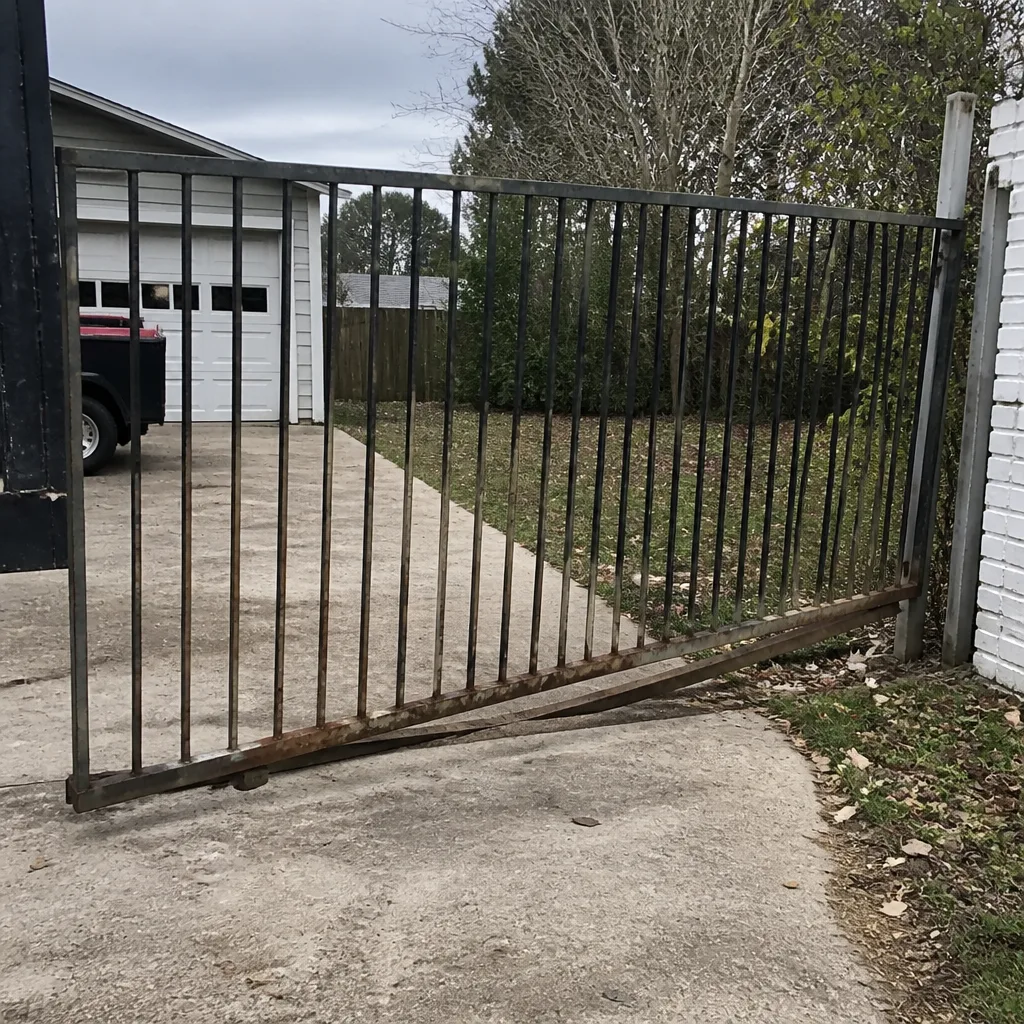 Before
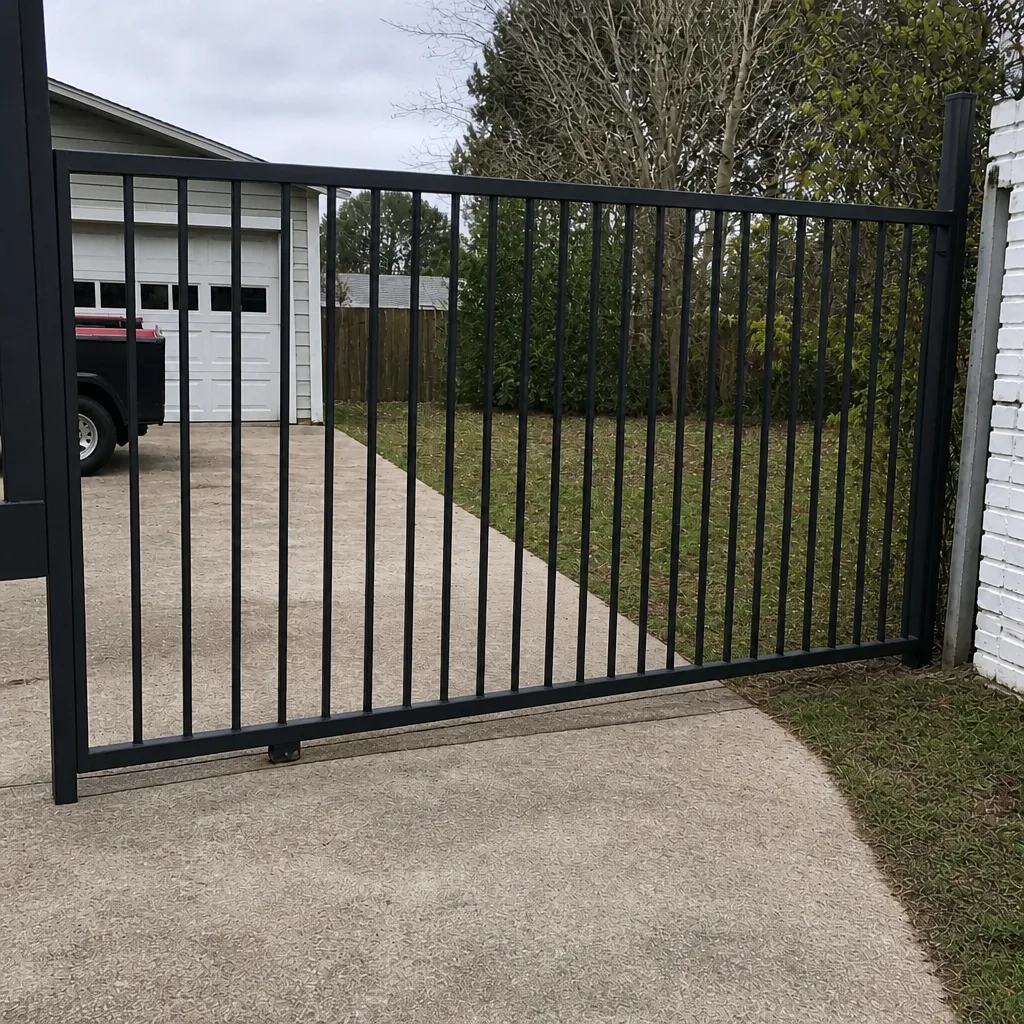 After
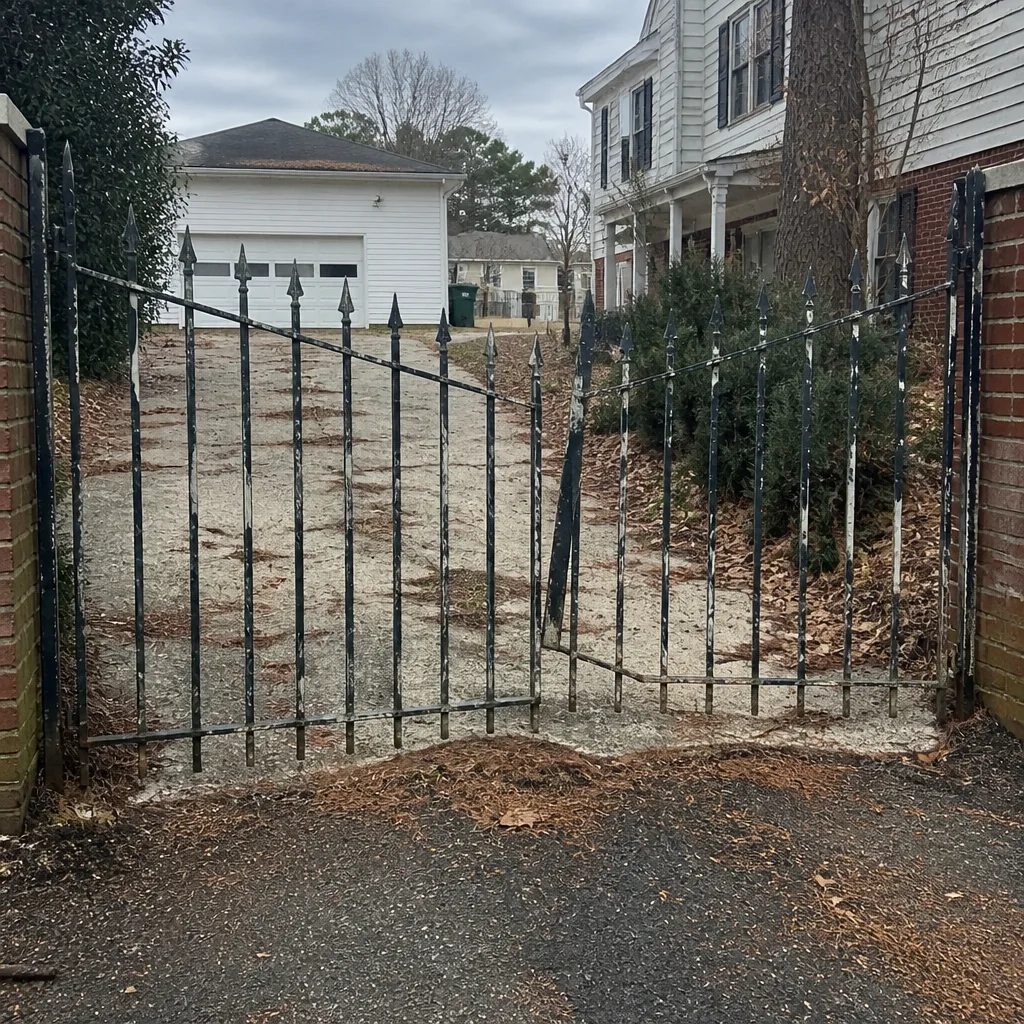 Before
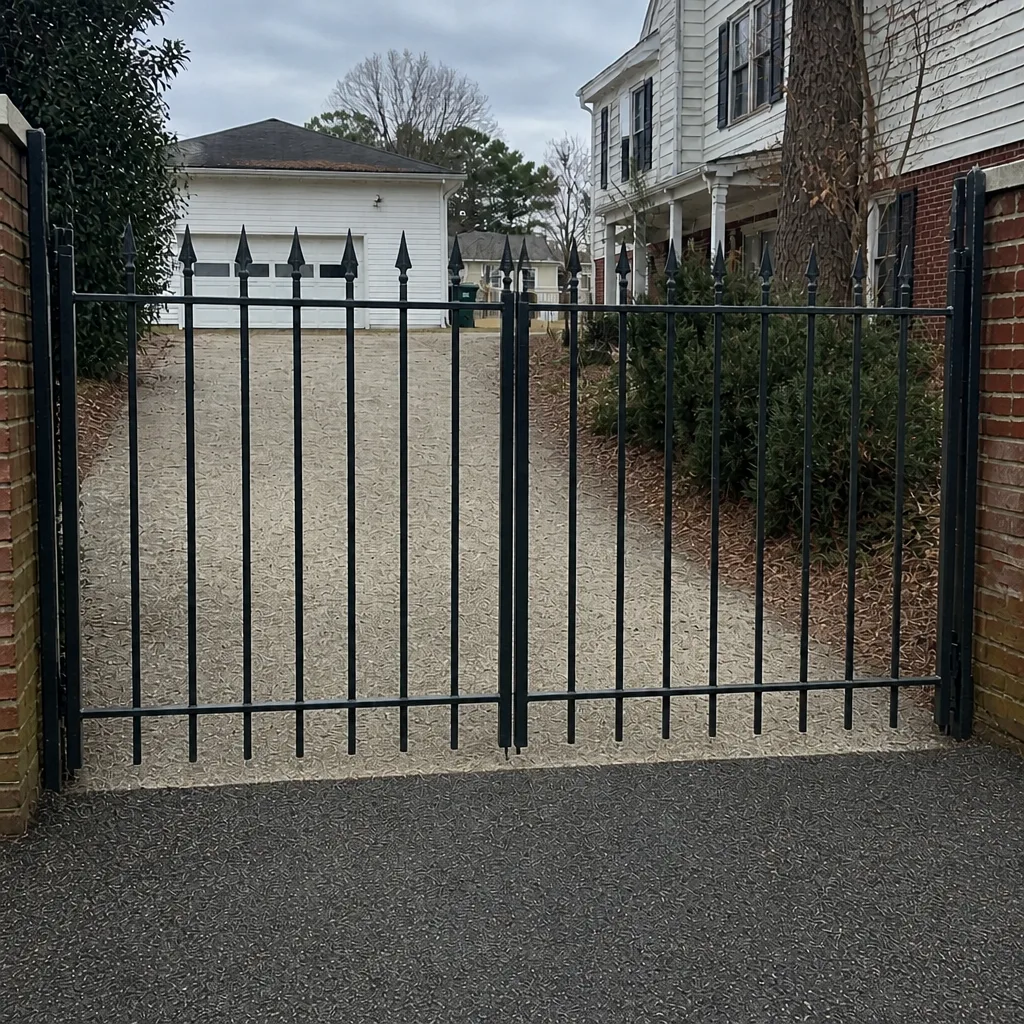 After
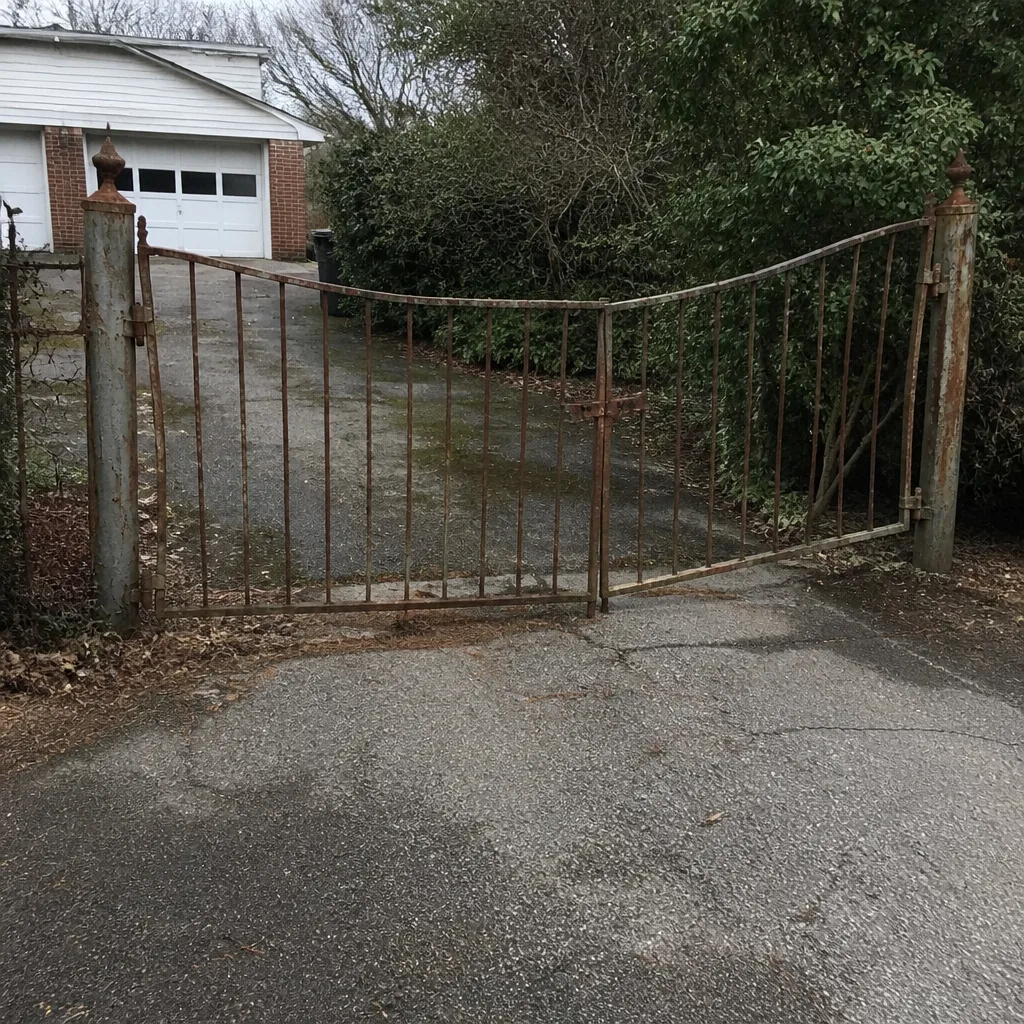 Before
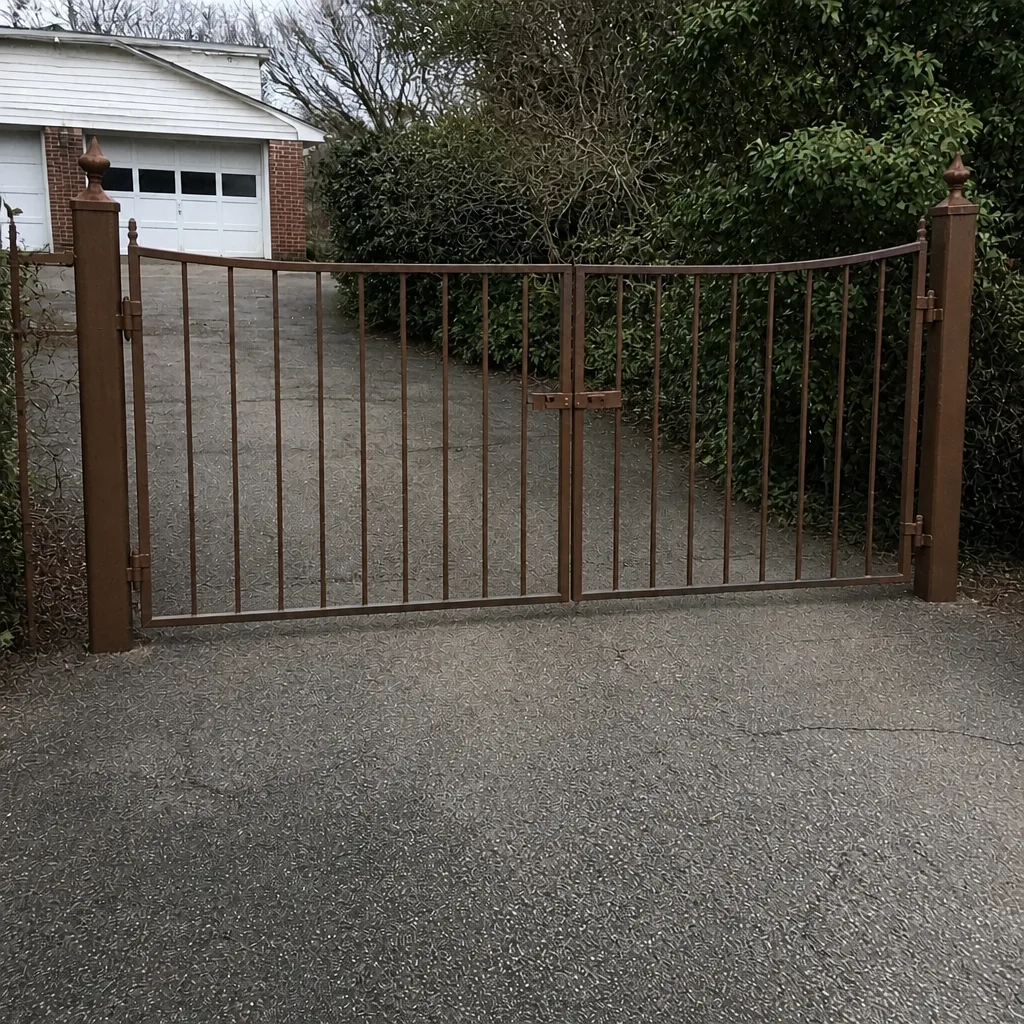 After
When to Call a Professional
Call a professional whenever the repair touches anything mechanical, electrical, or heavy. Specifically: any work on a high-tension spring or counterbalance, any electrical work inside the operator housing beyond a battery or fuse, any control-board fault, any gate that won’t release manually, any post that has shifted, and any safety sensor or edge that isn’t working and won’t clean up. Also call if your gate is still under warranty and the problem is more than a dirty sensor or a blank remote. Our technicians have up to 10 years of experience, and Gate Repair Suffolk offers free estimates in Suffolk. Call (855) 360-8054. We answer 24/7. Fast dispatch from 7am to 7pm, Sunday through Friday.
Frequently Asked Questions
You can safely handle the low-risk tasks: reprogramming remotes, cleaning photo-eye sensors, checking the breaker, lubricating a manual gate, and clearing the track. Anything involving high-tension springs, live wiring inside the operator, control-board work, or a shifted post should go to a technician. The dividing line is what happens when it goes wrong, not how handy you are.
Release the operator with the manual release and move the gate by hand. If it moves freely, the problem is in the operator or the electronics. If it binds, drags, or won’t move, the problem is mechanical: hinges, rollers, track, or a shifted post. That test takes two minutes and tells you which kind of call to make.
Our free estimate is an on-site look at your gate and operator, a diagnosis of what’s wrong, and a written price for the repair before any work starts. You get a clear number, and the written estimate is the final price. Call (855) 360-8054 to book one in Suffolk.
Often, no. Manufacturer warranties exclude damage caused by unauthorized repair attempts, and a technician who finds a DIY attempt often can’t make the claim stick. If the gate is still under warranty, stick to remote reprogramming, sensor cleaning, and breaker checks, and let a technician handle the rest. A free estimate costs less than a voided warranty.
Yes. We’re factory-familiar with nine major gate brands: LiftMaster, FAAC, BFT, Linear, Viking, Ghost Controls, DoorKing, Elite, and Mighty Mule. That covers residential entry-level units and commercial-grade systems alike, so you don’t have to source a brand-specific specialist.
Check the breaker first, then confirm the operator has power, then look for a tripped GFCI nearby. If power is fine and the gate is still dead, don’t open the housing. Leave the gate in manual and call (855) 360-8054. We answer 24/7, and a call outside dispatch hours is booked into the next opening, Sunday through Friday, 7am to 7pm.
Yes. We repair manual and electric gates under one company: mechanical issues, operator and control-board faults, and new installation. You’re not handed off between a gate fitter and an electrician mid-project. Our Suffolk page has more on how we work locally.
The Bottom Line
The DIY versus professional question isn’t about your confidence. It’s about the component. Remote programming, sensor cleaning, lubrication, and a breaker check are safe for any homeowner. High-tension springs, live electrical work, control-board rewiring, post re-setting, and hanging a heavy slide panel are not. Attempting the second group doesn’t just risk injury. It can void a warranty, accelerate wear, and turn a small repair into a big one. Get the safe jobs done yourself, get the dangerous ones done by a gate-only specialist, and you’ll spend less and stay safer. Call (855) 360-8054 for a free estimate on any gate repair in Suffolk, whether you’re ready to book a repair or just want a straight answer on whether it needs one. Learn more on our Gate Repair Suffolk homepage, or read the full gate repair service details before you call.
Written by the team at Gate Repair Suffolk.